
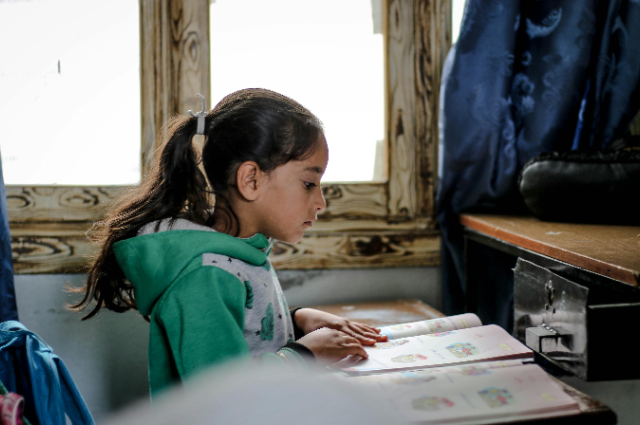
Education in India is often treated as the most important thing in a child’s life. From a very young age, students are taught that good marks bring success, respect, and a better future. Parents proudly discuss ranks and percentages, schools celebrate toppers, and society often judges intelligence through marks. But behind this race for academic success, one important thing is consistently ignored — the mental and emotional condition of students. The recent murder of a nine-year-old girl in Maharashtra over a marksheet is a devastating reminder of how dangerous this pressure can become.
According to police reports, the incident occurred in Hanuman Wasti village in Pune district. A man named Shantaram Chavan allegedly murdered his daughter Anamika after discovering that she had altered her marksheet, changing her rank to first position while moving her brother’s rank to second. Rather than asking why a child would feel the need to do this, the father responded with extreme violence. Police stated that he later attempted to destroy evidence by setting the body on fire and presenting the death as an accident. The case shocked people across Maharashtra because a small act driven by a child’s fear turned into the irreversible loss of her life.
This case is not only about one violent father. It reflects a deeper and more widespread problem: the unhealthy obsession Indian society has with marks and academic rankings. Many students grow up believing that their value as a person depends entirely on their academic performance. Society constantly asks children about marks, ranks, percentages, and exam results — but rarely pauses to ask whether they are mentally healthy, emotionally safe, or simply happy. This pressure begins from a very young age and quietly erodes the confidence and mental well-being of children over time.
From a student’s perspective, academic competition in India has become extraordinarily intense. Students are expected to score high marks, consistently outperform their classmates, and prove themselves at every stage. Many parents compare their children with relatives, neighbours, or school toppers. Even when done with good intentions, continuous comparison creates deep-seated fear and insecurity. Some children begin to internalise the belief that low marks will disappoint their family and permanently reduce their worth in the eyes of society.
This issue is also rooted in social and economic reality. In a country where unemployment and financial hardship are widespread, many families view education as the only reliable path to a stable future. Parents invest enormous hope in their children’s academic success because they want a better life for them. However, when education becomes entirely about marks and competition rather than genuine learning, children begin to experience anxiety instead of curiosity, and stress instead of growth.
Another critical issue is the lack of mental health awareness in Indian households and schools. Many children experience anxiety, fear of failure, and emotional distress, but these feelings are rarely acknowledged or discussed openly. In many families, emotional struggles are dismissed or treated as signs of weakness. Schools, too, focus heavily on academic results while giving far less attention to emotional well-being and access to counselling support.
The death of Anamika raises a deeply uncomfortable question: why do children feel so afraid of disappointing their parents over marks? A nine-year-old altering her marksheet was almost certainly motivated by fear — fear of punishment, fear of rejection, or a desperate need for approval. Instead of understanding the emotional state of the child, extreme violence destroyed her life entirely. This tragic outcome shows how urgently Indian society must rethink its approach to education and parenting.
Parents play the most powerful role in shaping a child’s confidence and sense of emotional safety. Discipline and expectations are necessary, but children also require patience, support, and unconditional understanding. Parents must teach their children that marks represent only one part of life and that failure does not diminish a person’s value. A home where children can speak honestly about mistakes — without fear of violence or humiliation — is a home where genuine growth becomes possible.
The education system and government also carry significant responsibility. Schools should not function only as engines of academic performance. They must also provide structured mental health support, emotional learning programmes, and accessible counselling facilities. Awareness initiatives focused on student stress and healthy parenting are especially urgent in rural and semi-urban communities, where conversations about mental health remain largely absent and stigmatised.
In recent years, India has seen a troubling rise in reports of student depression, anxiety, and suicide directly linked to academic pressure. This confirms that educational stress is no longer a private or individual concern — it is a serious and growing social crisis. If society continues to place marks above mental well-being, tragedies like Anamika’s will not remain isolated incidents.
In conclusion, the murder of a child over a marksheet is not only a criminal act but also a consequence of the damaging pressure that India’s education culture has normalised. India ranks students, but rarely asks if they are okay. Education should help children grow into confident, curious, and emotionally healthy individuals — not trap them in a cycle of fear and competition. Society must work urgently to build an environment where children are valued for who they are, not only for the marks they score.
References
- NDTV News – Pune father kills daughter over marksheet case: https://www.ndtv.com
- Indian Express – Maharashtra crime and academic pressure reports: https://indianexpress.com
- National Crime Records Bureau (NCRB) reports on student mental health and crime: https://www.ncrb.gov.in
- UNICEF India – Child mental health and wellbeing awareness: https://www.unicef.org/india