
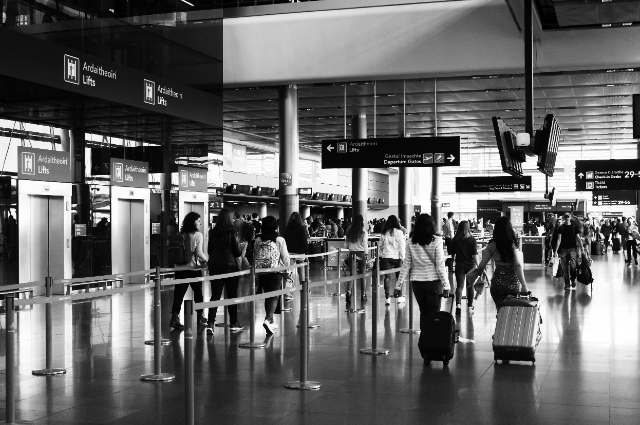
On the morning of May 7, 2010, Ajay Singh reached Raja Bhoj Airport in Bhopal carrying nothing more alarming than a suitcase and a few packets of branded kitchen spices. He was a software engineer from Gwalior, booked on a Jet Airways flight to Delhi and then onward to Malaysia. The kind of traveller airports see thousands of every day. By afternoon, he was in police custody, booked under one of India’s harshest criminal statutes, accused of carrying heroin and a synthetic psychotropic drug. The accusation came not from a human being who had seen or smelled or tested anything — it came from a machine.
An Explosive Trace Detector at the airport had scanned his spice packets and flagged them. The readout suggested that his aamchur powder contained between 1 and 4 per cent heroin, and that his garam masala showed roughly 10 per cent MDEA, a compound related to MDMA. Based on that reading alone, CISF personnel detained him. An FIR was registered at Gandhi Nagar police station under Sections 8 and 21 of the Narcotic Drugs and Psychotropic Substances Act. Ajay Singh went from transit passenger to narcotics accused in the space of a single airport checkpoint.
A Machine That Decides, a Lab That Cannot Confirm
Explosive Trace Detectors work through a process called Ion Mobility Spectrometry. The device ionises particles collected from a surface or object, then measures how long those ions take to travel through a tube under an electric field. The time it takes is compared against a stored library of known substances — explosives, narcotics, precursor chemicals. The problem is that IMS is extraordinarily sensitive, and that sensitivity cuts both ways. Ordinary organic compounds, including the complex aromatic molecules found in Indian spices, can produce readings that overlap with those of controlled substances. The machine does not distinguish between a drug trafficker and someone who packed their lunch.
Singh’s spice packets were seized and sent to the Regional Forensic Science Laboratory in Bhopal for confirmation. What the RFSL sent back was not a test result. It was an apology of sorts: the lab returned the samples after ten days, stating it did not have the equipment required to test for MDEA. The only forensic institution that could either confirm or deny the machine’s accusation had neither the tools nor the trained personnel to do the job. The samples then made their way to the Central Forensic Science Laboratory in Hyderabad. On June 30, 2010 — fifty-three days after Singh’s arrest — the CFSL issued its report. No contraband substance was present in either packet. Singh was released on July 2, having spent 57 days in judicial custody for carrying dried mango powder.
This is not an isolated story. India’s regional forensic labs have been in institutional distress for years. A detailed 2026 analysis of the country’s forensic backlog described the situation as a ‘perfect storm’ of unmanageable caseloads, staff shortages, equipment gaps, and budgets eaten up by salary costs rather than scientific infrastructure. Labs return samples because they lack machines. Cases stall because reports don’t arrive. Undertrial prisoners wait. According to National Crime Records Bureau data, roughly 69 to 74 per cent of India’s prison population at any given time consists of people who have not been convicted of anything — they are awaiting trial. In NDPS cases, where bail conditions are particularly restrictive, that wait can stretch from weeks into years.
Sixteen Years Before a Court Said Sorry
The police filed a closure report after the CFSL cleared Singh, and the Special NDPS Court in Bhopal accepted it. The criminal case was closed. But what about the 57 days? What about the FIR filed under a narcotics law, the reputational damage of being led away from an airport in front of other passengers, the professional disruption, the family’s fear? Singh filed a writ petition in the Madhya Pradesh High Court in 2011 seeking compensation. He asked for ₹10 crore in notional damages, a figure meant to reflect not just lost income but the full weight of what had been taken from him.
The case moved through the courts at the pace that Indian litigation typically moves. It took until May 2026 — sixteen years after his arrest — for Justice Deepak Khot of the Madhya Pradesh High Court to deliver a verdict. The judgment was direct. The court held that the ETD machine’s reading was indicative, not conclusive, and that arresting and detaining a person based on a machine alert alone, without immediately pursuing laboratory verification, violated his fundamental right to personal liberty under Article 21 of the Constitution. The court noted that the state was vicariously liable for the 57 days Singh spent in custody because of what it called ‘lethargy and not having standard laboratories’ in Madhya Pradesh.
The compensation awarded was ₹10 lakh. Divided across 57 days, that comes to roughly ₹625 per day of wrongful imprisonment. Singh had asked for a hundred times that amount. The court did not grant a probe into the airport machines, nor the higher sum, though it noted he was free to pursue additional civil remedies. It did, however, issue a wider institutional direction: the Chief Secretary of Madhya Pradesh was instructed to inspect all Regional Forensic Science Laboratories within one month and ensure they were properly equipped and staffed for testing controlled substances.
The Law That Makes Innocence Expensive to Prove
Part of what made Ajay Singh’s situation so acute is the specific character of the NDPS Act. Enacted in 1985, the law contains provisions that effectively shift the burden of proof onto the accused in cases involving commercial quantities. It also makes bail exceptionally difficult to obtain. This architecture makes sense as a tool against drug trafficking networks, but it is a brutal instrument when applied to someone caught in a false positive. Under the NDPS Act, you cannot simply explain your way out of custody while a lab confirms your innocence. You wait. And as Singh’s case shows, that wait depends entirely on whether the nearest forensic lab has the right equipment — and in Bhopal in 2010, it did not.
The broader pattern this case fits into is one that India has been slow to address. There is no dedicated statutory law for compensating people who have been wrongfully prosecuted or detained. Courts have stepped in using their constitutional jurisdiction, but the awards tend to be modest, the process is long, and the initiative falls entirely on the individual. As one legal review on wrongful incarceration in India put it plainly: the law on compensation is still absent. What exists is a patchwork of High Court and Supreme Court judgments that require each victim to individually prove their case and wait for relief that, as in Singh’s case, may arrive a decade and a half later.
Meanwhile, the market for ETD machines in India continues to grow. Airport modernisation programmes, counter-terrorism requirements, and CISF deployments have driven demand for trace detection equipment across the country. Industry reports have flagged the false positive rate as a known challenge in the Indian ETD market, pointing specifically to the diversity of organic compounds carried by Indian travellers. Singh himself argued before the High Court that tests conducted on other common spice brands had produced similar false alerts. The machine was not malfunctioning in any dramatic sense — it was doing exactly what it was built to do. The problem is that what it was built to do was never sufficient to determine guilt.
What a ₹625 Per Day Verdict Should Force Us to Ask
Justice Khot’s judgment matters, and its institutional directions — particularly the instruction to audit and equip state forensic labs — could prove more consequential than the compensation figure itself. But the case also exposes gaps that a single High Court ruling cannot close. ETD protocols at Indian airports still generally allow arrest on the basis of a machine alert before laboratory confirmation is available. State forensic labs still vary widely in capacity, with rural and smaller states far behind major urban centres. And the NDPS Act still makes bail a function of how long a forensic report takes to arrive, not of how likely an accused person is to have actually committed a crime.
Ajay Singh spent 57 days in jail. He then spent 16 years in court. He received ₹10 lakh. None of those numbers reflects what actually happened to him: an innocent man who packed his lunch, walked into an airport, and found that a machine’s error was enough to take away his freedom for nearly two months. The ₹625-per-day figure is not a settlement. It is an admission. And it raises a question India has not yet answered cleanly: when the state’s technology fails, when the state’s labs are not equipped, and when the state’s law makes innocence nearly impossible to assert in real time — who bears the cost of that failure? Right now, the answer is the person who was innocent all along.
References:
- Bar and Bench — Man goes to jail after garam masala mistaken for heroin; MP HC awards ₹10 lakh — https://www.barandbench.com
- ANI News — MP High Court awards Rs 10 lakh to businessman jailed 57 days over spices — https://aninews.in
- Republic World — Spices Mistaken for Heroin at Airport; 16-Year Legal Battle — https://www.republicworld.com
- ETV Bharat — HC Orders Rs 10 Lakh Compensation for Airport Faux Pas — https://www.etvbharat.com
- Wikipedia — Explosives Trace Detector (IMS technology overview) — https://en.wikipedia.org
- Nexdigm — India ETD Market Report (false positive rates in Indian airports) — https://www.nexdigm.com
- Budding Forensic Expert — India’s Forensic Lab Backlog Crisis (April 2026) — https://www.buddingforensicexpert.in
- The Quint — The Price of Wrongful Prosecution in India — https://www.thequint.com
- IJLMH — Right to Compensation for Wrongful Prosecution: Indian Socio-Legal Framework — https://ijlmh.com
- Budding Forensic Expert — Does India Need Its Own Innocence Project? (May 2026) — https://www.buddingforensicexpert.in