
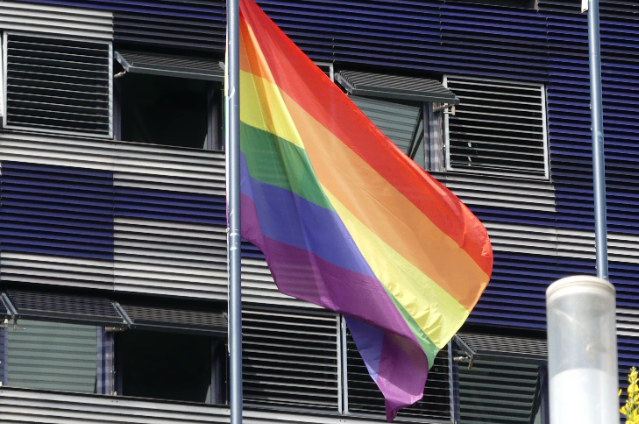
On June 28, 1969, police raided the Stonewall Inn — a small, dimly lit bar in Greenwich Village, New York. The people inside fought back. They threw bottles, they resisted arrests, and they started an uprising that lasted six days. Those people were not marching with corporate sponsors. They were not wearing branded t-shirts or carrying rainbow-coloured merchandise. They were fighting, quite literally, for the right to exist without being arrested. That moment became the foundation of the modern LGBTQ+ rights movement. And every June, when corporations paint their logos rainbow and flood social media with Pride-themed content, a large part of the LGBTQ+ community asks a very uncomfortable question — is this what those people at Stonewall were fighting for?
From Riot to Rainbow Merchandise — How Pride Changed
The first Pride march took place on June 28, 1970 — exactly one year after Stonewall. It was organised largely by Brenda Howard, a bisexual activist who is credited as the Mother of Pride, along with Robert A. Martin and L. Craig Schoonmaker, who helped popularise the very word Pride to describe these events. It was a protest march, not a parade. There were no floats sponsored by banks. There were no rainbow-themed product launches. There was anger, and there was courage, and there was a community demanding to be seen as human.
Fast forward to today. In June, some of the world's largest corporations — Amazon, Google, Nike, Goldman Sachs — change their logos to rainbow versions, launch Pride collections, and post enthusiastically about inclusion and diversity. On July 1, the rainbow disappears. The merchandise goes on sale. And the community is left to wonder what exactly just happened. This phenomenon has a name — Rainbow Washing — and it refers to the practice of corporations performing visible support for LGBTQ+ causes during Pride Month without any meaningful commitment to LGBTQ+ rights the rest of the year.
The Hypocrisy Behind the Rainbow Flag
The anger that activists feel towards corporate Pride is not simply about aesthetics or purity politics. It is backed by documented evidence of hypocrisy. A 2022 report by the LGBTQ+ advocacy organisation Popular Information analysed political donations by major US corporations that publicly celebrated Pride and found that dozens of them had simultaneously donated to politicians who voted against LGBTQ+ rights — including against same-sex marriage protections, against anti-discrimination legislation, and in favour of laws restricting transgender rights. These are not small donations. Some corporations donated hundreds of thousands of dollars to anti-LGBTQ+ political campaigns while their rainbow logos were still visible on their websites.
This is the contradiction that sits at the heart of corporate Pride — and it is why so many activists and long-time community members feel genuinely angry rather than grateful when corporations show up in June. It is one thing to be silent. It is another to celebrate Pride publicly while quietly funding the political forces working to roll back the rights being celebrated. From an Economics perspective, this behaviour has a straightforward explanation — it is profit-driven. Pride Month represents a significant consumer market. The LGBTQ+ community and its allies constitute enormous purchasing power, and corporations respond to it. The rainbow logo is not a moral statement. It is a market strategy.
The Community Is Divided — And Both Sides Have a Point
What I find most interesting about this debate is that the LGBTQ+ community itself is genuinely divided on the question of corporate Pride — and I think both sides deserve to be heard fairly, not dismissed.
On one side, there are people who say — celebrate. Pride has come a long way. The fact that major corporations feel pressure to visibly support LGBTQ+ inclusion is itself a sign of social progress. Visibility matters. Representation matters. A young LGBTQ+ person in a small town seeing rainbow flags everywhere in June might feel, for the first time, that they are not alone. That feeling is real, and it has value. Progress, even imperfect progress, is still progress — and dismissing every corporate gesture as hollow ignores the genuine cultural shift that has taken place over decades.
On the other side, there are activists — many of them older, many of them from the communities that were most marginalised even within the LGBTQ+ movement — who say that celebration without accountability is dangerous. They argue that Rainbow Washing actually makes things worse by giving corporations a way to appear supportive without doing anything meaningful, creating the illusion of progress while the political and legal battles are still being lost. They point to the fact that transgender rights are currently under severe attack across multiple countries, that same-sex couples still face discrimination in housing and employment in many places, and that the most vulnerable members of the community — particularly Black and Brown transgender women — continue to face alarming rates of violence. For these activists, a rainbow logo from a corporation that donates to anti-trans politicians is not just empty — it is an insult.
I find myself understanding both positions. But I think the activists have the harder, more honest argument. Visibility is valuable. But visibility without accountability can become a substitute for accountability — and that is dangerous.
Pride in India — Where Celebration Is Still a Form of Protest
In India, this debate takes on a different dimension entirely. Section 377 of the Indian Penal Code, which criminalised consensual same-sex relations, was struck down by the Supreme Court in 2018 in the landmark Navtej Singh Johar verdict. That was a historic moment. But in 2023, the Supreme Court declined to legalise same-sex marriage, leaving LGBTQ+ couples without legal recognition of their relationships, without inheritance rights, without adoption rights, and without the basic protections that marriage provides. The court suggested that Parliament should legislate on the matter, and Parliament has not moved.
In this context, Pride marches in Indian cities — Mumbai, Delhi, Bengaluru, Kolkata — carry a weight that is qualitatively different from Pride in countries where same-sex marriage is already legal. Here, walking in a Pride parade is still an act of courage for many people. It still risks family rejection, workplace discrimination, and in some cases, violence. The debate about whether Pride has become too commercial feels somewhat distant when the basic legal infrastructure for equality does not yet exist. In India, the celebration is still inseparable from the protest — because the rights being celebrated have not yet fully arrived.
What Corporate Pride Should Actually Look Like
I am not arguing that corporations should stay out of Pride. I am arguing that if corporations want to show up in June with rainbow flags, they should be held to a standard of consistency. That means not donating to politicians who vote against LGBTQ+ rights. That means having non-discrimination policies that actually protect LGBTQ+ employees throughout the year, not just in June. That means paying fair wages to LGBTQ+ workers, including the most marginalised — transgender employees, and employees of colour. That means lobbying for LGBTQ+ protections in countries where their operations contribute to economies that criminalise same-sex relationships. A rainbow logo costs nothing. Genuine allyship costs something. And the difference between the two is exactly what activists are pointing to when they express anger at corporate Pride.
Pride began as a riot because the community had no other choice. The joy and colour of today's celebrations are built on the courage of people who had nothing to lose because they had already lost everything. That history deserves more than a seasonal logo change. The tension between celebration and protest that runs through the LGBTQ+ community today is not a sign of division — it is a sign of a community that takes its own history seriously and refuses to let it be flattened into a marketing opportunity. Both the celebration and the protest are necessary. The celebration honours how far the movement has come. The protest ensures it does not stop here. And the corporations that want to be part of Pride should understand — the rainbow flag was never a brand. It was a symbol of resistance. If you want to carry it, carry it all year.
References:
- History.com — Stonewall Riots: The History of the Stonewall Riots: https://www.history.com
- Popular Information — Corporate Donors to Anti-LGBTQ+ Politicians (2022): https://popular.info
- Supreme Court of India — Navtej Singh Johar vs Union of India (2018): https://main.sci.gov.in
- Human Rights Watch — India: Supreme Court Declines to Legalise Same-Sex Marriage (2023): https://www.hrw.org
- GLAAD — Accelerating Acceptance Report — LGBTQ+ Representation and Corporate Allyship: https://glaad.org
- Time Magazine — The History of Pride Month and How It Has Changed: https://time.com