
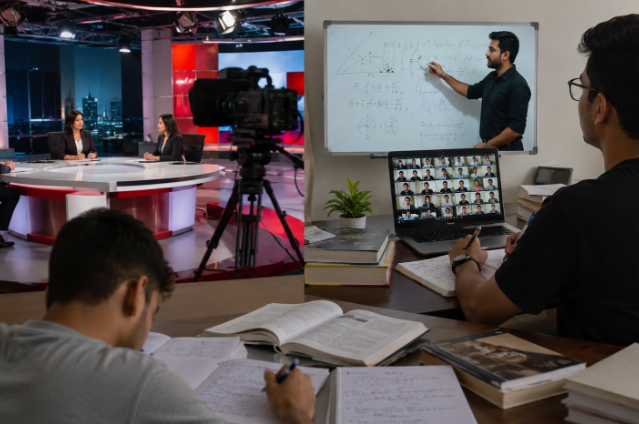
A remark made by veteran television journalist Anjana Om Kashyap recently ignited a heated debate across India's education and media landscape. The controversy emerged during a live debate in late May 2026, when Kashyap made comments that many online educators interpreted as dismissive toward YouTube-based teachers, calling them “do kaudi ke" (not worth two pennies), according to sources. Clips from the broadcast spread rapidly across social media platforms, drawing criticism from several well-known educators who have built large audiences through online teaching.
Abhinay Sharma (also known as Abhinay Sir), a prominent Indian mathematics educator and ed-tech entrepreneur and the founder of the YouTube channel ‘Abhinay Maths,’ responded to the statement by asking a simple but devastating question: ‘If YouTube teachers are worthless, who exactly has been preparing millions of students for JEE, NEET, SSC, and UPSC all these years?’ Another online educator, called Suman Mam (Ocean Gurukul), pointed out that she runs free marathon classes for students who can't afford coaching, and asked why a journalist in an air-conditioned studio was calling her a fraud instead of covering the real issues. Khan Sir, with his tens of millions of followers, delivered arguably the most cutting response: "Tu apna gyaan apne paas rakh."
The backlash was immediate because the comments arrived at a particularly sensitive moment. Students and educators across the country were already engaged in discussions surrounding examination-related controversies, including concerns raised about the NEET-UG 2026 examination process. Several YouTube educators had been actively covering these issues, discussing student grievances, examination transparency, and policy concerns through their channels.
Many people argued that the criticism overlooked the significant role digital learning platforms have played in India's education system over the last decade. During the COVID-19 pandemic, when schools, colleges, and coaching institutes were forced to shut down, online educators became a primary source of learning for millions of students. YouTube channels covering competitive examinations such as JEE, NEET, UPSC, SSC, and banking exams witnessed unprecedented growth as students searched for affordable and accessible alternatives to traditional coaching.
This accessibility has been particularly important for students living in smaller towns and rural regions. For decades, access to quality coaching was concentrated in educational hubs such as Kota, Delhi, Hyderabad, and Patna. Online education helped reduce some of those barriers by bringing experienced teachers directly to students' smartphones and laptops.
Several prominent educators publicly responded to the remarks. Many questioned whether online teaching was being unfairly dismissed despite its demonstrated impact on student success. Others pointed out that thousands of students from economically weaker backgrounds have benefited from free educational content that would otherwise have been inaccessible.
The controversy also highlighted a broader tension between traditional media and digital creators. Television news channels have historically served as gatekeepers of information and public discourse. However, platforms such as YouTube have allowed independent educators, commentators, and subject experts to build audiences that rival or even surpass those of mainstream media outlets.
This shift has transformed how knowledge is consumed. Students increasingly turn to online teachers not only for academic content but also for exam updates, career guidance, counselling, and mentorship. Many educators have developed highly engaged communities where students interact directly with instructors, ask questions, and receive personalised support. This level of accessibility is difficult to replicate through traditional broadcasting formats.
At the same time, critics of digital education argue that the online ecosystem is not without problems. The lack of standardised regulation means that educational quality can vary significantly between creators. Competition for views, subscribers, and monetisation can sometimes encourage sensationalism, exaggerated claims, or misleading marketing practices. Supporters of stricter oversight argue that educational influence should come with greater accountability.
Yet the same criticism has often been directed at television news. In recent years, mainstream media organisations have faced accusations of prioritising ratings, dramatic debates, and viral moments over substantive reporting. As a result, many observers viewed the controversy as reflecting a larger struggle between two industries that are increasingly competing for public trust and attention.
Ultimately, the debate extends beyond one anchor or a handful of educators. It reflects a transformation taking place across India. The authority once held exclusively by television studios, newspapers, and coaching institutes is now being shared with digital platforms and independent creators. Whether this change is viewed as disruptive or empowering depends largely on perspective.
What remains undeniable is the impact online educators have had on millions of students. From pandemic learning to competitive exam preparation, digital classrooms have become an integral part of India's educational ecosystem. The controversy, therefore, serves as a reminder that the conversation should not simply be about who holds credibility, but about how education can remain accessible, effective, and trustworthy in an increasingly digital world.
References: