
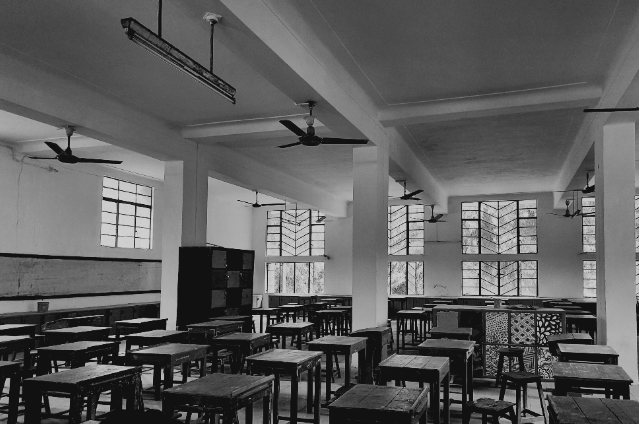
The death of a student studying in Class 3 sparked grief and outrage amongst the public about the responsiveness of schools to children when they are unwell. Protests by parents took place in front of the Maharishi Vidya Mandir school in Bansdroni, an area located in south Kolkata. On May 13, 2026, Ayush Kumar Nath, an eight-year-old student of the school, reported to his class teacher that he was feeling extremely sick, experiencing discomfort from the intense summer heat, and wanted to go home.
In response to this, the teacher asked him to head to the back of the class and sit with his head down on the desk, instead of sending him to the school’s medical room or contacting his parents. According to his family, Ayush remained in that condition for several hours as classes continued. His father later claimed that the corner where the child was seated did not have a functioning fan, despite Kolkata experiencing severe summer temperatures. By the time school ended around noon, Ayush's condition had reportedly worsened significantly.
The tragedy escalated when the young student attempted to leave school carrying his schoolbag. He collapsed while descending a staircase and struck his head, resulting in a severe head injury. He was rushed for medical treatment and admitted to SSKM Hospital, one of Kolkata's major government hospitals.
For the next eleven days, Ayush fought for his life while in a coma. Despite medical efforts, he succumbed to his injuries, devastating his family and triggering widespread public anger.
The incident quickly drew attention across West Bengal. Parents gathered outside the school demanding answers and accountability. Many questioned why a child who had repeatedly expressed discomfort was allegedly not provided immediate medical assistance or allowed to return home. Others raised concerns about whether schools are adequately prepared to handle student health emergencies, particularly during increasingly frequent heatwaves.
Maharishi Vidya Mandir is a CISCE-affiliated school and is located near the Bansdroni fire station. Ashish Kumar Nath, Ayush’s father, has alleged that Ayush died due to the negligence of the school authorities. He has filed a complaint with the police.
Reports indicate that three individuals, including the class teacher and the school principal, were detained for questioning as authorities sought to determine whether proper procedures were followed. The investigation remains ongoing, and officials have stated that all aspects of the incident will be examined before any conclusions are reached.
Beyond legal accountability, the tragedy has exposed broader concerns about the culture of discipline and authority that still exists in some educational institutions. Child welfare experts argue that when a student says they are sick, the response should prioritise health and safety over attendance, classroom discipline, or routine. Young children often struggle to fully explain their symptoms, making it especially important for teachers and school staff to take complaints seriously.
The case comes at a time when India is experiencing some of its hottest summers on record. According to the India Meteorological Department, several parts of eastern India have witnessed above-normal temperatures and prolonged heatwave conditions in recent years. Children are particularly vulnerable to heat-related illnesses because their bodies regulate temperature differently from adults. Medical experts warn that symptoms such as dizziness, fatigue, headaches, nausea, and weakness should never be ignored, especially during periods of extreme heat.
For many, the story of Ayush Nath is heartbreaking precisely because it appears preventable. An eight-year-old child reportedly asked for help. Whether through a phone call to his parents, a visit to the medical room, or a simple decision to send him home, many believe there were multiple opportunities for intervention before the situation became fatal.
As investigations continue, Ayush's death has prompted conversations about school responsibility, emergency preparedness, heatwave safety, and the duty of care educational institutions owe to children. For one family, however, these discussions come at an immeasurable cost; the loss of a young boy whose life ended far too soon after what should have been an ordinary day at school.
References:
- https://mausam.imd.gov.in
- https://wbhealth.gov.in
- News reports from The Telegraph India, The Times of India, and The Indian Express covering the Ayush Nath case and subsequent police investigation.