
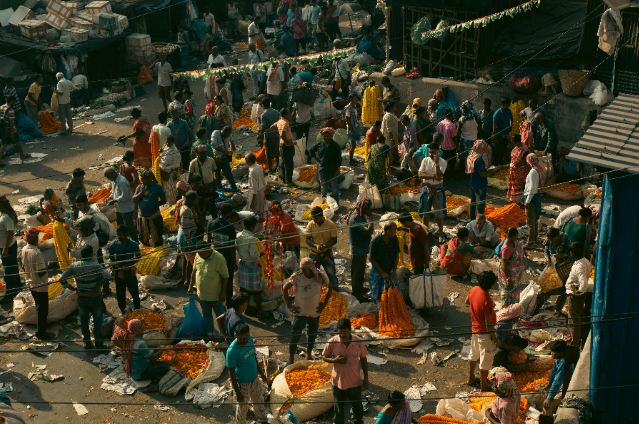
If you come across an international vlog on India, chances are you will see two extremes: the breathtaking, vibrant beauty of its heritage, or the gritty reality of its streets. For decades, India has wrestled with a stubborn global reputation for being unclean. International indices like the Environmental Performance Index (EPI) often place India near the bottom of their rankings.
However, rankings rarely tell the whole story. To truly understand India’s cleanliness challenge, we have to look past the surface stereotypes. The problem is rooted in much more complex factors aside from struggles with sanitation and environmental management. Population pressure, poverty, urbanisation, infrastructure gaps, and governance challenges are some of the causes that have developed over decades.
One of the biggest contributors to India’s poor environmental condition is air pollution. Cities like Delhi, Kanpur, and Patna consistently rank among the most polluted in the world due to vehicle emissions, crop burning, industrial activity, and construction dust. Initiatives have been taken to mitigate the prolonged problem, such as developing more parks or encouraging the use of electric vehicles. However, these have not been effective for long. In 2023, a study published in The Lancet Planetary Health estimated that air pollution contributes to over a million premature deaths annually in India. For many urban residents, smog has become a normal part of daily life, affecting respiratory health, productivity, and overall quality of living.
Another major issue is waste management. India generates more than 1.5 lakh tonnes of solid waste every day, according to the Central Pollution Control Board (CPCB). However, waste collection, segregation, and recycling infrastructure remain inadequate in many cities. Landfills like Delhi’s Ghazipur landfill have become prominent examples of the same. Often called the “garbage mountain,” the landfill rises over 60 metres high and has witnessed fires, methane leaks, and even deadly collapses in the past. Similar landfill problems exist in cities like Mumbai, Chennai, and Kolkata, where rapid urban expansion has outpaced waste disposal systems.
In addition to this, public littering, even today, remains a major but overlooked problem in the country. Public areas such as streets, parks, railway stations, and even beaches have witnessed large amounts of plastic waste, spit stains, food waste, and other discarded garbage. It has been argued that the problem here does not lie only in the infrastructure, but also in the civic behaviour of the people. In many areas, public bins are either unavailable or poorly maintained, while enforcement against littering remains inconsistent. At the same time, civic awareness regarding public cleanliness is still developing. Environmental activists often point out that many Indians treat cleanliness as a private responsibility limited to homes, while public spaces are viewed as someone else’s responsibility.
Aside from land, water bodies have also been affected due to pollution and environmental negligence. The Ganges and Yamuna rivers remain the most polluted rivers in the world. Untreated sewage, industrial waste, chemical discharge, plastic dumping and religious offerings add to the pollution of rivers. The Yamuna River, for instance, is infamous for the toxic foam that floats across the surface during certain times of the year due to high phosphate and sewage levels. According to government data, almost 70% of India’s surface water is contaminated to some degree, making water pollution an environmental and public health concern. Open defecation has also contributed to the uncleanliness of the country, especially in rural areas.
Open defecation has also contributed to the uncleanliness of the country, especially in rural areas. For decades, millions did not have access to household toilets, forcing communities to use open fields or public spaces. However, this is also one area where India has made notable progress. The Swachh Bharat Mission was launched by the Indian government in 2014 to improve sanitation and eliminate open defecation. According to official government statistics, over 100 million toilets were built under the campaign, significantly improving sanitation access across rural India. While critics argue that behavioural change and toilet maintenance remain ongoing challenges, the mission still marked one of the largest sanitation drives in the world.
The cleanliness crisis in India cannot be separated from the country’s enormous population and economic inequality. India is home to more than 1.4 billion people, with millions still living in informal settlements or areas with limited access to sanitation infrastructure. Rapid and often unplanned urbanisation has placed massive pressure on roads, sewage systems, housing, and waste management.
At the same time, the global narrative around India’s cleanliness is not always entirely fair. Many developed nations also struggle with pollution, waste generation, and environmental degradation, but these issues often receive less international attention. Countries in the Global North generate enormous amounts of plastic waste and carbon emissions per capita, yet “dirty India” remains a dominant stereotype in international media and tourism content. Selective imagery showing slums, garbage, or crowded streets frequently overshadows India’s technological growth, biodiversity, conservation efforts, and improvement of sanitation systems.
There are also examples of positive change within India itself. Cities like Indore have consistently ranked as India’s cleanest cities under the Swachh Survekshan survey due to effective waste segregation, public participation, and strict enforcement. Indore transformed its waste management system through door-to-door collection, composting initiatives, and awareness campaigns, proving that large-scale cleanliness improvements are possible with proper administration and civic cooperation.
In conclusion, India’s cleanliness problem is real, but it is also layered and deeply rooted in history, governance, education, and socio-economic realities. Reducing it to a stereotype ignores both the scale of the challenge and the progress that has already been made.
Cleanliness in India is connected to urban planning, poverty reduction, environmental policy, public behaviour, and long-term investment in infrastructure. The conversation, therefore, requires honesty, accountability, and context rather than simplistic judgments.
References
- https://swachhbharatmission.ddws.gov.in
- https://www.thelancet.com
- https://swachhsurvekshan2023.org
- https://swachhsurvekshan2023.org
- https://www.iqair.com