
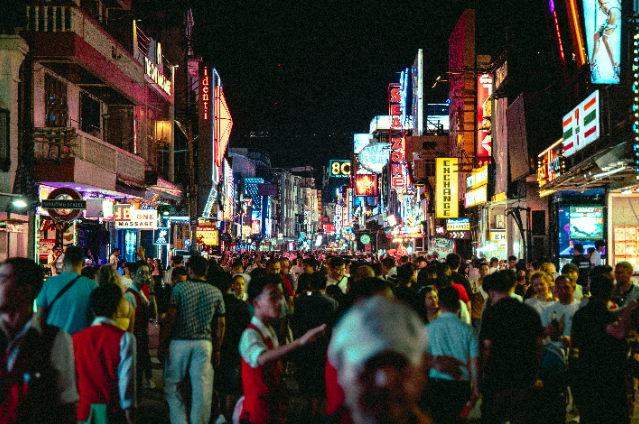
Thailand is one of the most popular tourist destinations in the world. It is globally famous for its tropical islands, Buddhist temples, cuisine, and vibrant festivals. Apart from its culture, the country is also associated with its nightlife and sex tourism, especially in cities like Bangkok, Pattaya, and Phuket. This industry is far more complex than the stereotypes suggest.
According to the Tourism Authority of Thailand, the country welcomes millions of tourists every year. Despite being technically illegal, sex work openly thrives and exists as night dawns. However, due to the complexity of the law, the industry remains in a grey area. This issue is tied to factors such as economics, inequality, migration, and globalisation. Estimates of sex workers vary widely, ranging from 200,000 to over 1 million because of legal ambiguity and informal operations.
Sex work often pays significantly more than traditional jobs. It has been observed that a factory worker or hotel maid might earn 300–500 baht/day, while sex work can earn multiples of that in fewer hours. Additionally, rural poverty also pushes people to engage in sex work. A lot of workers hail from northern and northeastern regions such as Isaan and Chiang Rai, where agricultural income is unstable and limited. Most workers engage with the sex industry as a temporary means to gain sufficient amounts of money and send it back to their families. For example, a woman may migrate from Isaan to Pattaya primarily out of severe economic necessity. This may include repaying debts, funding a sibling’s education, or simply financially support impoverished parents.
Thailand’s modern sex industry is closely tied to the country’s tourism economy and nightlife culture. Areas such as Bangkok, Pattaya, and Phuket are internationally known for their entertainment districts filled with bars, massage parlours, go-go clubs, karaoke lounges, escort services, and nightlife venues that cater heavily to tourists. So, what made sex work popular in Thailand? Historically, sex work has been traced back to the Vietnam War during the 1960s-70s, when the country became a ‘rest and recreation’ centre for the US soldiers stationed in Southeast Asia. This further accelerated nightlife economies and tourism in Bangkok and Pattaya, thus transforming it into a long term industry. However, not everyone working within nightlife economies works in the sex industry. Many individuals work as bartenders, dancers, waitresses, singers, receptionists, or hospitality staff, though the boundaries between tourism, companionship, and transactional relationships often overlap informally.
Despite how visible the industry is, sex work technically remains illegal under Thailand’s Prevention and Suppression of Prostitution Act of 1996. In practice, however, enforcement is highly inconsistent. This legal grey zone creates serious risks for workers. Since sex work is criminalized but tolerated, many workers lack formal labor protections, healthcare access,
workplace rights, or legal support. Human rights organisations such as Human Rights Watch and Amnesty International have argued that criminalisation often increases vulnerability rather than reducing exploitation. Workers may hesitate to report violence, abuse, or trafficking due to fear of arrest, social stigma, or police harassment. Critics argue that the current system benefits businesses and tourism while leaving workers themselves without meaningful protection or legal security.
Another important aspect of Thailand’s sex industry is its gender and LGBTQ+ dynamics. While women make up a large portion of workers, the industry also includes migrant labourers, transgender women, and gay male workers. Thailand is globally recognised for the visibility of kathoey, a term commonly used for transgender women or feminine-presenting individuals, particularly within entertainment and nightlife spaces. However, activists warn against romanticising or exoticising this visibility. Many transgender individuals in Thailand continue to face discrimination in mainstream employment, education, and hiring practices, despite the country’s relatively visible LGBTQ+ culture. As a result, the entertainment and nightlife industries may become one of the few accessible ways to earn a stable income. Reports by the United Nations Development Programme (UNDP) have highlighted how workplace discrimination pushes many LGBTQ+ individuals toward informal sectors where income opportunities are higher, but protections remain weaker.
The debate surrounding sex work in Thailand is also deeply connected to the complicated idea of “choice.” Discussions around the industry are often divided between viewing workers as empowered individuals exercising agency or as victims of exploitation. In reality, the truth usually exists somewhere in between. Some people enter sex work voluntarily because it offers significantly higher earnings than factory jobs, domestic labour, or agricultural work. Others are driven by poverty, debt, family pressure, lack of education, coercion, or trafficking networks. Some workers describe the industry as temporary survival work intended to pay off debts, build a house, fund education, or support ageing parents. Researchers and anti-trafficking organisations, therefore, emphasise that “choice” cannot be understood in purely black-and-white terms when economic inequality heavily shapes available options.
Thai society itself holds deeply contradictory attitudes toward sex work. In some communities where the industry has existed for generations, stigma may be lower because the economic benefits are widely understood. Nationally, however, social stigma still exists strongly, especially toward women associated with the industry. Thailand’s social attitudes toward transactional relationships are also historically complex. Concepts such as mia noi, referring historically to “minor wives” or secondary companions, reflect older traditions where financial support and romantic relationships often overlapped socially. The contradiction is striking: the industry contributes significantly to tourism and local economies, yet many workers continue to experience judgment, invisibility, and limited social protection.
Ultimately, Thailand’s sex industry cannot be explained through morality alone. Its growth is tied to economic inequality, tourism dependency, labour gaps, migration, gender discrimination, and survival economics. Simplifying the issue into stereotypes about “immorality” ignores the deeper structural realities pushing people toward the industry in the first place. Real reform would require far more than policing nightlife districts. It would involve improving wages, expanding rural development, increasing access to education, strengthening labour protections, reducing discrimination, reforming legal systems, and enforcing anti-trafficking laws more effectively. As many researchers point out, the persistence of Thailand’s sex industry says less about morality and more about the economic systems people are forced to survive within.
References:
- https://www.hrw.org
- https://www.tatnews.org
- https://www.ilo.org
- https://www.amnesty.org
- https://www.undp.org