
In the vast landscape of Indian journalism, where news cycles are often dominated by prime-time debates, the essence of investigative reporting frequently remains in the shadows. However, the courageous intervention of Mahima Singh, a dedicated reporter for Dainik Bhaskar, one of India’s largest Hindi newspapers, has recently illuminated a dark corner of rural society that many chose to ignore. By infiltrating the dangerous world of illegal "orchestra groups" in Bihar, Singh demonstrated an immense act of bravery to expose the group. Her investigation was not based on interviews conducted from the safety of a newsroom; it was a five-day descent into a criminal underworld where women and underage girls were being treated as commodities, sexually exploited, and abused behind the curtain of entertainment.
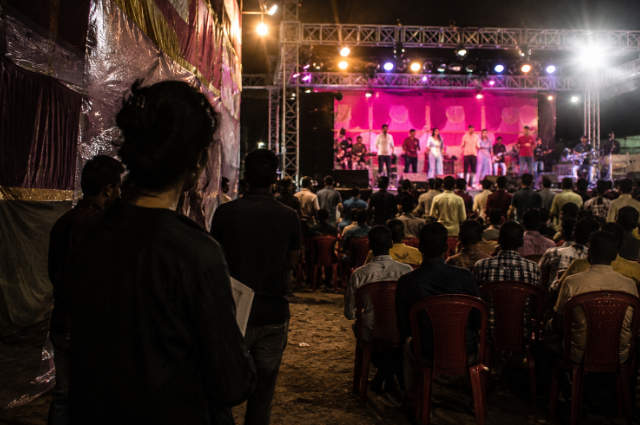
The concept of “orchestra groups” spread across regions like Siwan and Saran. While functioning as trafficking groups, they operated under the guise of providing musical performances for social celebrations. The recruitment process began with the targeting of economically vulnerable families in states across India, luring girls, especially minors, with promises of legitimate jobs. After being recruited, their identification documents were confiscated, and they were forced into a cycle of performance that coerced them into dancing and sexual exploitation. Mahima Singh’s reporting revealed that these women were often subjected to horrific living conditions, physical abuse, and a total lack of agency, held captive by a network of "managers" who operated with near-total local impunity.
In order to expose this network, Singh undertook an undercover mission that required her to adapt her identity and live among the traffickers and their victims for nearly a week. During her five days undercover, she was sold 3 times to different people and faced sexual harassment and abuse. She documented the structure of these troupes, and observed that the orchestra groups would move the girls between different districts to avoid local suspicion. Minor girls aged between 13 and 15 were given hormonal injections in order to make them appear mature and hide their age. Singh further discovered that they were forcefully impregnated and the newborn babies were sold for thousands and lakhs of rupees. The human trafficking network also consisted of brokers, doctors, and nursing homes. Her reporting highlighted a specific case study of the Siwan district, where the “orchestra” culture had become deeply entrenched in the local economy.
Mahima Singh's ability to record the dialogue of the traffickers and the testimonies of the trapped girls provided enough evidence required to take action by the local administration and the police. In the districts of Siwan and Saran, the Bihar police rescued at least 21 minor girls in a single sweep. These rescues were accompanied by the arrest of several key figures in the trafficking hierarchy, individuals who had previously operated without fear of consequence. The impact of Singh’s work reached the highest levels of the regional judiciary, leading the Patna High Court to push for mandatory registration and strict regulatory frameworks for all orchestra troupes.
According to India’s National Crime Records Bureau (NCRB), thousands of trafficking-related cases are registered every year across the country, with women and minors forming the overwhelming majority of victims. However, activists and researchers consistently argue that the actual numbers are far higher due to underreporting, social stigma, and local complicity. Rural entertainment circuits, including unauthorised dance troupes and travelling orchestra groups, have repeatedly appeared in conversations around exploitation, yet few investigations have penetrated these systems from the inside the way Singh’s reporting did.
The public response to the investigation reflected this significance. Across social media platforms, journalism forums, and independent commentators, Mahima Singh was widely praised for her courage. Many referred to her as a symbol of fearless reporting in an industry increasingly criticised for sensationalism and studio debates detached from ground realities. The timing of the recognition, around World Press Freedom Day in 2026, further amplified the symbolic importance of her work. At a time when conversations around media credibility dominate public discourse, her investigation reminded audiences that journalism still has the power to protect vulnerable communities and initiate tangible change.
Ultimately, the story of Mahima Singh is a testament to the power of a single individual to disrupt centuries-old patterns of exploitation. Through her courage, she transformed a local investigative piece into a national movement for the protection of women's rights in rural India. The legislative changes and the ongoing police vigilance in Bihar are the direct results of her five days of peril. As the legal system continues to refine the registration processes for entertainment groups, the legacy of her undercover journey remains a benchmark for what journalism can achieve when it prioritises the lives of the marginalised over the comfort of the status quo. Mahima Singh did more than write a story. She ensured that dozens of girls, who may otherwise have remained invisible forever, were finally seen.
References