
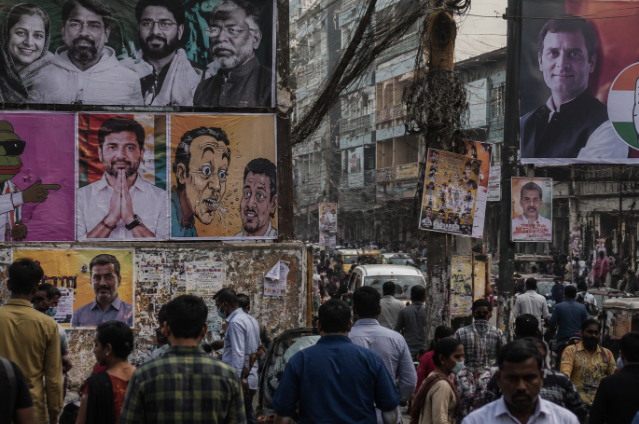
India has had its fair share of surprises when it comes to politics. People elect actors as their chief minister, independent candidates win against well established political parties, and so forth. Nowadays, there emerged another interesting political phenomenon, meme-based movements. Amid such absurd-sounding titles as "Cockroach Janta Party", one wonders whether this political novelty can make it in India's election reality.
Initially, this notion seems unrealistic as Indian elections are costly, tough, and emotional. They also heavily depend on caste and religion factors, as well as other issues important at the local level. Memes can become viral for only several days, but political movements need not only memes but also organising people, gaining their trust, having strong leaders, and so on. Nevertheless, the power of meme culture is evident since it affects people's opinions in multiple countries.
Today, social media largely shapes the opinions and arguments of the young generation.
The emergence of meme parties in India can be viewed as a reaction to politics that do not meet citizens' needs and expectations. Thus, one must investigate further the problem of meme culture in modern Indian society.
Why Meme Politics Is Growing
One of the fastest means of expressing political views in recent years has been memes. One can get to millions of people within hours through just one image or joke. Youngsters consume most of their political information via Instagram reels, Twitter, YouTube shorts, and memes in WhatsApp groups. While the conventional political addresses are lengthy and serious, memes are quick, emotional, and straightforward. They simplify complex political ideologies by turning them into jokes and criticisms that make the information easier to comprehend.
Internet use in India has been increasing exponentially. Cheap smartphones and affordable data rates allowed many more to get access to the internet. Political discussion is no longer limited to news shows or newspapers; today, students, professionals, artists, influencers, and all kinds of people discuss politics online. Such an atmosphere allows the creation of movements built around memes. There is a significant number of young citizens who consider themselves dissatisfied with existing political parties. They are tired of corruption scandals, broken promises, and harsh politicking. A meme party is perceived as new, witty, and alternative; even if it lacks some popularity, people find it appealing as a mockery of conventional politics.
"Cockroach Janta Party" perfectly matches this type of political discussion. Its name is deliberately comical, but the symbol of the cockroach has great political meaning as well; a cockroach is famous for its endurance. It is easy to interpret the symbolism as a metaphor for regular citizens surviving inflation, unemployment, or political turmoil.
India’s Electoral System Is Extremely Tough
Becoming viral online and getting elected are two entirely different concepts. India is home to one of the most complicated and largest democracies in the world. A political party can never exist through memes alone. An election requires financial resources, manpower, networking, booth management, and voter goodwill.
A lot of Indian voters actually care about pragmatic matters. They want roads, employment, power supply, education, and safety. This is particularly true for voters from rural areas. Matters that come up in social media discussions in urban centres do not necessarily represent the concerns of all Indians. While a meme party might attract attention through the internet, attention does not necessarily mean votes. The internet popularity of a party can quickly evaporate. For political success, persistence for decades is required.
The second problem relates to credibility. Although people might enjoy political satire, during elections, they might turn back to traditional political parties. Once in the voting booth, they often vote based on the opinion of their community members, leaders, parties, and ideologies.
Election campaigns in India also entail financial difficulties. In order to run campaigns, big political parties allocate large sums of money toward advertisements, rallies, transport, and even internet marketing. A meme party would have difficulties competing financially with big players.
Finally, certain legal and organisational issues must be considered. In order to run in elections, parties must comply with regulations set by the Election Commission and follow all other formalities. This implies that a meme party would have to turn into a disciplined party, which is far more difficult than one could think.
Young Voters Could Still Change the Game
Despite all the difficulties, ignoring the power of meme politics altogether would be foolish.
India has one of the largest youth populations in the world. Each election period sees millions of new first-time voters join the political scene. Youth voters spend much of their time online and are greatly influenced by memes there. Younger citizens often become politically jaded. The same speeches come up each time an election season rolls around. Some of them believe that mainstream political parties fail to grasp current issues such as digital work opportunities, mental strain, high living expenses, or even online freedoms.
A meme-based political party may appeal more to these citizens due to its apparent relatability and honesty.
On an international level, political campaigning through the Internet has been known to make some impact. Political parties in different nations, such as Iceland and Italy, have been successful in winning some degree of popularity by portraying themselves as alternative options to the establishment.
In India, small political parties have managed to surprise other established parties at times. With the help of social networking sites, any political party does not have to solely rely on TV channels for exposure. By using humour while also addressing some serious matters in society, the Cockroach Janta Party may draw more attention than memes. It may address issues such as education loans, youth unemployment, corruption, Internet censorship, or lack of affordable housing for young adults.
The crucial factor is whether or not the Cockroach Janta Party manages to remain a parody or becomes an actual protest group.
The Danger of Turning Politics Into Entertainment
But there are dangers of meme politics, too.
The basis of democracy is discussion based on information and leadership. If everything becomes a matter of memes and funny images, there may not be enough time to discuss all issues in detail. There are complex situations that cannot be discussed only with memes. It is said that social networks promote emotional discussion rather than discussion. Political information may be spread without even checking the truth about the issue. It can be hard to control meme politics.
Also, a meme party can have problems with its seriousness inside. All people who came for fun may not stand such hard political discussions when they need to make decisions. Attention span is another concern. The internet world moves fast. Whatever is trendy now could be gone next month. It needs longevity for political parties.
Furthermore, Indian politics is very polarised. Meme parties can be trolled, have misinformation spread about them, or even face attacks from other groups. Online popularity can easily turn into online hate.
For any meme party to thrive, they need to step out of the joke phase at some point. There will be policies and real leaders.
Could the Cockroach Janta Party Actually Win?
It would be very hard for a meme-based political movement to win any national election.
Nevertheless, winning is not necessary for success; such a movement may affect the discourse nonetheless. It can put pressure on established parties to interact with young people or discuss neglected problems.
The Cockroach Janta Party may persist as an activist platform instead of a political party. It may gather independent candidates, activists, content producers, and discontented youth. Probably, its greatest advantage will lie in effective communication. Memes get popular quickly because they feel real and personal. While established political rhetoric often comes off as artificial, memes seem organic.
However, surviving in the Indian electoral environment will demand significant adjustments. The party would need:
- Strong local leadership
- Clear political goals
- Real policy ideas
- Financial support
- Grassroots workers
- Consistent public engagement
- Serious organisational structure
It would just be a trend on the Internet if these components were not included.
In this regard, the symbolic use of a cockroach seems to portray a sentiment that is common amongst many regular citizens, who feel marginalised within the power structures of the system but continue to survive in spite of everything. Still, symbolism is not enough for proper governance.
The concept of the cockroach Janta Party might appear amusing at first glance. However, this concept highlights several significant developments that are taking place within today's politics.
Nowadays, social media, memes, and internet culture play an increasingly large role in shaping public opinion. The youth are particularly responsive to political jokes since they have strong emotional connotations. Nonetheless, India's electoral system can be described as rather complicated. Success in elections presupposes much more than simply attracting attention in the Internet space.
The meme party can draw considerable attention quickly, perhaps even become influential enough to affect political discussions and language online. However, to survive in the realm of serious electoral politics, it would have to rise above mere comedy. The potential of Indian meme politics in the future would be determined by whether such movements could translate their internet popularity into actual political legitimacy. If not, they will stay just a brief diversion, but if yes, then these movements might emerge as an entirely new type of political expression for a generation grown up with social media.
At the moment, the Cockroach Janta Party stands in an ambiguous space between irony and promise, serving as a rather bizarre yet telling symbol of modern politics in the internet age.
References
- Election Commission of India. “Recognition of Political Parties.” Available at: https://eci.gov.in
- Ministry of Information and Broadcasting, Government of India. Reports on digital media and internet growth in India.
- Pew Research Centre. “Social Media and Political Engagement in Emerging Democracies.” Available at: https://www.pewresearch.org
- Statista. Data related to internet users and social media growth in India. Available at: https://www.statista.com
- The Hindu. Various articles on youth voting trends and digital political campaigns in India. Available at: https://www.thehindu.com
- Indian Express. Reports covering social media influence in Indian elections. Available at: https://indianexpress.com
- BBC News. International coverage on meme politics and internet-driven political movements. Available at: https://www.bbc.com/news
- Reuters. Reports on digital campaigning and changing political communication trends. Available at: https://www.reuters.com
- Oxford Internet Institute. Research papers on internet culture, memes, and political communication.
- Journal of Political Marketing. Academic discussions on political branding, satire, and youth engagement in modern democracies.