
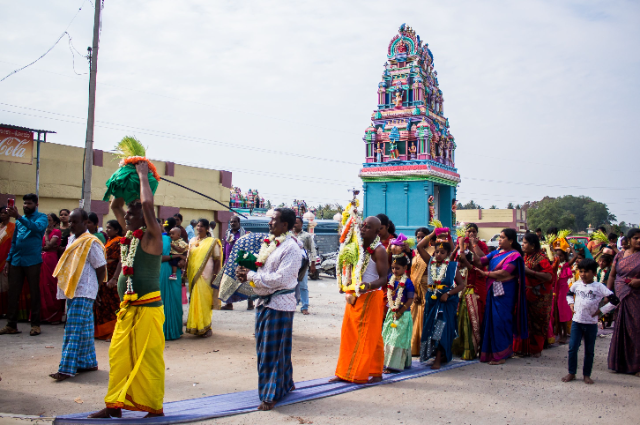
VIP darshan at numerous popular temples in India was long synonymous with money. While wealthy individuals could visit these places of worship for a fee, others had to spend hours waiting in long lines to gain access. Yet, the Omkareshwar Jyotirlinga Temple in Madhya Pradesh came up with an idea that broke all the stereotypes in 2026. Rather than pay extra for a fast track to a temple, healthy people were offered the option to make a donation of blood and get VIP darshan for free.
This project turned into a unique way of rewarding the social work of people and solved the important issue of blood shortage in hospitals.
When Faith Meets Public Service
India is faced with shortage of blood banks throughout the year, particularly during the summer season and during festivals and emergencies.
The local administration of Khandwa district realised that there were many pilgrims coming to Omkareshwar Jyotirlinga every day. Instead of considering this crowd simply as a religious crowd, they utilised this opportunity to get voluntary donations of blood.
The answer was very simple; anyone medically fit who donated blood at the authorised camp located near the temple got a certificate giving him the privilege of darshan along with his family. Instead of asking for money from people, the temple rewarded a life-saving deed.
Why the Idea Worked So Well
Blood donation drives typically rely on advertising, raising awareness, or calls for urgency. Even though such initiatives have their successes, there is no consistency.
In the case of the Omkareshwar project, the incentive was something that the pilgrims appreciated. Queues during festivals would take up to three or four hours. The act of giving blood, which normally would not exceed 20 minutes, would become both useful and save hours of waiting.
Unlike financial rewards, the incentive here did not involve money. It included convenience and a sense of doing good at the same time.
From Blood Shortage to Blood Surplus
The most interesting result of the program was its effect on healthcare locally.
There used to be regular shortages in the blood bank in the Khandwa district before the launch of the campaign. The problem got even worse because of the opening of a new medical college in the area.
Soon after the initiation of the campaign, there were huge numbers of donors. Sources say that the district gathered around 1,200 units of blood during the initial months of the program, and then the figures went up substantially during Adhik Maas.
Ultimately, the district went from shortage to surplus, thus being able to help other districts.
A Carefully Managed Process
The whole purpose of this program was to make sure that safety took the foremost priority.
It made sure that only those people who were fit according to the medical criteria could come forward to donate their blood. Medical personnel screened the medical condition of the person before accepting their blood. Refreshments, certificates, pictures of Lord Omkareshwar, and Prasad were provided to the donors after they donated their blood.
Now they would be able to have VIP darshan without buying any ticket.
More Than a Religious Incentive
Though initiated from the premises of a temple, the impact goes beyond any religious considerations.
For a long time, behavioural scientists have been emphasising the need to use positive reinforcement while encouraging any desirable actions among people. In lieu of moral encouragement alone, the Omkareshwar program rewarded positive community service with tangible benefits.
It is through this example that one learns how public organisations can innovatively deal with social problems. Instead of investing heavily in publicity efforts, the administrators used the existing practice of pilgrim services to ensure ongoing public engagement.
The idea can possibly be extended in the form of incentive-based public service initiatives for various other social goals such as ecological preservation, community work or organ donation campaigns.
Public Appreciation and National Attention
The project soon became a big story in the nation's newspapers, with many people seeing it as a perfect case of good governance for the benefit of both society and devotees.
Users of social media called it a "win-win" situation. The hospitals got much-needed blood supply, while pilgrims were happy to get something useful without paying extra money.
Some observers suggested that such schemes might also be thought of in other places of mass pilgrimage where hospitals were nearby.
Ethical Questions and Criticism
Despite its widespread use, there have been many issues regarding the practice. There is an ethical issue in which some ethicists believe that blood donation should only be voluntary and never become a kind of transaction. When people begin donating in exchange for a prize, it can happen that the idea of voluntary donations could start diminishing.
There is also an issue regarding fairness because elderly devotees, anaemic, chronically ill, skinny, or any other kind of patient cannot give their blood. They would still be deprived of the prize despite being sincere and faithful in their religion.
Thus, all the professionals in the medical field make sure that nobody is forced into giving their blood. The person should always be fit and healthy to give his blood regardless of his religion.
Could Other Temples Follow the Same Model?
The success of this initiative at Omkareshwar has led to debates regarding its implementation on a larger scale.
However, for such an endeavour to be carried out successfully, careful consideration will have to be taken into account. For instance, facilities that are necessary in order for blood donation to take place and other important aspects such as availability of medical personnel and proper storage of donated blood need to be in place. Without all of these essential elements, incentives alone would not bring success.
Moreover, each temple is visited by a different number of visitors and has different administrative processes in place.
Still, this particular experience can serve as an encouragement to others.
A New Meaning of VIP
VIP darshan, by tradition, has frequently been associated with money and power. But through the Omkareshwar scheme, it was subtly changed in its meaning.
It was an act that did not require any money but rather saved somebody else’s life. This way, it focused more on contribution than privilege.
Whether there will be more such projects in India or not, this project has managed to prove that religious centres can serve as strong allies in solving practical social problems. Through the combination of devotion and compassion, it managed to create a good example of how spiritual satisfaction and civic activity can go hand-in-hand.
What we have as a result is not only an ingenious way of managing queues at temples but also a great example of how carefully elaborated policies can turn a regular pilgrimage into an instrument of benefit to the community. In the country where blood shortages are frequent, it became clear that sometimes the best solution is the one that makes people share rather than pay.
References:
- Times of India. Omkareshwar pilgrims get VIP darshan for donating blood.
- Times of India. Donate blood, skip queues: Omkareshwar temple VIP entry scheme creates surplus.
- The Economic Times. Just donate blood and get VIP entry into a famous temple. The result is a blood bank surplus at local hospitals.
- Official Shri Omkareshwar Temple Website. Latest News– Blood Donation and VIP Darshan Initiative.
- Pune Pulse. Can Devotees Get 'VIP Darshan' at Omkareshwar Temple by Donating Blood?