
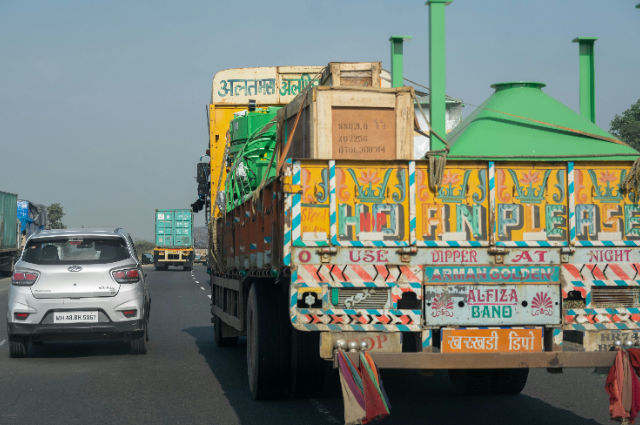
For generations, road trips in India have had a familiar sight on the backs of trucks: "Horn OK Please." Brightly painted with lots of decorations, this sign stands out in Indian road culture. But why do truck backs say "OK"? And what makes honking so important?
This sign first appeared in the 1960s when truck drivers asked others to honk to warn of stationary trucks. "OK" means it's fine to honk, but how did it become so well-known? It spread because it's catchy and useful, now recognised worldwide as a fun bit of Indian driving tradition.
A Message Born Out of Necessity
To get the gist of this, you need to know what Indian roads were like a few decades back. Before modern highways popped up, roads were generally narrow, jam packed, and not well maintained.
To top it off, big trucks carrying way too much stuff would block their drivers' views. What’s more, lots of these older trucks had dud side mirrors, making it super tough for drivers to see if another car was trying to overtake them.
So, sound came in handy. Cars that wanted to pass would honk to say, "I'm here!" The truck driver would hear this and know someone wished to overtake. This is why "Horn Please" wasn't about making needless noise; it was a key safety tip. Basically, it told drivers to beep if they planned to go around the truck.
This basic system saved lives for years on roads with terrible visibility. And guess what? Lots of truckers still think honking is crucial for communicating while driving on those small roads or steep mountain paths.
The Most Confusing Part: What Does “OK” Mean?
"Horn Please" is pretty easy to understand, but the baffling "OK" in there has confused lots of people for years. Travellers, historians, and transport buffs all scratch their heads over it. There's no one agreed-upon explanation for it, but a few ideas have popped up trying to crack the code on why those specific letters are used.
In truth, the ambiguity only makes the sign more interesting. It's unlike other road signs with their clear-cut official stories. "Horn OK Please" stayed around partially because we aren't sure how it all began.
The Overtaking Signal Theory
The most talked-about explanation for "OK" ties to an old overtaking signal used on Indian roads. This story goes that trucks showed "Horn" on one side and "Please" on the other, with "OK" right in the middle. Some trucks even had a tiny light next to "OK." So when a car honked, the truck driver would turn on the light if the road was clear, letting the car know it was safe to pass.
While there isn't much proof supporting this, lots of retired drivers and folks who've traveled those roads remember similar systems from back in the day. In super narrow roads where passing was dangerous, this kind of sign would make things safer. Even if this wasn't how "OK" started, the tale is still popular since it fits perfectly with older Indian highways.
The World War II Kerosene Theory
During World War II, fuel shortages were a huge issue worldwide. In India, a common theory suggests that transport vehicles sometimes used kerosene or kerosene mixed with diesel due to lack of proper fuel. These trucks supposedly displayed “On Kerosene” to warn people. The theory says this was then shortened to "OK," and combined with instructions to honk before overtaking, giving us "Horn OK Please."
It's a neat story, and people have been sharing it through newspapers, blogs, and social media for years. Still, history experts say there’s not enough proof that "OK" actually meant "On Kerosene." So, while it's a fun idea, it hasn't been confirmed as a real historical fact. But hey, that doesn't stop it from being a popular tale in talks about the slogan. People just love a good origin story.
The Tata Soap Advertisement Story
The most unusual reason has to do with marketing rather than transport. Here’s the deal: The Tata Group made a detergent called “OK” via their company, TOMCO. Now, since Tata was a big player in truck manufacturing too, some folks think they turned their trucks into ads for the soap.
By placing “OK” between “Horn” and “Please,” drivers could warn others while promoting the brand. As these trucks rolled around towns and rural areas, tons of people saw the sign. Even when OK detergent became old news, folks kept the “OK” up, making it last in truck decor.
This idea's tough to prove totally, just like the kero story. Still, people often point to this tale because back then, businesses were super inventive with how they did promotions.
More Than a Road Sign
No matter where "Horn OK Please" came from, it went way past its initial use. By the late 20th century, it was embedded in India’s visual identity. Trucks weren’t just for hauling stuff anymore; they were rolling works of art covered in vibrant paintings, local designs, religious quotes, and funny jokes.
Inside this lively scene, “Horn OK Please” stood out. Drivers from all over—Punjab, Maharashtra, Tamil Nadu, and West Bengal—knew the phrase right away. It was like a universal language.
Before long, the saying became iconic in a bigger way. People found it in books, movies, art shows, and in talks about Indian pop culture. An instruction turned into a cultural icon that showed the country’s energy, diversity, and creativity on the roads.
Why the Phrase Started Disappearing
As India's infrastructure got better, the original meaning of the "Horn OK Please" slogan started fading. Now, modern trucks have better mirrors, advanced visibility systems, and way more safety features. Plus, highways are wider, smoother, and often feature multiple lanes across the country. So nowadays, drivers depend on things like indicator lights and traffic rules rather than constantly honking.
On the other hand, worries about noise pollution grew pretty significant. In 2015, Maharashtra banned the "Horn OK Please" message on commercial vehicles. The officials said it pushed unnecessary horn blasts which raised noise levels too much, especially close to places like hospitals and schools. The folks in transport admitted the slogan was from a time when roads were narrower and required such direct communication for safety.
Though the ban was just for Maharashtra, it showed a bigger change in how India views road safety and driver communication in today’s world.
A Mystery That Refuses to Die
"Horn OK Please" is super intriguing because no one can agree on its actual origin. Did it start as a way for drivers to ask to overtake? Was it meant as a warning during wartime? Maybe it came from a detergent ad? The truth is, we may never know for sure about its true roots.
This mystery, though, has made the phrase pretty iconic. What's awesome about it is that people aren't even bothered by not having a solid explanation – it's the mystery itself that draws folks in.
Nowadays, while India's roads keep getting more modern, "Horn OK Please" still brings up feelings of old-time journeys. Back then, driving involved lots of human interaction and politeness, rather than relying too much on tech.
To many Indians, the saying means way more than just words. It's a link to transport history and unique truck art traditions. And the mystery stays alive each time someone sees it on trucks, even if no one remembers why it began in the first place.
References
- Wikipedia – Horn OK Please
- Atlas Obscura – The Origins of Horn OK Please
- Times of India – History and theories behind Horn OK Please
- Maharashtra Government reports on the 2015 ban
- TrucksBuses.com – Historical context of the slogan
- Driver and community accounts regarding overtaking-light theory