
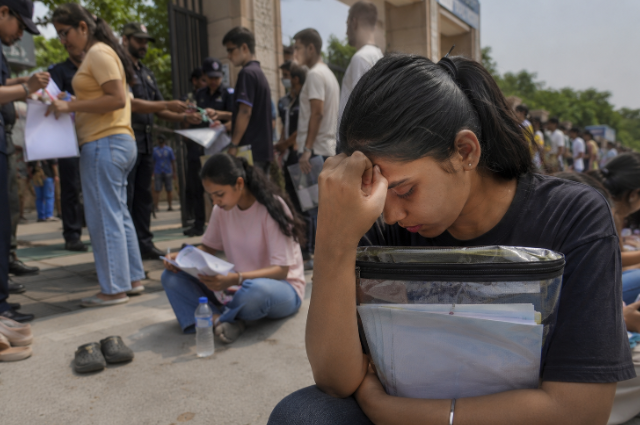
When the National Testing Agency (NTA) finally cancelled the NEET UG 2026 exam, it did not seem like just another administrative glitch. For over 24 lakh students across India, it felt like a slap on their faces. It felt deeply, painfully. For someone who didn't witness India's strict meat-grinder exam ecosystem, the cancellation may seem like a minor incident to them. But for an 18-year-old student who works day and night, those years aren't just a few days of study; they're their entire life. It's a combination of loneliness, mental pressure, and sacrifice. It means living in stuffy rooms at coaching centres like Kota, missing family weddings, distancing yourself from friends, and watching your parents spend a lifetime's worth of hard-earned money just to pay excessive fees. When the entire system fails on such a massive scale, exam cancellations are no small matter. They're a blatant betrayal of an entire generation's hard work.
The Truth About Modern Leaks
"The paper was on Telegram, and the minister was on vacation." This slogan didn't go viral on social media just because it sounded good. It spread like wildfire because it exposed the cruel joke being played on honest students. What happened on May 3, 2026, was utterly bizarre. On one hand, millions of students stood outside examination centres in the scorching May sun. They faced meticulous, prison-like checking. Even the girls’ rubber bands were checked. Students were made to remove their shoes and slippers outside the examination hall, forcing them to enter barefoot. Digital watches were strictly prohibited. To ensure security, full-body biometric scans were conducted. The NTA's message was clear: We don't trust you even a bit. But while these 18-year-olds were being treated like criminals at the gate, the real paper was circulating freely on mobile phones miles away. It wasn't hidden in a bag or being sold secretly on a street corner. It was circulating on secure Telegram groups and private WhatsApp channels, where it was being traded fearlessly for thousands of rupees. When the entire paper had already reached thousands of mobile screens before the first bell, then what was the point of installing metal detectors at classroom gates?
From Rumours to a National Crisis
Alarm signals began to emerge soon after the May 3 exam. Blurred images and panicked voices began circulating on social media. Initially, officials and the public ignored these reports, dismissing them as common rumours that circulate during exam time. But this time, the trickery could not remain hidden. The Special Operations Group (SOG) of the Rajasthan Police arrested a local gang. A handwritten “guess paper” was recovered from their belongings. Following this discovery, there was no longer any room for denial. When investigators cross-referenced this document with the authentic paper issued by the NTA, the truth came to light: approximately 140 questions were absolutely matched. This was no mere coincidence; it was a replica of the question paper for what is considered India's most secure medical entrance examination. Within just a few days, the entire conspiracy unravelled. Investigations were initiated across several states, including Bihar, Maharashtra, and Uttarakhand. The subsequent raids exposed the existence of a highly advanced digital crime network—a gang that had a deep understanding of the administrative weaknesses of NTA. Its operatives would create fleeting, fake channels on Telegram, enticing anxious students with the promise of a "guaranteed pass.” They accepted payments via digital wallets that were virtually impossible to trace. Crucially, they would upload the PDF of the leaked paper just a few hours before the examination was scheduled to begin, thereby minimising the risk of their own apprehension. By exploiting the security features of this application, the ringleaders of this gang consistently managed to stay several steps ahead of traditional police investigative techniques.
The Human and Financial Cost
The financial losses and mental anguish resulting from this failure cannot be underestimated. India's coaching industry constitutes a massive market worth thousands of crores. This entire market thrives on the fears and anxieties of middle-class families. For a wealthy family, a paper leak might be a minor inconvenience. However, for a poor or lower-middle-class family, it is equivalent to total ruin. Consider, for a moment, the family of an average student. To pay the extremely high fees charged by major coaching centres, they either borrow from moneylenders or take out bank loans. They send their children away from home to live in distant cities. There, they must bear the heavy monthly burden of paying for substandard accommodation and tasteless mess food. When an examination is cancelled, these expenses do not cease; room rent must still be paid, and the electricity bills for the children's living quarters still have to be settled. The NTA issues notices couched in grand terms, stating that no additional fees will be charged for the re-examination. However, such notices cannot repay families for the additional months of expenses they are compelled to face, costs that many can no longer afford. The psychological impact of this is even more dangerous. The students who performed exceptionally well in the May 3 exam had scores so impressive that they were guaranteed a confirmed seat in a government medical college. Suddenly, all their hard work has gone down the drain. Now, they are compelled to start everything all over again, right from scratch. They are mentally exhausted. They are completely broken from within. Now, they are being forced to re-read the very same old textbooks once again, without any fixed date in sight. The human mind is not designed for this; it simply cannot endure such academic pressure for an extended period while under the shadow of the system’s widespread corruption and fear.
An Outdated System in a Digital World
The NEET UG 2026 scam has made it abundantly clear that our examination authorities are attempting to fight a modern-day digital battle using an outdated, traditional mindset. The entire security system of the NTA is based only on outward appearances. Their operations are confined only to locking boxes and frisking students. While this method may stop traditional cheaters who conceal notes in their socks, it is completely ineffective against cyberattacks and compromised computer systems. These regulations are powerless against an insider with a smartphone. What purpose does security serve if the question paper is leaked right from the printing facility or the distribution centre itself? If the paper is photographed and uploaded to the internet, the rigid security measures within the examination hall become entirely meaningless. The act of theft, in such instances, has already been committed long before the student has even woken up in the morning. We cannot simultaneously conduct such a massive pen-and-paper examination for millions of children on a single day. To do so is essentially the same as openly attracting major criminals. When a single PDF file commands a price running into hundreds of crores on the black market, human greed will inevitably find a way—it will break through every lock and barrier. As long as the government continues to view exam security merely as a trivial matter involving nothing more than police deployment and routine checks, nothing will change. It must be recognised as a critical issue inseparably linked to cybersecurity. Until that happens, it is the honest and hardworking students who will continue to bear the full force of the consequences. They should not have to dedicate the prime years of their youth solely to their studies, only to discover later that years of hard work and merit have been rendered utterly worthless in the face of a single leaked PDF file circulating on a Telegram channel.
References
- National Testing Agency (NTA Official):https://neet.nta.nic.in & https://www.nta.ac.in
- The Indian Express: NEET UG 2026 cancelled after paper leak scandal: How a handwritten 'guess paper' exposed the system. https://indianexpress.com
- Hindustan Times: Tracing the Telegram channels: SOG tracks digital footprints in NEET-UG leak. https://www.hindustantimes.com