
At the Commonwealth Games 2026 in Glasgow, India clinched 39 medals, comprising 13 gold, 17 silver, and nine bronze. India stood fourth in the medal table after Australia, England, and Canada at the Commonwealth Games 2026. However, despite having fewer medals, 39, compared to the 61 medals won by India in Birmingham 2022, the comparison has to be put into context because the Glasgow Games involved fewer disciplines in the sporting programme than the previous games in Birmingham. Indeed, the Glasgow Games lacked some important sports that have always been medal winners for India, such as wrestling, badminton, table tennis, and hockey. These sports alone have made a contribution of about 25 medals to the Indian medal tally in the Birmingham Games. Hence, it can be argued that the 39-medal performance of India is not necessarily an indicator of a poor athletic performance. In addition, the 2026 Glasgow Games proved to be historic for Indian athletes in terms of boxing, athletics, and para sport performances. Furthermore, the 2026 Glasgow Games became the starting point of preparation for the upcoming Games in Ahmedabad 20
India Finishes Fourth With 39 Medals
India won a total of 39 medals, which comprised 13 gold, 17 silver and nine bronze. The nation made a push into fourth place at the end of the Games due to its late surge, where boxing played a significant part in India's medal haul. It is particularly commendable given the relatively small delegation and fewer events that India took part in. This is because India fielded 122 athletes in Glasgow as opposed to 210 athletes in Birmingham in 2022. This notwithstanding, 38 Indian athletes won medals at the Games. The ranking still put India in good standing with the other athletic nations of the Commonwealth.
Why 39 Medals Cannot Be Directly Compared With Birmingham
In Birmingham 2022, India collected 61 medals, out of which 22 were gold. On the surface, the reduction from 61 to 39 seems to be quite substantial. But Glasgow 2022 lacked a number of sports that contributed heavily to India’s Birmingham medal tally. Wrestling, badminton, table tennis, and hockey are some of the sports that come to mind. In all, these sports accounted for around 25 medals won by India in Birmingham. That is why the fact remains that India had fewer medal events to compete for in Glasgow right at the start. It would thus not be fair to criticise India based on a comparison of the two counts. The better measure would be to see how well India did in the actual events.
Boxing Becomes India's Biggest Success Story
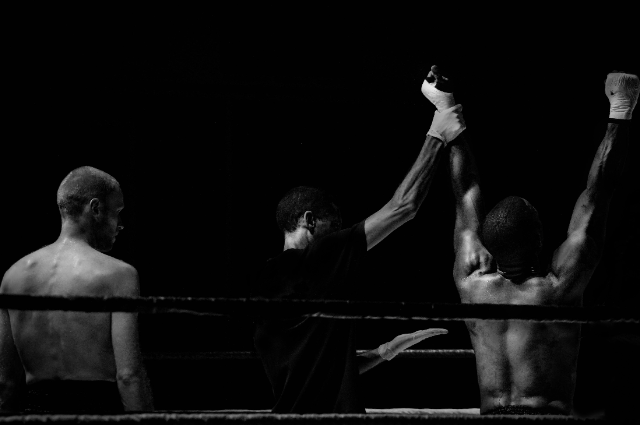
One of the major highlights of India's Glasgow campaign was boxing. Indian boxers won ten medals, out of which seven were gold medals, and their overall performance at the Commonwealth Games can be said to have been one of the best in boxing at the Commonwealth Games. The achievement is all the more significant given the fact that boxing has become one of the most reliable sports in terms of winning medals for India at international events. There were some important achievements in Indian women's boxing also. For instance, Jaismine Lamboria won a gold medal in the women's 57kg category, beating the defending champion Michaela Walsh in the final round.
India's Para Campaign Made History
One of the key events emerging from Glasgow came from para athletes of India. India won seven para-sports medals, which is equal to the sum total of medals won by India across all para sports at the Commonwealth Games to date. Out of these seven medals, six were from para-athletics. This result was especially commendable as it came after an absence of around two decades where Indian para athletes failed to win a medal at the Commonwealth Games. Hence, this event signifies not just seven additional medals, but marks the emergence of Indian para athletes as a key factor behind the success of Indian athletes at the international level. The results can further bring into focus the importance of accessibility, specialised training facilities and funding, among other factors for para athletes.
Gulveer Singh and Tejaswin Shankar Create New Milestones
There were some noteworthy accomplishments from India in athletics as well in Glasgow. For instance, Gulveer Singh became the first Indian field and track athlete who managed to win two individual medals during the same Commonwealth Games. He managed to get both silver and bronze medals, which made him India’s only multiple individual medallist at this event. The significance of his achievement was that endurance running has never been considered among India’s best sports in the Commonwealth Games. This accomplishment may become an incentive for further investments in endurance running of Indians. Another athlete who played an important role in India’s achievements in athletics in Glasgow is Tejaswin Shankar, who won a bronze medal in the decathlon.
The Bigger Story Is Ahmedabad 2030
While Glasgow was all about competing with each other, the closing ceremony was also an indication of the start of the next chapter of India's Commonwealth journey. India took charge of hosting the Commonwealth Games in the year 2030. The Commonwealth Games centenary edition will be hosted in Ahmedabad. This makes the occasion more significant for India. So far, India has hosted the Commonwealth Games only once before and that too in Delhi in the year 2010. With the Commonwealth Games in Ahmedabad, India gets another chance to show its capacity to conduct a major international sporting event. The gap of four years between Glasgow and Ahmedabad provides India ample time to prepare itself. While Glasgow had little time left to arrange things, Ahmedabad has sufficient time to prepare itself.
What Hosting the 2030 Games Means for India
The hosting of the Commonwealth Games may have advantages far beyond the actual event. The first advantage that is quite evident would be the construction of infrastructure related to the games. This means that stadiums would need to be built and other facilities like accommodation, transport and others would need to be upgraded. However, this would not be an indication of success; rather, the use that will be made of all these facilities after the games will tell how successful it was. The hosting of the 2030 Commonwealth Games will attract many more children into sport due to the visibility of the Indian players.
A Chance to Build India's Next Generation
The main potential for growth between the two cities lies in the development of athletes. India will have four years to scout for talent and provide them with good coaching, nutrition, sports science, physiotherapy, rehab and international competition experience. The performance of Indian athletes at the Glasgow Games has proven that their success is now coming from a wide range of sources. There were some brilliant performances in boxing, a great record set by para athletes, and the athletics team has also achieved great milestones. What follows is ensuring that these accomplishments are sustained. Instead of focusing only on the Commonwealth Games, India should also ensure that its athletes are ready for the Olympics, Asian Games and world championship events.
India Will Face Higher Expectations in 2030
There will also be increased pressure to perform. In other countries, when Indians take part in competitions, most of the attention is directed towards the sportspersons' performance in the games. However, when the games are hosted by India, the whole nation itself gets into the international limelight. The organisers will need to ensure that high-quality venues, transport systems, accommodation and all other services are provided. Any shortcomings or inefficiencies in organising the games may result in criticisms from all corners of the world. The recent case of the 2010 Commonwealth Games held in Delhi is enough evidence of the fact that it takes just one mistake to bring down any major international sporting event.
Glasgow's Experience Can Help Ahmedabad
Lessons can also be drawn from Glasgow 2026 regarding the next host. The Games were staged in a less ambitious fashion as Glasgow came into the picture as the host of the event on rather short notice. This proves that the Commonwealth Games can adjust to changes in financial and logistical conditions. Ahmedabad has far more time to prepare for hosting the Games. India, thus, has to learn both the successes and mistakes of Glasgow 2026. The key problem would be to find the right way of combining the creation of an impressive centennial event and avoiding excessive expenses.
What India Needs to Improve Before 2030
Although fourth place for India is an inspiring result, there have been several areas pointed out by Glasgow that need improvement. The lack of participation in wrestling, badminton, table tennis and hockey revealed the degree of dependence of India's Commonwealth results on a fairly limited number of sports. India needs to develop a wider sports base. Such sports as athletics, swimming and gymnastics, which are Olympic sports, need continuous efforts rather than temporary attention just before large-scale events. Para sports should also continue to be of utmost importance. The excellent results shown at the Glasgow Games revealed the potential of Indian para-athletes when they have enough support. The goal of the future games should not only be getting more medals in Ahmedabad.
Ahmedabad 2030 Could Be Bigger Than the Commonwealth Games
The Games of 2030also have the potential for significance that goes beyond the Commonwealth movement. India has aspirations to become one of the leading nations in the sporting world and has expressed a willingness to host other international tournaments in the future. Success at the Games in Ahmedabad would prove India’s capability to host an international multi-sport event effectively. This would give India an advantage in its bid to host future tournaments. The four years between Glasgow 2026 and Ahmedabad 2030 thus become critical.
While India's fourth place at the Glasgow 2026 can be perceived as a drop-off from their performance at the previous Games, where they managed 61 medals overall, that is not entirely the case. The small number of medals gained was primarily driven by the limited sporting programme and the omission of certain disciplines in which India had achieved significant results before. Nevertheless, India made some breakthrough performances within the available disciplines. For example, boxing was the highlight of the Indian team's performances. Indian boxers earned 10 medals, seven of which were golds. India also saw a performance by para athletes as impressive as their para-medals in the combined medal tally across all previous Commonwealth Games. India also saw a historic performance by Gulveer Singh, who became the first Indian track-and-field athlete to earn two medals during one Commonwealth Games. Despite winning fourth place and earning fewer medals, Glasgow still has an important message for India. India will host the centenary Commonwealth Games in 2030 in Ahmedabad. This means that there are four years left until India will be able to present its sporting prowess at its best.
References:
- Reuters. (2026, August 3). Commonwealth Games eyes India boost after mending and making do in Glasgow 2026.
- Olympics.com. (2026). India at Commonwealth Games 2026: Medal tally and winners.
- The Indian Express. (2026). String of firsts, new stars: Glasgow serves India hope, Asian Games will give reality check.
- Hindustan Times. (2026). What India's 39-medal Glasgow Games really mean: Historic highs, familiar flaws and the road to Ahmedabad 2030.
- Times of India. (2026). India at Commonwealth Games 2026: Complete list of India's medal winners and sport-wise medal tally.
- DD India. (2026). Commonwealth Games 2026: India finish fourth with 39 medals.
- The Economic Times. (2026). Glasgow Commonwealth Games ends as flag and baton handed to next host India.
- The Tribune. (2026). Indian boxers dominate as India reach 39-medal mark at Commonwealth Games.