
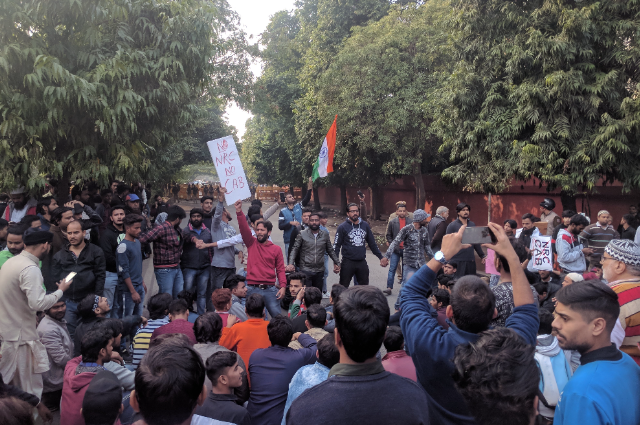
There was a massive youth-driven protest campaign in July 2026, India. The protests, which started by students who had accused the NEET-UG 2026 paper leak, later developed into a countrywide protest campaign for educational reforms. Thousands of students, the Cockroach Janta Party (CJP), Sonam Wangchuk, and Dharmendra Pradhan, who is the Union Education Minister, formed this protest movement.
Dharmendra Pradhan resigned from his position as the Union Education Minister on July 25, 2026, after being under pressure for several weeks. While the government claimed his resignation was his personal decision, several people, including students and opposition leaders, argued that this proves that public protests can achieve political change.
In this article, we are going to discuss the factors behind his resignation, why Sonam Wangchuk called off his hunger strike even before the resignation of Dharmendra Pradhan, and the implications of this movement in India's future.
The Beginning: Why Students Took to the Streets
Protests started after the NTA announced the cancellation of the NEET-UG 2026 examination due to a massive leakage of question papers. Thousands of students prepared for one of the toughest entrance examinations in the country for months.
The cancellation brought heartbreak for many of the students since all their hard work and money were nowwasted. Many parents and students called for an explanation and raised questions regarding the issue.
Students soon started gathering in various cities across the country, demanding justice from the government and security from paper leaks in the future.
The Rise of the "Cockroach" Movement
The movement was later termed the "Cockroach" movement. A name given sarcastically came to represent a symbol of struggle and solidarity for the youth.
Cockroach Janta Party (CJP), headed by Abhijeet Dipke, was one of the most instrumental organizations in organizing the peaceful protests. Jantar Mantar in New Delhi became the main venue for the protests as young students from various parts of the country gathered to fight for their rights. Social media became another crucial part of the movement. Video messages and speeches by the students went viral and helped in spreading the word about the movement allaround India.
As opposed to many other politically motivated movements, this particular movement involved students and young job seekers who believed that education must be clean.
Sonam Wangchuk Joins the Movement
National attention came to this movement when educationist and environmental activist Sonam Wangchuk joined the protestors.
Being known for his co-education and sustainable development, Sonam Wangchuk started an indefinite hunger strike in support of the demands raised by the students. This led to a lot more focus on this movement from the general public.
He fasted for 26 days, demanding accountability in the Indian examination system.
His health condition deteriorated during the fasting period. Many people felt that his hunger strike gave the movement a national dimension
WhyDid Sonam Wangchuk EndHis Hunger Strike?
The next question on people's minds was why Sonam Wangchuk stopped his hunger strike when Dharmendra Pradhan didn't resign?
After calling off the fast, Wangchuk clarified that his primary aim was not to secure the resignation of any political leader, but to make sure that the students aren't charged under FIRs and that their grievances are heard officially.
As per him, his greatest worry was that there should be no FIRs and no cases against the peaceful protestors. He also mentioned that students had endured enough because of the examination crisis.
Moreover, he believed that if the protests continued peacefully and remained united, then ultimately the questions of accountability would come to the fore.
It was both a mixed response. While some supporters were disappointed because the minister had still not resigned, some liked the fact that he cared for the safety and health of students.
A few days later, Dharmendra Pradhan tendered his resignation.
Dharmendra Pradhan's Resignation
Dharmendra Pradhan quit as the Union Education Minister on July 25, 2026.
The government asserted that this was done voluntarily and took other measures to improve the examination system, such as tougher paper leak laws and reforms to enhance transparency.
Congress and other opposition parties welcomed the resignation, considering it a win for students and democracy. Some student organizations were also pleased with the development, which they viewed as evidence that peaceful protests could change government policies.
Nevertheless, despite the significance of this development, it did not mark the end of the campaign.
What Happened After the Resignation?
After the resignation, there were negotiations between the government and the leaders of the Cockroach Janta Party.
There were several pending demands which needed to be sorted out, such as compensation for those students who had been affected by the paper leak, a guarantee that peaceful protesters would not be sued, measures to ensure that in the future there would be no leakage of exam papers, and more transparency in recruitment and entrance examinations.
The government made promises to introduce stronger laws against paper leakage and set up committees to suggest changes in the examination system.
The students applauded these decisions but promised to see what the government did, not what it said.
Wh Protest Was Different
Student movements in India have not been uncommon, but the movement in 2026 was unique for various reasons.
To begin with, this protest brought together students from various parts of the country and from diverse backgrounds based on a single cause.
Secondly, this protest stayed peaceful despite occasional flare-ups between the protestors and the police force.
Thirdly, modern technologies enabled students to communicate with the public and spread information regarding their struggles regardless of the media filters that they had encountered in the past.
Finally, this protest called for structural changes as opposed to addressing the issues on a personal level.
Political Impact
The political experts called the resignation “one of the few times that the Modi administration showed any kind of response to public protest.”
Regardless of whether one agrees or disagrees with the administration politically, there was no denying the fact that the incidents proved that the youth vote was gaining ground.
However, the government also tried to justify itself on the basis of reforms that it promised to introduce in the examination system and anti-cheating laws.
The discussion thus moved away from apportioning blame to finding ways out of the situation.
Lessons for India's Education System
Some of the lessons learned from the 2026 protests include the following. First, transparency is very crucial when it comes to competitive examinations. This is because students take years to prepare for such tests, and just one paper leak may bring about a loss of faith among many people.
Second, communication is very important. In times of crisis, it is very important for authorities to communicate with the public so that they can avoid confusion.
Third, peaceful civic engagement is an important component of democracy.
Finally, reforms should be done in order to deal not only with the perpetrators of paper leaks but also to prevent future leakage of papers.
Besides being a political move, Dharmendra Pradhan's resignation turned out to be a clear example of how student activism can become part of national debates on education and accountability.
This movement provided evidence that millions of Indian youngsters are deeply concerned about justice, transparency, and equal educational opportunities. At the same time, it was a display of the power of peaceful civic participation.
The hunger strike led by Sonam Wangchuk, the commitment of thousands of students, and the ongoing negotiations following the resignation all reflect the need for sustainable educational reform.
The success of the proposed reforms will be determined by their future implementation. Nevertheless, there is no doubt that the events of July 2026 have become a significant part of the history of Indian education and democracy.
References:
- Reuters. (2026, July 27). India's youth protests force exam reforms after Education Minister Dharmendra Pradhan resigns.
- NDTV. (2026, July 25). Sonam Wangchuk explains why he ended his 26-day hunger strike before Dharmendra Pradhan's resignation.
- The Indian Express. (2026, July 24–26). Coverage of the NEET-UG 2026 paper leak protests, CJP demonstrations, and government response.
- India Today. (2026, July 25). Dharmendra Pradhan resigns amid student protests; opposition calls it a victory for youth.
- The Hindu. (2026, July 25–27). Education Ministry developments following the NEET-UG 2026 controversy.
- The Week. (2026, July 25). Sonam Wangchuk reacts to Dharmendra Pradhan's resignation.
- Press Information Bureau (PIB), Government of India. (2026). Statements regarding examination reforms and proposed anti-paper-leak measures.
- Ministry of Education, Government of India. (2026). Official announcements and press releases on examination reforms and NEET-UG 2026.