
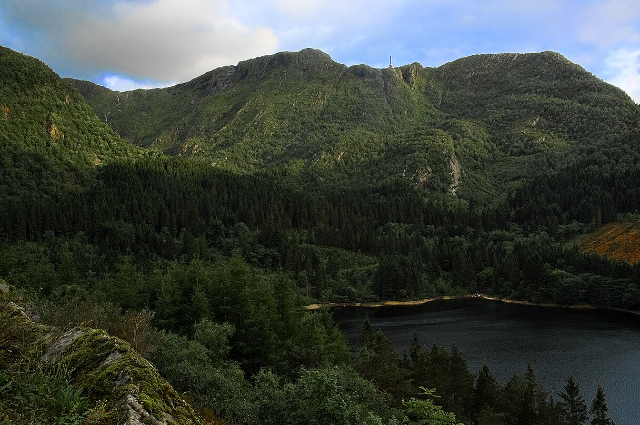
In November 1970, a woman's burned body was discovered in the remote Isdalen Valley near Bergen, Norway. She had no confirmed identity, and the investigation that followed revealed a trail of hotel registrations, false names, international travel and personal belongings that seemed carefully disconnected from her real life. More than fifty years later, the woman remains officially unidentified in the public imagination as the “Isdal Woman.” Her story has inspired theories ranging from espionage to murder, but the documented evidence tells a more complicated story. Investigators knew where she had travelled and discovered several identities she had used, yet they could not determine the name she was born with. Modern forensic science has reopened questions that seemed impossible to answer in 1970, but the central mystery remains. Who was this woman, and why did so much of her life appear to be hidden? This is not simply the story of an unidentified death. It is the story of a woman whose identity became a mystery even after her life had ended.
The Discovery in Isdalen
On 29 November 1970, two university students were hiking through the remote Isdalen Valley near Bergen, Norway. The valley was surrounded by steep mountains and rugged terrain, a place where very few people would expect to encounter anyone. But during their walk, the students noticed something unusual among the rocks. When they approached, they discovered the badly burned body of a woman.
The discovery immediately became a police matter. Investigators arrived at the isolated location and began examining the scene carefully. The woman had suffered severe burns, and the condition of her remains made the investigation considerably more difficult. At first, the most basic question was also the hardest to answer: Who was she?
There was no ordinary identification document that could immediately establish her identity. No passport provided investigators with a confirmed name, and there was no obvious personal information connecting her to a family or permanent address. The police therefore had to begin the investigation almost from nothing.
They examined the woman's physical characteristics and the objects found around the scene. These details could provide clues about her age, appearance and possible background, but none of them immediately revealed her name.
The location itself also raised questions. Why had the woman gone into such a remote valley? Had she travelled there alone? Was someone else with her? Had she chosen the location herself, or had she been taken there?
At this early stage, investigators could not answer any of these questions.
The condition of the body created another serious problem. Fire can destroy evidence that might otherwise help investigators reconstruct a person's final moments. In 1970, forensic science was also far less advanced than it is today. Investigators did not have the sophisticated DNA databases, digital records or modern forensic techniques that can now help identify unknown people.
Nevertheless, the police continued searching for clues.
They began looking beyond the immediate crime scene and examining the woman's belongings and possible movements. This decision would eventually reveal that the unknown woman had not simply appeared in Isdalen without a past.
She had travelled.
She had stayed in hotels.
And, most mysteriously, she appeared to have used different names.
The discovery of these details changed the investigation completely. What had begun as the investigation of an unidentified dead woman gradually became a much larger mystery involving travel, aliases and a hidden identity.
The police needed to discover where she had been before her death. Hotel records, railway information and personal belongings would eventually help them reconstruct parts of her journey.
But every new clue seemed to create another question.
If the woman had been travelling normally, why was her identity so difficult to establish? If she had wanted to remain anonymous, why had she left behind so many traces of her movements? And if she had deliberately hidden her identity, what was she trying to hide?
The answers would not be found in Isdalen alone.
Investigators would soon turn their attention to Bergen, where they discovered luggage that appeared to be connected with the mysterious woman. Inside those suitcases were objects that would become some of the most important clues in the case.
The woman found in the valley had died without a confirmed name.
But she had left behind a trail.
The Suitcases and the First Major Clues
After the discovery of the woman's body, investigators began searching for anything that could reveal her identity. One of the most important breakthroughs came when police connected two suitcases found at Bergen railway station with the unidentified woman. The contents of the luggage gave investigators their first substantial opportunity to reconstruct her life.
Inside the suitcases were clothes, shoes, cosmetics and other personal belongings. At first glance, much of it appeared ordinary. But investigators noticed several details that were far from ordinary when considered together. Some labels had been removed from her clothing, making it more difficult to determine where the garments had been purchased or manufactured.
The police also found wigs among her possessions. A wig, of course, is not evidence of criminal activity. People wear wigs for many reasons. But in this case, the discovery became significant because investigators were already learning that the woman had used different names during her travels. The possibility that she had also changed her appearance made the mystery even more intriguing.
The luggage did not contain the simple answer investigators were hoping for. No document clearly revealed her real name or permanent address. Instead, the suitcases provided fragments of information that investigators had to piece together.
Some of the objects suggested that she had travelled internationally. Her belongings were not those of someone who had simply gone on a short local trip. They suggested movement from place to place and a degree of preparation.
Investigators also found handwritten material containing combinations of letters and numbers. These markings attracted attention because they appeared to correspond with locations and dates connected to her movements. Police attempted to interpret them as a possible system of coded information.
However, it is important not to turn these notes into something they have never been proven to be. The existence of the markings is part of the historical investigation, but their exact meaning has remained uncertain. Later theories would give them an important role in the story, particularly when the possibility of espionage became popular.
The suitcases also contained another important clue: evidence that some identifying information had been deliberately removed. That raised a natural question. Was the woman trying to make herself difficult to trace? If so, why?
At this point, investigators did not know.
There were many possible explanations. She might have wanted privacy. She might have been using aliases for personal reasons. She might have been trying to avoid someone. Or she might have been involved in something secret.
The police could not simply choose the most dramatic explanation. They needed evidence.
They therefore began comparing the belongings with hotel records and witness statements. If the woman had travelled through Norway, hotels could provide dates, names and descriptions that might help investigators reconstruct her movements.
This approach soon produced an important discovery. The woman had apparently stayed at several hotels under different names. That finding changed the investigation.
Until then, investigators had been trying to identify an unknown woman from physical evidence. Now they had to investigate several identities that might all belong to the same person.
The more records they examined, the clearer the pattern became. The woman had travelled through different locations, and the names recorded in hotel registers did not always match.
She had left behind evidence of where she had been, but she had not left behind a reliable record of who she was. This contradiction became the central mystery of the case. The woman had tried, in some way, to conceal her identity.
Yet she had also left enough traces for investigators to follow her movements. The police now had a new task: reconstruct the life of a woman who seemed determined not to be easily identified.
The suitcases had not solved the mystery.
They had made it much larger.
The Woman Who Travelled Under Different Names
As investigators continued examining the woman's belongings and hotel records, they began to uncover a remarkable pattern. The unknown woman had not travelled under one consistent identity. Instead, she appeared to have used several different names during her journeys through Norway and other parts of Europe.
This discovery was one of the most important developments in the entire investigation. A person can remain unidentified because police simply cannot find enough information. But in the Isdal Woman case, the problem seemed different. Investigators were finding information, yet much of it pointed toward identities that did not appear to be genuine.
Police began comparing hotel registers, dates and descriptions provided by employees. Some witnesses remembered a woman matching her physical appearance. By comparing these accounts, investigators were able to connect different hotel registrations to the same person.
Slowly, a picture of her movements began to emerge.
She had travelled through several European countries before arriving in Norway. She appeared to be comfortable travelling alone and staying in hotels. She could communicate in several languages, which made her seem experienced and independent.
But the names she used remained a problem.
Investigators could record a name in a hotel register, but they could not be certain that it represented the woman's real identity. A false name could allow someone to disappear from an official record without completely disappearing from the physical world.
The woman seemed to understand this.
Her clothing labels had been removed. She possessed wigs. Different names appeared in different locations. Her belongings contained unusual notes and numbers.
Taken individually, none of these details proved criminal activity. Together, however, they created a picture of someone who was unusually careful about her identity.
The question was no longer, “Who was this woman?”
Investigators were also asking, “Why did she need so many identities?”
The answer remains unknown.
This is where the famous spy theory began to attract attention. The woman had travelled internationally during the Cold War, a period when intelligence operations were active throughout Europe. False identities and covert travel were real features of that historical period.
The circumstances therefore made espionage seem possible.
However, possibility should not be confused with proof.
There is no definitive public evidence establishing that the Isdal Woman was an intelligence agent. Her aliases, international travel, and efforts to conceal aspects of her identity are documented as part of the case. The conclusion that these activities were connected to espionage is a later interpretation.
Other explanations are possible.
She could have been trying to escape a personal situation. She could have wanted to remain anonymous. She could have had financial, professional or private reasons for using different identities.
Investigators in 1970 could not simply choose between these possibilities.
They needed evidence that connected the woman to a specific identity.
The hotel records became increasingly important because they allowed investigators to reconstruct a timeline. A name at one hotel could be compared with a physical description. A date could be matched with a journey. A location could be connected to another hotel registration.
This process slowly revealed the woman's movements.
But there was an extraordinary contradiction.
The police could reconstruct where she had been, but they could not establish who she was.
Every new hotel record gave investigators another location. Every new witness provided another description. Every new alias provided another piece of information.
Yet the woman's true identity remained hidden behind the names she had used. This made the case unlike an ordinary unidentified-person investigation. Investigators were not searching for a person who had simply vanished from the records. They were following someone who appeared to have intentionally created several different versions of herself.
And then there was another problem.
The investigators had to determine what had happened during the final days of her life. Her previous movements could explain where she had travelled. They could not explain why she eventually went to Isdalen.
That question would lead investigators toward the final and most troubling chapter of her journey.
The Final Journey to Isdalen
As investigators reconstructed the woman's movements, they gradually focused on the final days before her death. Hotel records, witness statements and travel information helped establish parts of her journey through Norway, but they could not explain what she was thinking or whom she may have been meeting. The records could show where she had been, but not why she had gone there.
Eventually, her movements brought her to the Bergen area and then toward Isdalen, the remote valley where her body was discovered. The location was significant because it was far removed from the hotels, railway stations and populated areas through which she had travelled.
Why did she go there?
That question became one of the central mysteries of the investigation.
There was no reliable eyewitness who could clearly describe the woman's final hours. Investigators therefore had to reconstruct the circumstances from the physical evidence available at the scene. The condition of the body made that task particularly difficult.
The fire had severely damaged the remains and destroyed or weakened evidence that might otherwise have helped investigators establish exactly what had happened. Modern forensic techniques such as advanced DNA analysis were not available to the original investigators.
Police nevertheless examined the scene carefully and considered the circumstances surrounding her death. They needed to determine whether the woman had died by suicide, whether another person was involved, or whether there was another explanation that had not yet been considered.
The woman's previous behaviour made the investigation even more complicated. By this point, police knew that she had travelled under several names. They knew that some clothing labels had been removed and that she had possessed wigs and other unusual belongings. They also knew that she had travelled across several countries.
But none of those facts could explain what had happened in Isdalen.
Her secretive behaviour might have had nothing to do with her death. It was also possible that it was directly connected to the events that led her into the valley.
Investigators had to consider both possibilities.
The lack of a clear motive was another major obstacle. If the woman had been murdered, who would have wanted her dead? Why would someone take her to such an isolated location? And where was the evidence connecting another person to the crime?
No clear answer emerged.
Over time, theories began to develop around the case. Some people suspected that she had been murdered. Others connected her mysterious identities and international travel with Cold War espionage.
Yet investigators could not simply treat those theories as facts.
The evidence established that the woman had travelled under different names. It did not establish why she had done so.
The evidence established that she died in Isdalen. It did not conclusively establish who, if anyone, had been responsible for her death. This distinction would become increasingly important as the case attracted public attention.
The woman had entered the valley as an unknown traveller.
She left it as an unidentified dead woman.
And somewhere between her last confirmed movements and the discovery of her body lay the missing part of the story.
What happened to her during those final hours remains one of the most difficult questions surrounding the Isdal Woman case.
But there was another mystery waiting for investigators.
Even if they could determine how she died, they still needed to discover who she really was.
Theories, Suspicion and the Question of Espionage
As the investigation progressed, the Isdal Woman case began to attract attention far beyond the immediate circumstances of her death. Her use of several names, international travel, altered clothing labels, wigs and mysterious notes created an image of someone deliberately living behind a hidden identity. In the atmosphere of the Cold War, it was almost inevitable that people would begin asking whether she had been involved in espionage.
The theory was not completely random. During the 1960s and 1970s, intelligence agencies operated across Europe, and false identities were a genuine tool of espionage. A person travelling between countries under different names could, in some circumstances, attract the attention of investigators.
The Isdal Woman appeared to fit parts of that picture. But there is a major difference between circumstances that look suspicious and evidence that proves espionage.
No definitive public evidence has established that the woman worked for a government intelligence agency. Her aliases are documented. Her international travel is documented. Her efforts to conceal aspects of her identity are documented. But the conclusion that she was a spy remains a theory.
Other possibilities have also been suggested. Perhaps she was attempting to escape someone. Perhaps she wanted to protect her private life. Perhaps she was involved in relationships or circumstances that required secrecy. It is also possible that some of her unusual behaviour had completely ordinary explanations that investigators simply never discovered.
The same problem applies to theories about murder.
The circumstances of her death have understandably encouraged suspicion, particularly because she was found in an isolated location and because so much about her identity remained unknown. But suspicion alone cannot establish that another person killed her.
The investigation therefore became a struggle between what could be demonstrated and what could only be imagined.
One of the most fascinating aspects of the case is how easily separate clues can be combined into a dramatic story. A wig can become evidence of disguise. A false name can become evidence of espionage. A coded note can become evidence of secret communication.
But each clue must be examined independently.
A wig does not prove that someone was a spy.
A false name does not prove that someone was involved in a crime.
International travel does not prove intelligence activity.
Even several unusual facts together require supporting evidence before a definite conclusion can be reached.
This is particularly important when examining an investigation that took place more than fifty years ago. Many of the people who originally handled the case are no longer available to explain every decision they made. Some records may be incomplete, while some witness memories may have changed over time.
The result is a case filled with fragments but lacking a final explanation.
The mystery became even more complicated because the woman's real identity was never established. Without knowing her background, investigators could not easily determine what her aliases meant or why she had travelled in the way she did.
If she had been connected to an intelligence organisation, her identity might have been deliberately concealed.
If she had been an ordinary woman escaping a difficult personal situation, the same behaviour could have had an entirely different explanation.
The available evidence does not conclusively settle the question.
This uncertainty is precisely why the Isdal Woman continues to fascinate investigators and the public. Her story contains enough unusual details to suggest many possibilities, but not enough evidence to prove any single dramatic theory. And while the theories continued to grow, another possibility emerged.
Perhaps modern science could succeed where the original investigation had failed. If investigators could not identify her through documents or witnesses, perhaps her own biological evidence could finally reveal where she came from and, eventually, who she was.
The Return of Modern Forensic Science
For decades, the Isdal Woman remained unidentified. The original investigation had collected a remarkable amount of information, but the technology available in 1970 was simply not capable of answering every question. There was no modern DNA database, no advanced genetic genealogy and no sophisticated digital system capable of connecting records from different countries within seconds.
Decades later, investigators and researchers returned to the case with a completely different set of scientific tools. The objective was no longer simply to examine the old clues. It was to ask whether modern forensic science could extract information that had been impossible to obtain in 1970.
One of the most important possibilities was DNA analysis. If suitable biological material from the woman could be recovered and successfully analysed, it could potentially provide a genetic profile. That profile could then be compared with relatives or appropriate databases, depending on what evidence and legal avenues were available.
DNA could potentially answer a question that hotel records never could: whether the unidentified woman belonged to a particular family.
But DNA has limitations. A genetic profile does not automatically produce a name. Investigators need a reliable comparison, such as a known relative or a suitable database match. The quality and preservation of the original biological material are also crucial.
Researchers also became interested in isotope analysis. The chemical composition of human tissues can sometimes contain geographical information because food, water and local environments leave measurable signatures in the body. By examining these patterns, scientists may be able to estimate where a person spent significant periods of their life.
Such evidence cannot necessarily identify a person by itself.
But it can narrow the search.
The case also received renewed international attention through the BBC World Service investigation and podcast Death in Ice Valley. The project brought together journalists, researchers and members of the public to reconsider evidence from the original investigation and explore new forensic possibilities.
This renewed interest demonstrated how an investigation can change when old evidence is examined with modern methods.
A hotel record that once existed only on paper can now be digitised and compared with other records. A photograph can be enhanced and studied more carefully. A witness description can be compared against documentary evidence. Biological evidence can be examined using techniques that did not exist when the woman died.
Yet modern science has not magically solved every mystery surrounding the case.
The woman's identity has remained a difficult problem.
This is what makes the Isdal Woman case so unusual. Investigators have learned a great deal about her without definitively learning her name. They have been able to reconstruct parts of her journey, study her belongings and investigate her biological background, but the final connection between those clues and a specific identity remains elusive.
The search therefore continues differently from the original investigation. In 1970, investigators were looking for a document, a witness or someone who recognised her. Today, researchers can also look for a genetic connection, a forgotten family record or scientific evidence capable of narrowing her origins.
The mystery has survived for more than five decades, but the methods used to investigate it have changed dramatically. And that raises one final possibility.
Perhaps the answer is not hidden in another theory about spies, secret missions or mysterious meetings.
Perhaps it is hidden in something much more ordinary: a family connection, an old record or a piece of evidence that has been overlooked for more than fifty years.
The technology now exists to ask questions that the original investigators could never ask. The remaining challenge is finding the evidence that can finally provide the answer.
The Name That Was Never Found
More than five decades have passed since the burned body of an unidentified woman was discovered in Isdalen. In that time, investigators, journalists and researchers have uncovered an extraordinary amount of information about her. They have reconstructed parts of her journey, identified several names she used, examined her belongings and explored scientific methods that were unavailable to investigators in 1970. Yet one crucial fact remains missing: her confirmed identity.
That is what makes the Isdal Woman case so haunting. In many unidentified-person investigations, almost nothing is known about the victim. Here, the opposite is true. There are records of hotels she visited, descriptions from people who encountered her, travel information, photographs and personal possessions. Investigators know pieces of her story, but those pieces have never been connected into a complete identity.
The mystery surrounding her has also created countless theories. The Cold War espionage theory remains one of the most famous. Her aliases, international movements and apparent attempts to conceal her identity certainly make the theory intriguing. But intrigue is not evidence. There is no definitive public proof that she worked for an intelligence agency, and the responsible way to tell her story is to separate documented facts from speculation.
The same caution is necessary when discussing the circumstances of her death. Questions about whether another person was involved have never completely disappeared, but suspicion alone cannot establish murder. The available evidence must be judged according to what can actually be demonstrated.
Perhaps the most important lesson of the case is therefore not about spies or secret organisations. It is about identity.
Behind the mysterious aliases was a real woman who had lived for years before arriving in Norway. She had a childhood, a family, friendships, relationships and memories. Somewhere, there may have been people who knew her by a completely different name.
Yet when her life ended, that connection was lost.
The name “Isdal Woman” does not describe who she was. It describes where she was found. The valley became her identity because her real identity disappeared from the investigation.
Modern forensic science offers hope that this could eventually change. DNA analysis, genetic genealogy, isotope research and renewed examination of historical records may provide clues that were impossible to obtain in the 1970s. A relative who has never realised that a missing family member could be connected to the case might someday provide the crucial comparison.
A forgotten document could also change everything. A travel record, photograph, letter or family archive could potentially connect one of the aliases to a real person.
Until then, the case remains open in the broader sense of history, even if the original investigation is long gone.
The Isdal Woman should not be remembered only as a mysterious figure surrounded by theories. She was a human being whose identity was never conclusively recovered. Her story reminds us that an unidentified person is not simply a puzzle. It represents a life that once belonged to someone.
More than fifty years later, investigators know where her final chapter was written.
They know the valley.
They know the date.
They know many of the clues she left behind.
But they still do not know the name she was born with.
The mystery of the Isdal Woman has survived for more than five decades because the evidence provides fragments of a life without revealing the person behind them. Investigators discovered her belongings, reconstructed parts of her travels and identified several names she used, but none led conclusively to her true identity. The theories surrounding espionage and murder remain fascinating, yet they should not be treated as facts without stronger evidence. What is certain is that a real woman died in Isdalen in 1970 and was never publicly reunited with the name she carried during her life. Modern DNA analysis, genetic research and renewed examination of historical records may still offer a path toward identification. Until that happens, the Isdal Woman remains more than a mystery. She represents a life reduced to clues, aliases and unanswered questions. Perhaps the most important question is not whether she was a spy or whether someone killed her, but whether the world will ever discover the ordinary human identity behind the extraordinary mystery. Somewhere beyond the theories, there was a woman with a real name. That name is still missing.
References:
- BBC World Service – Death in Ice Valley
- NRK – Death in Ice Valley
- The Guardian – Death in Ice Valley
- Bergens Tidende – Isdal Woman case
- Death in Ice Valley – Podcast episodes