
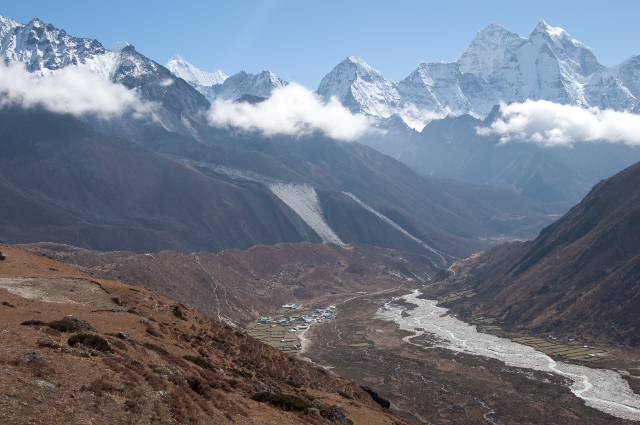
The Himalayas have always represented something larger than mountains. They are a source of rivers, livelihoods, tourism, spirituality and identity for millions of people across South Asia. For centuries, communities have lived beneath their slopes, travelled through their valleys and depended on their rivers. Yet the same mountains that provide life can also become extremely dangerous when ice, rock and water suddenly move together.
On August 26, 2026, a devastating flash flood struck the Himalayan region along the Nepal-Tibet border. A collapse involving glacial ice, rock and debris sent an enormous surge into a mountain river system, producing destructive flooding downstream. The disaster affected communities, roads, bridges and infrastructure and left a large number of people dead or missing. Search and rescue operations continued on August 27 as authorities struggled to determine the full scale of the destruction.
The numbers changed rapidly during the first hours of the emergency. Reuters reported that Nepalese authorities had confirmed 359 deaths and more than 1,000 people missing across Nepal and Tibet, while other reports gave different totals as information from isolated areas continued to arrive.
Among those affected were residents, workers, tourists and religious pilgrims travelling through one of the most spectacular but challenging regions of the Himalayas. Many foreign nationals were also reported missing, including people from India and several other countries.
But this disaster should not be understood merely through statistics.
Behind every missing-person figure is a family waiting for information. Behind every destroyed bridge is a community that has suddenly lost an essential connection. Behind every damaged road is a reminder of how vulnerable mountain societies can become when nature and infrastructure collide.
The Nepal disaster therefore raises questions that go beyond one tragic day. What exactly happened in the mountains? Why was the flood so destructive? Why were so many people vulnerable? How prepared are Himalayan communities for such events? And what does this tragedy tell us about the changing environmental conditions of the world's highest mountain region?
A Disaster Born High in the Himalayas -
The first key to understanding the disaster is to look upward, toward the high Himalayan landscape where the event began.
Initial reports raised the possibility that an earthquake might have triggered the collapse. However, the United States Geological Survey later indicated that the seismic signal initially interpreted as an earthquake was actually energy generated by the sudden collapse of glacial rock and ice, followed by a powerful debris flow. Satellite imagery examined by experts showed that a substantial section of a glacier had collapsed from a high elevation and travelled down toward the valley.
This distinction matters because a glacier collapse and an earthquake create different kinds of risks.
A glacier is not simply a frozen river. It is a complex mass of ice, snow, rock and sediment existing within a constantly changing mountain environment. When a large section becomes unstable and collapses, the material can accelerate down a steep slope. If it enters a river system, it can dramatically increase the volume and destructive power of the water moving downstream.
In Nepal, the collapse affected the Lhende Khola river system and sent water, sediment, boulders and other debris into the Bhote Koshi and Trishuli river systems. Reports indicated that downstream water levels rose by several metres within a very short period.
That is what makes such events particularly dangerous.
A conventional flood may gradually raise water levels, allowing residents to receive warnings and move to safer locations. A sudden mountain flood can arrive with extraordinary speed, carrying not just water but enormous quantities of mud and rock.
For people living beside rivers, the difference can be a matter of minutes.
The disaster also demonstrates how interconnected the Himalayan landscape is. Something that happens thousands of metres above sea level can have devastating consequences far downstream.
The mountain does not need to collapse completely.
A relatively limited collapse at high altitude can become a much larger disaster once it enters a river system.
This is one of the fundamental challenges facing countries such as Nepal. Mountain communities often live close to rivers because rivers provide water, fertile land, transportation
routes and opportunities for tourism and hydropower. But those same rivers can become channels through which mountain hazards rapidly travel.
The August 26 disaster showed how quickly that transformation can happen. When Water Became a Force of Destruction -
The flood was not simply a large amount of water moving through a river. It was a mixture of water, mud, ice, rocks and sediment.
That difference explains much of the destruction.
A river carrying ordinary floodwater may damage houses and roads. A debris flow can behave more like a moving wall of concrete. Large rocks can destroy buildings, while mud can bury roads and machinery. Bridges can be swept away, leaving entire communities isolated.
The affected areas included Rasuwa and Nuwakot districts, while the wider disaster also affected routes connecting Nepal with Tibet. The region is important not only for local communities but also for tourism, pilgrimage and cross-border movement.
Reports showed extensive damage to infrastructure. Roads and bridges were destroyed or rendered unusable, while power and other facilities were also affected. Some reports indicated that around 40 kilometres of roads and numerous bridges were damaged in the disaster zone.
Infrastructure damage creates a second disaster after the first one.
When a road disappears, rescuers cannot easily reach survivors.
When a bridge collapses, communities on opposite sides of a river can become completely separated.
When electricity and communication systems fail, families cannot contact one another and emergency authorities cannot immediately determine where help is needed most.
This is why natural disasters in mountainous regions are especially difficult. The geography itself becomes part of the emergency.
A rescue team may know that people are trapped in a particular village but still be unable to reach them by road. Helicopters may be required, but weather and terrain can restrict flights. Heavy machinery may be needed to clear debris, but the machinery itself may not be able to reach the affected location.
The disaster also created the possibility of additional flooding.
Nepalese authorities warned of a potentially dangerous situation where debris had blocked part of the river and created a lake. If the natural barrier were to fail, another surge of water could move downstream. Authorities therefore urged people near vulnerable sections of the river to move to safer areas.
This illustrates a crucial principle of disaster management:
The end of the first wave does not necessarily mean the end of the disaster. Mountain environments can remain unstable for hours or days.
A landslide can block a river. A blocked river can create a temporary lake. A temporary lake can suddenly burst. One event can therefore produce another.
For emergency planners, understanding these chains of events is essential. The Human Cost Behind the Numbers -
It is easy to read a sentence saying that hundreds of people died and more than a thousand were missing.
It is much harder to understand what those numbers actually mean.
Every missing person has someone waiting for them.
A mother may be waiting for news about her son. A husband may be searching for his wife. Children may be asking why their father has not returned. Friends may repeatedly call a phone that no longer connects.
The human cost of the Nepal disaster is therefore much larger than the official death toll.
One survivor quoted by Reuters, 68-year-old Keshav Prasad Baral, described watching a huge mass of mud approach his home and attempting to save his wife. He survived, but she was swept away and remained missing.
Such experiences reveal the emotional reality behind a disaster.
People do not experience disasters as statistics. They experience them through separation, fear, uncertainty and loss.
Another important aspect of the tragedy is that the affected region was populated not only by residents but also by travellers.
The area is part of a route used by trekkers, tourists and religious pilgrims. Consequently, people from many countries were caught in the disaster.
Reports indicated that hundreds of foreign nationals were among those unaccounted for. India was particularly affected, with many Indian citizens travelling as pilgrims to the Mount Kailash and Lake Manasarovar region.
This international dimension made the disaster a concern far beyond Nepal.
Families in India, Australia, the United States, Britain, Canada and other countries began searching for information about their relatives.
But obtaining accurate information during a major disaster is extremely difficult.
People may be in remote areas without mobile connectivity. Tourist groups may become separated. Travel companies may not immediately know where all their clients are. Government agencies may receive incomplete lists.
For families, this uncertainty can be agonising.
A confirmed death is devastating, but not knowing whether someone is alive or dead can create an entirely different form of suffering.
This is why disaster response must include not only physical rescue but also information management.
Authorities need accurate lists of missing people.
Hospitals need systems for identifying survivors.
Embassies need reliable communication with local authorities.
Families need verified information rather than rumours circulating through social media.
In the age of instant communication, misinformation can spread almost as quickly as a natural disaster.
A responsible response therefore requires both speed and accuracy.
From Pilgrimage and Tourism to a Fight for Survival -
The Himalayan region affected by the disaster has an importance that extends beyond its geography.
Mount Kailash and Lake Manasarovar are among the most important sacred destinations in Asia. Mount Kailash is revered in Hinduism, Buddhism, Jainism and the Tibetan Bon tradition. Pilgrims travel great distances to visit the region, often considering the journey a deeply spiritual experience.
For many travellers, reaching the Himalayas is the fulfilment of a dream.
But on August 26, the journey became a struggle for survival.
The disaster struck along routes used by people travelling between Nepal and Tibet. Some pilgrims were reportedly near border facilities when the flooding occurred. Others were travelling in groups or waiting for transportation through the region.
This creates a particularly painful contrast.
People travelled to the mountains seeking spirituality, peace or adventure. Instead, they found themselves surrounded by mud, destroyed roads and rapidly rising water. The tragedy also highlights the responsibility of tourism authorities and travel operators.
Mountain tourism cannot be treated in the same way as tourism in safer and more accessible environments. Visitors need information about altitude, weather, landslides, floods and evacuation routes.
Travel agencies should have emergency communication plans.
Tourists should know what to do if roads disappear or communication networks fail. Authorities should be able to quickly identify foreign visitors in disaster zones. These measures cannot prevent every tragedy, but they can improve the chances of survival. The disaster also reminds us that the Himalayas are not simply scenic destinations.
Photographs often show beautiful snow-covered peaks, peaceful valleys and clear rivers. What those photographs do not always show is the enormous physical force contained within the landscape.
A mountain valley can be calm for decades and then become extremely dangerous in a matter of minutes.
That is why responsible tourism in fragile mountain environments requires respect for nature.
The lesson is not that people should stop visiting the Himalayas.
The lesson is that beauty should never be mistaken for safety.
A Changing Himalayan Environment -
The immediate trigger of the disaster was a glacial collapse, but scientists and environmental experts are also examining the wider conditions that may make Himalayan hazards more dangerous.
The Himalayan region is experiencing significant environmental change.
According to United Nations findings cited by Reuters, Nepal lost close to one-third of its glacial ice over roughly three decades, while the rate of ice loss accelerated during the most recent decade.
This does not mean that climate change can automatically be declared the sole cause of the August 26 collapse.
Scientists still need to investigate the precise sequence of events.
But the broader pattern is important.
Higher temperatures can contribute to glacier retreat and changes in snow and ice conditions. Mountain slopes can become unstable. Meltwater can accumulate. Frozen ground can change. These factors can interact with landslides, rockfalls and heavy rainfall.
The result can be a more complicated hazard environment.
The Hindu Kush Himalayan region is particularly important because it contains vast amounts of ice and snow and feeds major river systems across Asia.
Changes in the high mountains can therefore affect communities far beyond the immediate disaster zone.
This makes Himalayan environmental monitoring a regional and international responsibility. Nepal alone cannot solve the problem.
Countries sharing the Himalayan and Hindu Kush region need scientific cooperation, satellite monitoring, glacier observation, early-warning systems and information-sharing mechanisms.
There is also a difficult question about development.
Nepal needs roads, hydropower, tourism infrastructure and economic opportunities. Development is essential for improving people's lives. But development in fragile mountain regions must be carefully planned.
Roads constructed along unstable slopes can increase vulnerability. Infrastructure placed too close to rivers can be exposed to floods.
Hydropower facilities require careful geological and hydrological assessment. Tourism infrastructure must consider extreme weather and changing environmental conditions. The answer is not to stop development.
It is to develop with greater knowledge of risk.
A road that connects communities is valuable.
A road that disappears during the first major disaster is not resilient infrastructure.
The challenge for Nepal and other Himalayan countries is therefore to build infrastructure that can survive the environment in which it is placed.
The Race Against Time -
Once the flood struck, rescue teams faced a race against time.
Nepal deployed security personnel and helicopters to search for survivors and provide emergency assistance. More than 5,000 army and police personnel were reported to have joined rescue efforts, while helicopters were used to reach isolated areas and deliver supplies.
But rescue work was complicated by the same destruction caused by the flood.
Roads were damaged. Bridges disappeared.
Communication was disrupted. Mud covered large areas.
And the possibility of further flooding remained.
In such circumstances, rescuers have to make difficult decisions.
Where should they search first?
Which communities are most isolated?
Where are survivors most likely to be trapped?
Which roads can safely be used?
Which areas might face another landslide?
Disaster response is therefore not simply about courage. It requires planning, technology, coordination and reliable information.
Helicopters can provide rapid access, but they cannot reach everyone.
Satellite imagery can show where the landscape has changed, but it cannot identify every person trapped beneath debris.
Residents can provide vital knowledge, but they may themselves be victims. The most effective response combines all of these resources.
The international dimension also matters.
Foreign governments need to coordinate with Nepal to identify their citizens. Humanitarian organisations need access to isolated communities. Neighbouring countries can provide technical and logistical support.
India's proximity and its large number of citizens among the affected travellers make its role particularly significant. Reports said Indian pilgrims were among those missing and that emergency support was being coordinated.
The immediate priority, however, remains simple:
Find the missing. Save the living. Care for the injured. Support the families. Only after the rescue phase will the full scale of reconstruction become clear. What Nepal’s Tragedy Means for the Future -
The Nepal disaster should not end as another tragic headline that disappears when the next major news story arrives.
It should become a lesson in preparedness.
The first lesson is the importance of early-warning systems.
If dangerous changes in glaciers, rivers or mountain slopes can be detected earlier, communities may have precious minutes or hours to evacuate.
The second lesson is the importance of resilient infrastructure.
Roads and bridges in high-risk mountain zones must be designed with the possibility of extreme floods and landslides in mind.
The third lesson is public awareness.
People living in vulnerable areas should know the warning signs of sudden floods and understand where to move during an emergency.
The fourth lesson concerns tourism.
Visitors entering high-risk mountain regions should receive clear information about weather conditions, evacuation procedures and emergency contacts.
The fifth lesson is scientific cooperation.
Glaciers and rivers do not respect national borders. A change on one side of a mountain can create consequences on the other. Nepal, China, India and other countries connected to the Himalayan system therefore need mechanisms for sharing environmental and disaster information.
Finally, there is a lesson about climate responsibility.
The Himalayas are far from many of the world's largest industrial centres, yet they are deeply affected by global environmental change.
Countries that contribute heavily to greenhouse gas emissions may be geographically distant from Himalayan villages, but the consequences of a warming climate can reach those communities.
That creates a moral as well as environmental responsibility.
The people living beneath the Himalayas did not create global climate change, but they may increasingly face some of its consequences.
The August 2026 disaster should therefore encourage governments, scientists and communities to ask difficult questions before another tragedy occurs.
How many high-risk glaciers are being monitored?
How quickly can warnings reach remote villages?
How many bridges could withstand a major debris flow?
How many tourists are travelling through vulnerable areas at any given time?
How prepared are hospitals and rescue teams for a disaster involving hundreds or thousands of people?
These questions may not produce immediate headlines.
But answering them could save lives.
The devastating flash floods that struck Nepal on August 26, 2026, have revealed the extraordinary power and unpredictability of the Himalayan environment. A collapse involving glacial ice and rock triggered a destructive chain of events that rapidly transformed rivers into channels of mud, water and debris. Communities were cut off, infrastructure was destroyed, and hundreds of families were left searching for missing loved ones.
Yet the disaster is more than a story of destruction. It is a story about the relationship between human beings and the natural world.
People build roads, bridges, homes, hydropower projects and tourism facilities because they need them. They build them to connect communities and improve economic opportunities. But nature does not always follow human plans.
The Himalayas remind us of that reality.
The mountains provide water, beauty and livelihood, but they also contain glaciers, unstable slopes, powerful rivers and geological forces that can change suddenly.
The tragedy in Nepal should therefore lead neither to fear of the mountains nor to blame without evidence. It should lead to better preparation, better science and greater respect for environmental risk.
Climate change may be an important part of the broader story of Himalayan instability, but scientists must continue examining the exact causes of individual disasters. Responsible reporting requires distinguishing what is confirmed from what remains under investigation.
At the same time, the human lesson is already clear. When a disaster strikes, preparation matters. Early warnings matter. Accurate information matters.Strong infrastructure matters. International cooperation matters.
And above all, human life must remain at the centre of disaster policy.
For the families still waiting for news, the disaster is not an environmental debate. It is personal. For the rescuers searching through mud and debris, it is a race against time. For governments,
it is a test of preparedness. And for the wider world, it is a reminder that the future of the Himalayas is closely connected with the future of millions of people.
The mountains have not simply given South Asia another tragedy to remember. They have given it a warning to act.
The question is no longer whether nature can surprise us. The question is whether we will be prepared when it does.
References :
- Reuters, “Hundreds killed, more than 1,000 missing in Nepal and China after Himalayan flood,” August 27, 2026.
- Reuters, “Glacier collapse may have triggered deadly Nepal flash flood, experts say,” August 26, 2026.
- Associated Press, “What to know about Mount Kailash, a sacred site for pilgrims missing after floods in Nepal and Tibet,” August 27, 2026.
- Al Jazeera, “More than 360 dead, 1,400 missing in Nepal and Tibet after Himalayan flood,” August 27, 2026.
- Euronews, “Around 1,300 people missing in Nepal and Tibet after catastrophic floods caused by a glacial collapse,” August 27, 2026.
- The Guardian, “Nearly 1,400 missing, mostly tourists, after Nepal-Tibet flash flood kills at least 356,” August 27, 2026.