
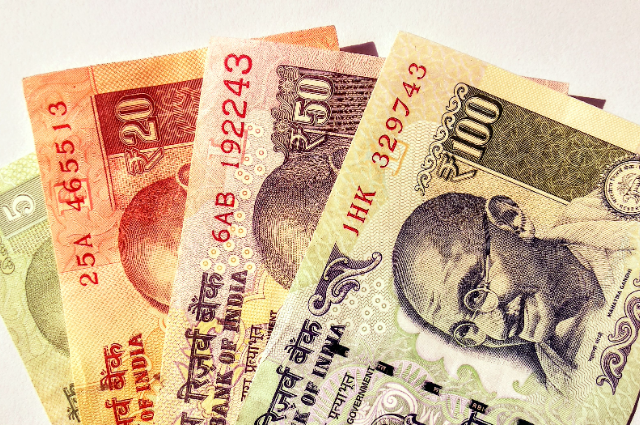
In January 2025, the cost of converting one Indian Rupee to one US Dollar was equal to 85 Rupees per US Dollar. It stands at 96 Rupees per 1 US Dollar (May 2026). At certain times, this rate was as low as 95.8 Rupees per 1 USD (a record low). There has not been any news, as such, to affect this slide of the Rupee, as it may be referred to in the press; it has not made any poor strategic decisions by itself, etc.
However, oil supply is the main problem, with a well-known solution, as is always the case. 85 to 90% of all its crude supply is imported by India so if one start day that one needs dollars to pay for your daily consumption of oil and, for example, if oil prices increased from approx $60 per barrel to above $100 per barrel following the tension in the strait of Hormuz, then one has to calculate the increase outlay (in US Dollars) to provide your daily oil intake during the current and previous day. As the dollar consumption of India starts climbing, the Rupee starts to slide; a “downward spiral " starts in what is known as lose or all!
But oil isn’t the only one that must share the responsibility. With foreign investors pulling $18.5Bn of money out of Indian markets over the past year- is also making money move out of India and into international markets, with the effect being the greatest “pull” of cash out of India since borders were first opened in 1993, when foreign investors were initially allowed to flow into India. If an investor is to pull out money, he will sell all of his Rupees and buy Dollars to take all of his profits back with him, so that means more dollars will hit the market and the Rupee continues to fall.
And the strangest of everything is the lack of any sort of investment into the Indian Artificial Intelligence [AI] market- it would not seem that there has been much activity from the AI sector in terms of attracting investor interest, either from their own industry or from outside of India. So the capital is being invested elsewhere in the world where there is actually an “AI Story” to go to.
With increasing US Dollar strength, it really hasn’t helped a bit. The US Federal Reserve have kept interest rates high in the US for far longer than everyone had believed, so any investor wanting to earn money through international investments will choose to invest their money in the US where they know it is safe and is likely to gain them a better financial return on investment. It is obvious from this that as the dollar strengthens, those currencies it does, so the rest of the world, especially those in emerging markets(and the rupee is an example of that), sees increasing strength of the dollar. There is decreasing strength of other currencies in the market.
Further, a major issue with this is that India is importing much more than it is exporting, so it must import dollars to maintain its level of consumption. Indian policy means there is consistently high demand for dollars to meet demand not only from the purchase of oil, but for goods such as electronics and gold also- meaning the dollar leaves India while the rupee depreciates.
An ‘expert’ told me this story of an additional problem: there are also controls placed by the regulator on the Indian currency market to limit the ease with which rupees may be accessed outside the market. ‘Arbitrage” of the difference between local and external demand for the Rupee will provide further strain on the Rupee.
The Reserve Bank of India has now added some confusion to the ongoing issues after they have announced they will let market determine currency rates although at the same time also intervening in the global market by selling a roughly $20bn of their foreign reserves to keep the Rupee from sliding to an untenable level; this means that there is uncertainty as to exactly when they want to see the rupee slide and when they wish to provide some form of intervention.
So What Drives Future Indian Rupee Movements? Three simple yet hard questions still need defining answers:
- Will the world prices of oil decline?
- Will foreign investors return to India?
- How soon will the US Federal Reserve rates decline?
So, unless clear answers become available to the questions posed above, the rupee will continue sliding on the seven headwinds previously listed and also struggle not to slide further than the position that it has lost.
References:
- https://www.wionews.com
- https://www.cnbc.com
- https://www.financeoutlookindia.com
- https://www.pw.live
- https://www.ziromarket.com
- https://www.finnovate.in
- https://dailypioneer.com
- https://www.multibagg.aim