
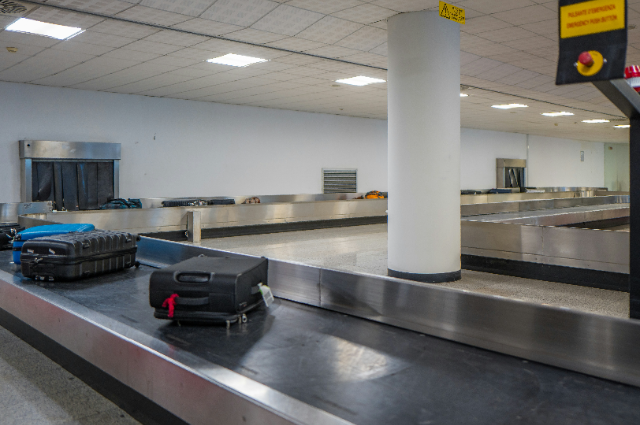
In May 2010, Ajay Singh, a businessman from Gwalior, arrived at Raja Bhoj Airport in Bhopal to board a flight to Delhi, en route to Malaysia. In his luggage were two packets of something wholly ordinary to an Indian household: aamchur (dried mango) powder and garam masala (aromatic spice blend). But to the Explosive Trace Detection (ETD) machine scanning his baggage, they were something else entirely. The scanner flagged the packets as containing heroin and MDEA, a psychotropic substance. Singh was subsequently arrested under the stringent provisions of the Narcotic Drugs and Psychotropic Substances (NDPS) Act, one of the harshest criminal statutes in the country. He would not walk free for fifty-seven days.
The samples were first sent to the Regional Forensic Science Laboratory in Bhopal, which then returned them after ten days, saying it lacked the necessary equipment and technical capability for proper analysis of the substance the scanner had flagged. They were then forwarded to the Central Forensic Science Laboratory (CFSL) in Hyderabad, which eventually confirmed that the packets contained no contraband. By that point, the man later found to be carrying no contraband had lost nearly two months of his life in a jail cell. Sixteen years later, Singh secured justice through the High Court, which awarded him Rs. 10 lakh in compensation, working out roughly Rs. 625 for each day of his wrongful imprisonment.
At first glance, this may seem like an unfortunate mistake involving one traveller. However, the case raises larger questions about how much trust should be placed in technology and what happens when legal systems are unable to verify its findings quickly.
How the machine works and why it fails
ETD stands for Explosive Trace Detection. Globally, these devices are a standard component of airport security. They work by gathering trace samples and subjecting them to a procedure known as "ion mobility spectrometry" (IMS), usually using swabs applied to clothing, bags, or hands. After the sample is collected, it is ionised and converted into gas particles. These particles are then transported through a tube using an electric field, and a detector records their transit time. The results are then compared with a database of known compounds to identify possible matches. The device sounds an alarm if a match is discovered.
The problem is that this library of substances overlaps significantly with everyday, harmless materials. Common triggers for false positives include glycerin found in lotions, soaps, and makeup, as well as medications like nitroglycerin pills used for heart conditions. Aromatic Indian spices with their complex organic compounds are plausible culprits, too. Singh’s legal team argued that the detection machine, manufactured in Canada, was not calibrated to handle aromatic Indian spices, which may have triggered the false positive.
This is not the only case.
The Ajay Singh case is striking, but it is not unique. India’s legal landscape is dotted with cases where NDPS charges have led to prolonged detention, only for forensic evidence to later clear the accused.
In a 2024 case, the Punjab and Haryana High Court held a man under the NDPS Act for thirteen days despite a forensic report revealing that the alleged contraband was nothing but paracetamol. The court awarded him Rs. 2 lakh compensation for the “unjust deprivation of liberty”.
At the systemic level, the problem runs deeper. The Supreme Court of India granted bail to two accused under the NDPS Act after noting an unexplained delay of twenty-one days in sending contraband samples to a forensic science laboratory, by which point the accused had already spent over two years in custody. The recurrence of such cases suggests that forensic delays are not isolated incidents but symptoms of broader structural challenges. Many forensic laboratories continue to struggle with limited resources and growing caseloads. The Supreme Court, in Thana Singh VS. Central Bureau of Narcotics, directed states to establish dedicated laboratories for NDPS cases and appointed a monitoring agency to prevent unnecessary trial delays, an acknowledgement that the problem is well-known and long-standing.
The law moves slowly; lives do not.
Because violations under the NDPS Act frequently make release difficult after an arrest has been made, cases like Singh's are particularly concerning. The effects of detention cannot be easily reversed, even when later forensic testing clears the accused. Although Singh eventually received compensation from the Madhya Pradesh High Court, the judgment came sixteen years after his arrest, highlighting the gap between recognising an injustice and providing timely relief.
In his decision, Justice Deepak Khot noted that although the initial arrest was justified, Singh could have been released much sooner if the state's forensic apparatus had been sufficient. While carefully worded, the observation points to a larger problem: a system that moved slowly while a man remained in jail for carrying ordinary kitchen spices.
Technology as authority: A dangerous default
Beyond the facts of the case, it is worth asking what role technology should play in decisions that can affect a person's freedom. When a machine flags someone, the instinct of the institution and humans is to treat the result as definitive. The machine said so. What more do you need?
This is where problems begin. Technology can assist investigations, but it cannot replace careful verification and human judgment. Trained operators are needed for ETD machine calibration, maintenance, and contextual judgment. False alarms can be produced by even poorly maintained ETD devices, a feature that is frequently acknowledged in technical literature but is rarely reflected in the actual process of making arrests. A machine error might cost someone months of their life before the truth is ever tested in India, where forensic infrastructure is overburdened, and the NDPS Act bears harsh presumptions against the accused.
The Bhopal case is a reminder that while security technologies can help identify potential threats, final decisions must still rely on evidence, investigation, and human oversight. And we overlook that distinction; the individual on the wrong end of the scanner bears all the repercussions when we allow a beep to turn into a conviction.
What needs to change
Although the compensation ruling from the Madhya Pradesh High Court is a good remedy, it treats the symptom rather than the underlying issue. The Ajay Singh case highlights several larger problems within the system, including an over-reliance on preliminary screening technology, inadequate forensic infrastructure, and delays that can prolong detention before forensic results are available. After-the-fact compensation is insufficient to address these errors. It demands quicker forensic testing through better-equipped labs, requires secondary verification before arrests based only on ETD results, and more robust protections for those awaiting scientific confirmation of alleged crimes.
According to Article 21 of the Constitution, the right to life and personal liberty is not merely a formality. It serves as the cornerstone for all other rights. Because a machine's initial alert was considered evidence before it was fully vetted, Singh's right was revoked for fifty-seven days.
Sixteen years later, the courts finally acknowledged the injustice and awarded compensation. Yet an important question remains: how many lives can be disrupted before systems designed to protect society are required to verify their conclusions before taking away someone's liberty? The spices in Singh's luggage were never narcotics. The larger concern is that it took the system so long to recognise its mistake.
References:
- Republic World:
https://www.republicworld.com - AOL/Guardian:
https://www.aol.com - LiveLaw (P&H HC paracetamol case):
https://www.livelaw.in - Bar and Bench (SC FSL delay):
https://www.barandbench.com - NLIU Law Review (FSL/NDPS):
https://nliulawreview.nliu.ac.in - IrelandTravelDeals (ETD explanation):