
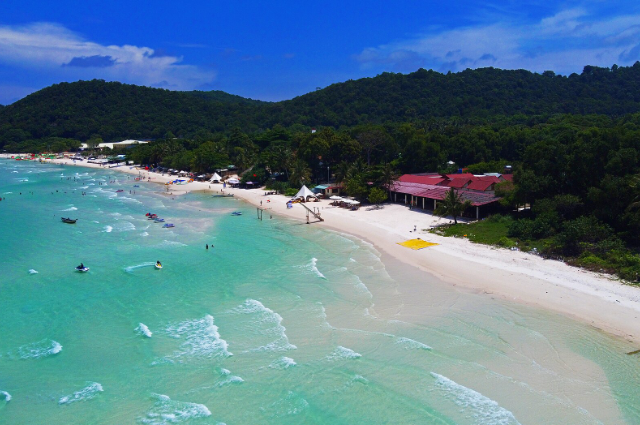
What was meant to be a memorable trip ended in tragedy when a tourist speedboat capsized off the coast of Phu Quoc Island in southern Vietnam on July 11, 2026, claiming the lives of 15 Indian tourists. On board were 36 people, including 32 Indian tourists, three crew members, and one Vietnamese tour guide. While the other passengers were rescued, 15 Indian tourists lost their lives. The tragedy triggered an official investigation and raised broader concerns about tourist and maritime safety, as well as accountability for ensuring safe travel.
The victims were part of a larger group of 110 Lava distributors and employees from South India who were on a company-sponsored trip to Vietnam. Among those who lost their lives were 14 channel partners and one team member. In a post on its X account, Lava described the incident as an "unimaginable tragedy." The company also stated that it was in close and continuous contact with the Indian Embassy and Vietnamese authorities to facilitate the repatriation of the victims' mortal remains and provide support to the bereaved families.
After a day of sightseeing around the islands near Phu Quoc, the group was ready to return. They boarded the tourist speedboat Ocean Pearl Island for their return journey. As they started moving towards the An Thoi International Port, the speedboat overturned approximately 400 meters from Hon May Rut Ngoai Island. According to survivor Nirmal Kumar, the vessel keeled over within three minutes of setting off after it was hit by strong winds and rough sea conditions. As the vessel was enclosed, many passengers became trapped inside, which led to moments of panic and confusion. Several passengers managed to survive by jumping through the front window as the boat flipped. Those seated at the back of the boat became trapped and were unable to escape.
Before official help arrived, Ha Van Loc saw the overturned vessel with about a dozen people clinging to the hull. He and his crew rescued survivors through lifebuoys attached to ropes and pulled them aboard their boats. Tran Minh Khoa, Chairman of the Phu Quoc Special Economic Zone, said that the residents and nearby vessels immediately formed what authorities described as a "four-on-the-spot" rescue force that initiated rescue operations before emergency responders reached the scene. The military, police, coast guard, and medical teams reportedly arrived within minutes despite the dangerous conditions. All 36 people were recovered and taken to Hon May Rut Ngoai Island, where CPR and immediate first aid were administered before they were transferred to nearby hospitals. Despite the extensive rescue efforts, many lives could not be saved.
By July 12, 16 of the 17 rescued Indian tourists had already begun their journey back to India. One survivor suffered from severe respiratory failure due to drowning, shock, multiple traumatic injuries, and a brain haemorrhage. His recovery was further complicated by pre-existing diabetes and an acute heart attack caused by a blocked coronary artery. Before being transferred to Ho Chi Minh City, a medical team from Cho Ray Hospital performed a two-hour emergency coronary intervention in Phu Quoc to reopen his blocked artery and implant a temporary pacemaker. His family also arrived in Vietnam to assist with his care.
In a separate effort, the flight carrying the mortal remains of the 15 victims departed Ho Chi Minh City on July 13 and arrived in Mumbai later that same day. Once in India, authorities from Andhra Pradesh, Kerala, and Tamil Nadu coordinated the final transportation of the remains from Mumbai to the victims’ homes. The Indian Embassy used its official X account to publicly acknowledge the support it received. Beyond the Phu Quoc authorities, it also thanked the Ho Chi Minh City Department of Foreign Affairs and the Vietnamese Ministry of Foreign Affairs for their roles in the aftermath. The embassy shared a moving note of thanks stating that the prayers, efforts, and presence of the Vietnamese people provided strength during this hour of grief. The Indian Ambassador and Consul General also expressed gratitude to the Vietnamese leadership for their humanitarian response. The Vietnamese authorities worked around the clock to expedite legal procedures and ensure the victims' families' wishes were met regarding repatriation.
Following the rescue and the repatriation efforts, Vietnamese authorities launched an investigation into the accident. The boat’s captain, Nguyen Hong Hai, was placed in temporary custody on July 12. He was placed under criminal investigation for alleged violations of inland waterway transport safety regulations. Authorities initially pointed to severe, unusual, and rapidly changing weather conditions, including high waves and strong winds, as a possible cause. While the sea was rough, state media noted there was no rain at that time, and other tourist boats were still operating in the same area during the accident. Officials continue to examine all possible factors that may have contributed to the accident. Allegations also surfaced that rescue efforts were delayed. However, Chairman Tran Minh Khoa rejected these claims, stating that residents, nearby boats, and emergency responders acted immediately after the accident. “The investigation remains ongoing as authorities continue to determine the exact circumstances that led to the tragedy.
The Phu Quoc tragedy is not an isolated incident. A similar accident occurred in Ha Long Bay, Vietnam, on July 19, 2025. A tourist boat named Wonder Sea capsized during a sudden thunderstorm. The boat was carrying 48 passengers and five crew members, all Vietnamese nationals. Most of the passengers were from Hanoi, including more than 20 children. Reports initially placed the death toll between 34 and 38, while eight others were reported missing. Only 11 people survived, including a 14-year-old boy who was trapped inside the overturned hull for four hours before being rescued. The reason for the capsize was strong winds and sudden heavy rain. Another incident occurred in Nusa Penida, Bali, on March 21, 2025, when the Sea Dragon 2 capsized in rough waters. Eleven of the 16 passengers were Australian tourists. The vessel was struck by large waves while travelling to Nusa Penida, a popular tourist island near Bali. One Australian woman was killed, and another was injured, while the remaining passengers were rescued by a nearby boat. This shows that maritime accidents continue to occur in tourist destinations. The scale of tourism also highlights why maritime safety is becoming increasingly important. Vietnam welcomed 750,000 Indian tourists in 2025, nearly 50% more than the previous year, while Phu Quoc alone welcomed over 1.8 million international visitors. Following the Phu Quoc incident, several tourism operators temporarily suspended speedboat services between islets. These incidents have renewed discussions about passenger safety and maritime preparedness in popular tourist destinations.
While maritime accidents cannot always be prevented, as the sea is unpredictable and weather conditions can change suddenly, their impact can be reduced through strong safety protocols, regular vessel inspections, accurate weather monitoring, well-trained crew members, and, most importantly, efficient emergency response and rescue coordination. Behind all the statistics is a family. What began as a holiday or a company-sponsored trip ended in grief for many families. The Phu Quoc tragedy serves as a reminder that while the sea offers unforgettable journeys, every voyage must be backed by safety, preparedness, and a commitment to protecting human life.
References:
- https://timesofindia.indiatimes.com
- https://timesofindia.indiatimes.com
- https://www.ndtv.com
- https://asianews.network
- https://www.npr.org
- https://www.malaymail.com