
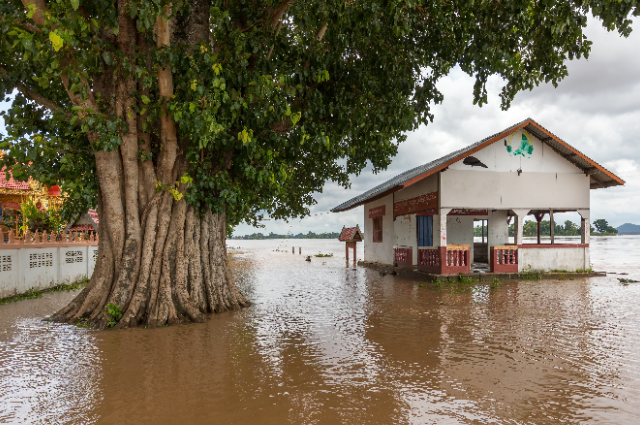
When floods occur, they lead to destruction and havoc in people's lives and livelihoods. These disasters are usually measured by human deaths and the number of people displaced. Another group affected by floods that receives much less attention is livestock. Assam has been dealing with severe floods in 2026, and the government stated that more than ten lakh livestock were affected. These animals matter because, for many families, they are not simply animals but a source of livelihood and important household assets. The losses of these animals often go unheard, and that raises an important question: when we count the damage caused by a flood, are we counting the animals that families depend on?
The 2026 floods were different from the usual pattern seen in Assam. The Brahmaputra is usually the main source of flooding, but this time Upper Assam was hit by rapidly rising waters in its south-bank tributaries, particularly the Dikhow and Desang rivers. The districts that were among the worst affected were Sivasagar, Charaideo, and Jorhat, with the flooding becoming unusually concentrated in these areas. The immediate trigger was exceptionally heavy rainfall in the Nagaland hills, which fed the catchments of these rivers. Since the ground was already soaked following heavy pre-monsoon rain in April and May, the additional water turned into rapid runoff. As a result, water levels rose quickly and reached areas that were considered comparatively safer from the usual floods.
For many families in Assam, livestock are closely connected to their everyday lives and livelihoods. Cows and other milch animals can provide milk and are also a source of income, while small animals like goats, pigs and poultry serve as important household assets and contribute to a family’s earnings. When these animals are lost or affected by floods, families may lose an important source of financial support along with their homes, crops and other belongings. Chief Minister Himanta Biswa Sarma described the devastation to animals as “one of the lesser discussed yet deeply distressing consequences” of the floods. In addition to domestic animals, hundreds of wild animals have been swept away, with many others remaining stranded or missing. The scale of this loss can therefore be difficult to capture through general statistics. While the number of people affected is usually reported after a disaster, the animals that support many households can receive far less attention.
However, it is not easy to measure the magnitude of the livestock situation based on the figures provided. Chief Minister Himanta Biswa Sarma mentioned that more than 10 lakh livestock were affected by the floods. On the other hand, figures provided by the Assam State Disaster Management Authority (ASDMA) reported that 35,025 domestic animals were affected by the flooding. The large discrepancy between the two figures has not been immediately explained by the government. The ASDMA figure included 17,195 large animals and 13,164 small animals, with the remaining animals falling into other categories. The difference between the figures raises questions about how livestock losses are being recorded and counted during the disaster.
While the loss of livestock is an important part of the disaster, the human toll remains severe. The death toll had risen to 101, while more than 1.37 lakh people remained affected across the state. Around 8,000 displaced people were staying in relief camps as the situation gradually improved in some areas. The damage also extended beyond the loss of life, with houses, crops, roads, bridges and other infrastructure affected by the floods. In Sivasagar, a mother and her seven-year-old son spent around 12 hours in a mango tree after floodwaters engulfed their village. For families caught in the disaster, the floods meant losing loved ones as well as homes, belongings and the means they depended on to rebuild their lives.
As the floodwaters recede, the government has begun assessing the damage and planning financial assistance for affected families. The compensation announced includes ₹9 lakh for the family of each person who died in the floods and up to ₹1.20 lakh for completely or severely damaged houses. Families that lost livestock are also eligible for assistance, with ₹37,500 provided for each large milch animal and ₹4,000 for goats, sheep or pigs, subject to the prescribed limits. Poultry losses are also covered under the compensation package. The Animal Husbandry and Veterinary Department has also been directed to organise animal health camps in affected areas to treat surviving livestock and help prevent disease outbreaks. A door-to-door damage survey began on August 9 and is expected to continue until August 30, with the government hoping to begin monetary compensation by mid-September.
But the unusual flooding of 2026 also points to a larger problem that goes beyond one episode of heavy rainfall. Experts have linked the worsening impact of floods to changes in the environment and the way rivers and their surrounding areas are managed. Deforestation and activities such as quarrying, mining and earth cutting in upstream areas can increase soil erosion and the amount of sediment carried into rivers. Over time, this sediment can raise riverbeds and reduce the amount of water that river channels can hold. Assam also depends heavily on embankments to control flooding, but many were built for historical riverbed levels and can become inadequate as riverbeds rise. When heavy rainfall occurs in already vulnerable catchments with rising riverbeds and inadequate drainage, the consequences can become much more severe. The 2026 floods therefore highlight the need to look beyond immediate relief and address the longer-term environmental and infrastructure challenges behind Assam's recurring floods.
The 2026 Assam floods show that the true cost of a disaster cannot be measured through human deaths and displacement alone. Behind the numbers are homes that need to be rebuilt, livelihoods that need to be restored and animals that families depend on but whose losses can be difficult to measure. The difference between the livestock figures reported by the Chief Minister and ASDMA also shows how much can remain unclear when animal losses are recorded separately or incompletely. As Assam begins the process of recovery, recognising these losses is an important part of understanding the full impact of a flood. The cattle may not appear in the death toll, but for the families who depend on them, their loss is very real.
Referen ces
- The New Indian Express https://www.newindianexpress.com
- The Times of India https://timesofindia.indiatimes.com
- BBC https://www.bbc.com
- India Today NE https://www.indiatodayne.in
- The Wire https://thewire.in
- The Assam Tribune https://assamtribune.com
- Hindustan Times https://www.hindustantimes.com