
Less than two years after leading the Labour Party to one of the largest electoral victories in British history, Keir Starmer announced his resignation as Prime Minister of the United Kingdom on June 22, 2026. Starmer had won the 2024 general election by a landslide, making his resignation less than two years later all the more unexpected. He said he had decided to step down after losing the confidence of much of his own parliamentary party, bringing an abrupt end to his leadership. With his departure, Britain is now set to have its seventh Prime Minister in just ten years. His resignation has raised an important question: how did a leader who entered office with such a strong public mandate lose the confidence of his own party in less than two years?
Starmer had come to power promising stability and change after years of Conservative rule. Still, within two years, his government found itself facing growing political pressure from both the public and the Labour Party. In May 2026, the Labour Party suffered a major setback after losing nearly 1,500 council seats in the local elections. These elections are often seen as an important indicator of public satisfaction with the governing party, making the result a serious warning sign for Labour. During the same elections, Reform UK, led by Nigel Farage, made significant gains, reflecting a shift in voter support. Although Starmer adopted tougher rhetoric on immigration, it failed to slow Reform UK's rapid rise. At the same time, critics argued that his positions on Israel and proposed welfare cuts had alienated many progressive supporters, further weakening Labour's support base. For many Labour MPs, the poor local election results were more than just a temporary setback; they were a warning sign that the party could struggle to retain public support before the next general election. As the party's popularity continued to decline, pressure from within Labour also began to intensify, with many MPs questioning whether Starmer was still the right person to lead the party into the next general election.
The final political blow came from a by-election that ultimately changed the course of Starmer's leadership. A by-election is held when a parliamentary seat becomes vacant before a general election. Unlike a nationwide election, only voters from that particular constituency elect a new representative. Although such elections involve only one constituency, they often become an important indicator of public opinion and party support. Andy Burnham, the mayor of Greater Manchester, contested the Makerfield by-election and won with nearly 25,000 votes, securing 55% of the vote and a majority of more than 9,200. The victory also made him eligible to contest the Labour Party leadership. Following the result, Burnham quickly emerged as the leading candidate to replace Starmer, and pressure from Labour MPs for a change in leadership intensified. For many within Labour, the by-election was no longer just about one parliamentary seat; it had become a clear signal that the party was ready for new leadership.
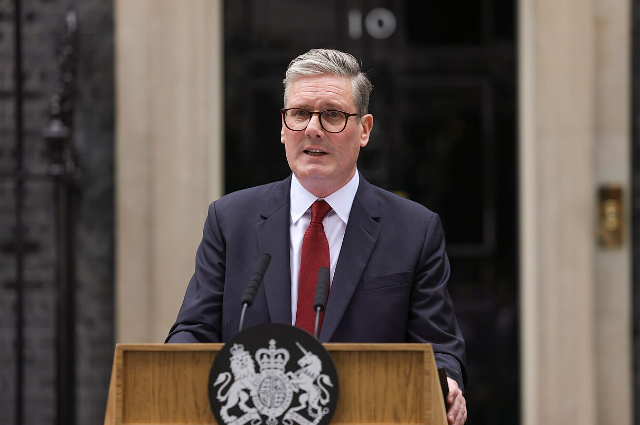
Standing outside 10 Downing Street on the morning of June 22, Starmer formally announced his resignation as prime minister of the United Kingdom. Addressing the nation, he confirmed that he would be stepping down after losing the confidence of much of his own parliamentary party. During his statement, Starmer said, "The question my party is asking now is whether I am best placed to lead us into the next general election. I have heard the answer of my parliamentary party to that question, and I accept that answer with good grace." His remarks made it clear that his resignation was driven by the loss of support within his own party rather than by a constitutional requirement or a general election defeat. Although he announced his resignation, Starmer will continue to serve as prime minister until a new Labour leader is chosen. Nominations for the leadership contest are set to open on July 9, with the new leader expected to be in place before Parliament returns in September.
With Starmer stepping aside, attention has quickly turned to who will lead the Labour Party and the British government next. As mentioned earlier, Andy Burnham has confirmed that he will contest the Labour leadership. Wes Streeting, the former health secretary, has decided not to stand for the leadership election and has instead pledged his support for Burnham. Unlike a presidential system, the United Kingdom does not automatically hold a general election when a prime minister resigns. Instead, the governing party elects a new leader, who is then invited to form the government. Once Labour elects its new leader, Starmer will formally tender his resignation to King Charles, who will then invite the new leader to form a government. Although Nigel Farage and several opposition leaders have called for an immediate general election, Labour is not constitutionally required to hold one, allowing the party to continue governing until the next scheduled election in 2029. Meanwhile, several of Britain's allies paid tribute to Starmer's leadership, particularly his support for Ukraine and his efforts to strengthen relations between the United Kingdom and Europe following Brexit.
Starmer's resignation shows that in a parliamentary democracy, winning an election is only the beginning of political leadership. Maintaining the confidence of both the public and one's own party is equally important. Although he entered office with a strong electoral mandate in 2024, a combination of poor local election results, growing public dissatisfaction, and internal party pressure eventually brought his leadership to an end. As the Labour Party prepares to choose its next leader, the challenge will not only be to regain public trust but also to reunite the party successfully ahead of the next general election. More broadly, the resignation shows how quickly political fortunes can change and how even a strong electoral victory does not guarantee long-term leadership. It also demonstrates how closely leadership, public opinion, and party unity are connected in a parliamentary democracy, where political support must be continuously earned rather than simply secured through a single election victory.
References:
- https://www.aljazeera.com
- https://www.cnn.com
- https://www.vaticannews.va
- https://www.bbc.com/news/articles/cdxd00lg599o