
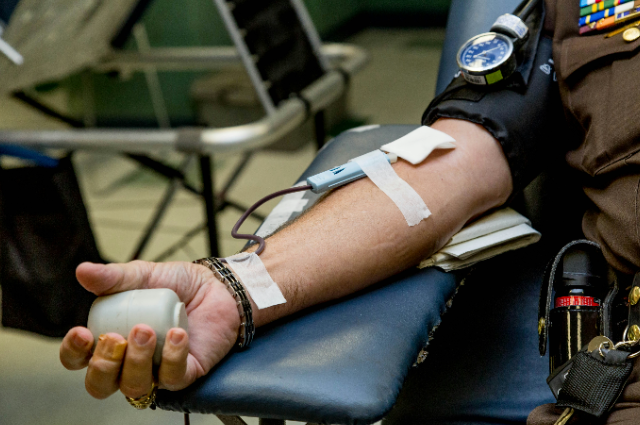
At the Omkareshwar Jyothirlinga temple in Madhya Pradesh, the fastest way to skip the queue is no longer through a donation of money but through a donation of blood. Devotees can now receive a VIP darshan in exchange for donating blood, turning an act of faith into an act of public service. The initiative was launched on February 24, 2026, under the leadership of the Khandwa Collector Rishabh Gupta. It was designed as a pilot project to address regional blood shortage by linking faith with the aspect of public service. By linking devotion with a life-saving cause, the administration hopes to encourage voluntary blood donation while also making the pilgrimage more meaningful for devotees.
The process is not very complicated. Blood donations can be made either at the district hospital or at a dedicated five-bed collection facility set up near the temple premises. To be eligible, donors must be healthy, between the ages of 18 and 60, and weigh at least 45 kilograms. In return for donating blood, devotees not only get to skip the usual three- to four-hour queue but also receive a certificate that allows them to avail VIP darshan. They are also provided with refreshments, prasad, and a photograph of Lord Omkareshwar as a keepsake. The certificate also allows one healthy family member to accompany the donor through the fast-track queue, making it easier for families travelling with elderly relatives or young children.
The results have been staggering. Before the initiative, the Khandwa district hospital collected roughly 15–20 units of blood per day. After the pilot project was introduced, that number increased to nearly 200 units daily. By June 14, the Omkareshwar camp alone had collected 497 units, a significant rise from the 168 units collected when the initiative first began in February. The success of the program has also created a surplus, allowing the Khandwa district to supply blood to several neighbouring districts. Betul, Dhar, and Burhanpur each received 150 units, Barwani received 200 units, and Harda received 80 units. The initiative has also helped strengthen the availability of rare blood groups such as AB-negative, A-negative, B-negative, and O-negative, making it easier for hospitals to respond to patients with urgent transfusion needs.
This local success reflects a much larger pattern across Madhya Pradesh. During the financial year 2025–26, the state collected a total of 836,638 units of blood across all its blood banks. Of this, 473,370 units, or nearly 57%, came through voluntary blood donation, highlighting the important role ordinary citizens continue to play in strengthening the healthcare system. The donated blood was used to support 163,972 pregnant women, 47,461 thalassemia patients, and 17,418 sickle cell patients, all of whom often depend on timely blood transfusions as part of their treatment or emergency care. Another noticeable rise in donations was seen during Adhika Maas, also known as Purushottam Maas, a sacred period in the Hindu calendar when charitable acts are believed to bring spiritual merit. This suggests that initiatives connecting faith with social service can encourage greater public participation while also helping address critical healthcare needs.
Omkareshwar Temple is not the first religious site to link faith with an act of generosity. A similar initiative has been in place at the Tirumala Tirupati Devasthanams (TTD), which manages the world-famous Sri Venkateswara Temple in Tirumala. Under this initiative, devotees who donate blood are rewarded with a free ₹300 Special Entry Darshan ticket, allowing them to complete their darshan within one to two hours instead of waiting in long queues that can sometimes last for several hours or even days. To be eligible, donors must weigh at least 50 kilograms, be free from chronic illnesses, and carry a valid photo ID such as an Aadhaar card or passport. Blood donations are collected at the TTD-run Ashwini Hospital, from where they are supplied to TTD hospitals for patients requiring urgent transfusions, surgeries, and emergency medical care. Much like the Omkareshwar initiative, the Tirupati model demonstrates how places of worship can encourage voluntary blood donation while contributing directly to the healthcare system.
Because of the success of the Omkareshwar pilot, the National Health Mission is now considering expanding the initiative to other parts of Madhya Pradesh. Saloni Sidana, Managing Director of the National Health Mission (NHM), said that the department is considering implementing this model in other districts after seeing the positive results it has produced. To encourage more voluntary blood donations, the state health department is also planning to establish blood banks near the Mahakaleshwar shrine, allowing more devotees to participate in a similar initiative. Along with this, the government is exploring the possibility of setting up blood bank branches at other public service facilities, including banks and major government institutions, to make blood donation more accessible. If implemented successfully, these measures could not only increase the number of voluntary donors but also help create greater public awareness about the importance of regular blood donation. More importantly, they demonstrate how a successful local initiative can be adapted on a larger scale to strengthen healthcare services across the state.
Traditionally, devotees offer money, flowers, or prayers at temples as an expression of faith. The Omkareshwar initiative shows that an act of service, such as donating blood, can also become a meaningful offering that benefits not only the individual but also the wider community. Through this act, devotees are not only seeking a quicker darshan but are also helping save lives, transforming a personal act of worship into one that serves society as well. In many Indian traditions, the idea of seva, or selfless service, has always been closely linked with faith. This initiative brings those two ideas together, showing that devotion need not end at the temple doors but can continue through acts that have a real and lasting impact on the lives of others. In that sense, the initiative is not simply rewarding blood donation with a faster darshan; it is encouraging people to see compassion and service as an equally meaningful expression of devotion.
The Omkareshwar initiative shows that faith and public service can go hand in hand. A few minutes spent donating blood can help save someone's life while also allowing devotees to experience their pilgrimage in a meaningful way. If more places adopt initiatives like this, they could not only help address blood shortages but also encourage people to see blood donation as an act of compassion and service towards others.
References:
- The Economic Times
https://m.economictimes.com - Deccan Chronicle
https://www.deccanchronicle.com - Curly Tales
https://curlytales.com - Tirtha Yatra
https://www.tirthayatra.org. . .