
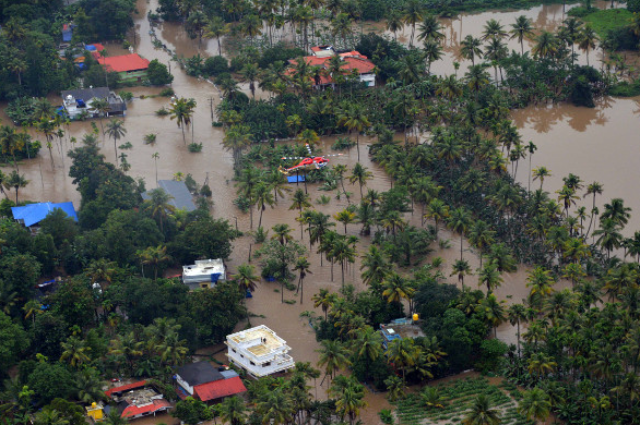
Based on the real rescue efforts of Kerala’s fishing community during the devastating floods of August 2018.
There are moments in history when nature reminds humanity of its helplessness. Rivers abandon their banks, roads disappear beneath muddy waters, and houses that once sheltered families become dangerous islands. In such moments, people discover that wealth, education, social status, and influence offer little protection against the forces of nature.
But disasters reveal something else, too. They uncover the extraordinary courage hidden in ordinary people.
In August 2018, when Kerala battled one of the worst floods in its history, hundreds of fishermen left their coastal homes and travelled into the flooded interior of the state. They carried no medals, held no powerful positions, and possessed no sophisticated rescue equipment. They brought what they knew best: their boats, their knowledge of water, and their willingness to risk their lives for strangers.
Their story remains a remarkable reminder that the greatest heroes are not always those who stand on podiums. Sometimes, they are the men who arrive in a small boat when an entire neighbourhood has lost hope.
When the land disappeared
The monsoon is an essential part of life in Kerala. Its rains replenish rivers, nourish plantations, and sustain the state's natural beauty. But in August 2018, relentless rainfall transformed this familiar blessing into a catastrophe.
Rivers overflowed. Low-lying villages disappeared under water. Roads became waterways, and the boundaries between fields, streets, and homes vanished. Families found themselves trapped inside their houses, watching helplessly as the water rose around them.
Electricity supplies failed in many affected areas. Communication became difficult, and people struggled to discover whether help was on its way. The elderly, children, pregnant women, and people with illnesses were particularly vulnerable.
Across the state, rescue operations brought together the armed forces, disaster-response personnel, police, government agencies, volunteers, and ordinary citizens.
Yet the scale of the disaster was enormous. Many narrow lanes and submerged residential areas were difficult to reach using conventional rescue vehicles.
That was when Kerala's fishing community stepped forward.
An unexpected army
Along the coast, fishermen had spent their lives learning to read the moods of the sea. They understood currents, changing water levels, and the dangers of navigating unpredictable waters.
Now, the skills that sustained their livelihoods would serve an entirely different purpose.
Men from fishing communities in districts including Thiruvananthapuram, Kollam, and Ernakulam began preparing boats for deployment to flood-hit areas. Some travelled long distances, transporting their vessels by truck to places where residents were stranded.
They were leaving behind their familiar surroundings and entering landscapes they scarcely recognised.
The waters before them were not the open sea. They concealed submerged walls, fences, trees, vehicles, and other obstacles. Powerful currents could push a boat off course or damage its engine. A journey through an ordinary residential lane could become a life-threatening expedition.
Nevertheless, the fishermen went.
One reported rescue team of seven men travelled from the coastal region near Thiruvananthapuram to Chengannur, one of the badly affected areas. Over several days, the team helped rescue approximately 800 people.
Their passengers included children, elderly residents, pregnant women, and people who could not leave their homes without assistance.
For these fishermen, the emergency was not an opportunity to earn recognition. It was a call to act.
The boat at the end of the lane
Imagine a family waiting on the upper floor of a house, surrounded by water.
The ground floor is submerged. Familiar streets have disappeared. The front door no longer opens onto a road but onto a dangerous stretch of floodwater. There is no safe way to walk to a relief centre, and every passing hour brings fresh anxiety.
For families in this situation, the arrival of a rescue boat meant much more than transportation.
It meant the possibility of seeing another sunrise somewhere safe.
During the Kerala floods, news reports documented families who had waited for help before being spotted by fishing boats. One such account concerned Divya G., who had struggled through neck-deep water and spent more than a day with her family on the upper floor of a neighbour's house. A fishing boat eventually found them and took them to a relief camp.
Behind every rescue was a similar transformation: fear giving way to relief, uncertainty giving way to movement, and helplessness giving way to hope.
A boat might have room for only a limited number of passengers. The rescuers therefore had to make repeated journeys, carrying people to safety and returning for those still waiting.
Every trip required judgement and courage. The boatmen had to navigate treacherous currents, avoid submerged obstacles, and decide how many people could safely travel at once.
They could not rescue everyone in a single journey.
But they could return.
And that simple decision—to return again and again—made the difference between despair and survival for countless families.
Beyond the boundaries of class
Perhaps one of the most remarkable aspects of the rescue effort was the way it challenged familiar social divisions.
Many fishermen lived modest lives. Their income depended on uncertain weather, difficult working conditions, and the unpredictable rewards of the sea. They were accustomed to working hard for their daily bread.
During the floods, however, they entered neighbourhoods where people from very different economic backgrounds were trapped.
Suddenly, the usual markers of status had lost their significance.
A spacious house offered little advantage when its ground floor was underwater. An expensive car could not travel along a submerged road. A respected professional title could not help someone escape a rapidly rising river.
What mattered was whether a person could reach safety.
The fishermen possessed a skill that others desperately needed. Their boats became instruments of rescue, and their familiarity with water became a lifeline.
In those circumstances, humanity was stripped of its social labels.
The person waiting on the rooftop was not a wealthy homeowner or a prominent citizen. That person was simply someone who needed help.
And the person arriving in the boat was not merely a fisherman. He was a rescuer.
This was one of the most powerful lessons of the disaster: society often underestimates people whose contributions are essential but whose occupations receive little public attention.
Courage without a uniform
Heroism is frequently associated with uniforms, official positions, medals, and carefully documented acts of bravery.
But the fishermen who joined the rescue operations demonstrated another kind of courage.
Many volunteered despite the dangers. They had to arrange transport for their boats, secure fuel, and travel to unfamiliar locations. Some worked for long hours under difficult conditions, navigating waters that threatened their own safety.
Their efforts complemented those of the official rescue teams. They did not replace the need for professional disaster management; rather, they demonstrated how local knowledge and community participation could strengthen it.
The fishermen understood something fundamental: when people are in immediate danger, helping them cannot always wait for perfect circumstances.
A boat might be available before a road became accessible. A local volunteer might know a narrow passage that an outsider could not identify. A person familiar with currents might recognise a danger that was invisible to someone unfamiliar with water.
Such knowledge, when combined with coordination and courage, can save lives.
The fishermen's contribution also raised important questions about the protection of volunteers. Reports from the period highlighted the risks they faced, including the need for adequate safety equipment. Bravery alone is not a substitute for life jackets, training, communication, and organised rescue planning.
Those who help others deserve protection themselves.
What happened when the water receded?
Eventually, the rain eased, and the floodwaters began to withdraw from many affected areas.
But the end of the immediate emergency did not mean that life returned to normal.
Homes needed repair. Roads and public facilities required restoration. Families had to confront the loss of belongings, livelihoods, and, in some cases, loved ones. The psychological wounds of surviving a disaster could remain long after the water had disappeared.
The fishermen, too, returned to their ordinary lives.
Their boats had taken them far from the familiar coastline, into places where strangers had depended on their courage. Now they would again face the everyday uncertainties of their occupation.
Yet the significance of their actions extended beyond the immediate rescue.
Their contribution was recognised publicly, and the state government announced measures to honour participating fishermen and address expenses and damage associated with their rescue work.
The incident also offered an important lesson for future disaster preparedness: communities that are often overlooked can possess valuable knowledge, equipment, and capabilities that should be incorporated into emergency planning.
The fishermen had demonstrated that disaster response is not the responsibility of one institution alone. It is a collective effort involving trained professionals, public authorities, local communities, and citizens willing to help responsibly.
The real meaning of wealth
There is a question that the Kerala floods leave us with.
What does it mean to be rich?
Is wealth measured only by the money in a bank account, the size of a house, or the possessions a person accumulates? Or can it also be measured by the lives one helps, the suffering one reduces, and the hope one offers when another person has nowhere else to turn?
The fishermen who ventured into the flooded areas may not have possessed great financial resources. Yet they carried something priceless: the ability to turn their skills into service.
Their boats carried more than passengers. They carried frightened children, exhausted parents, elderly people, and families whose lives had been reduced to a desperate search for safety.
Each successful journey represented a small victory against the overwhelming power of the disaster.
Their story does not suggest that everyone must become a professional rescuer or place themselves in danger. Rather, it reminds us that every person possesses some ability that can benefit others.
A doctor can treat the injured. A teacher can guide children. A neighbour can check on an elderly resident. A trained volunteer can assist during an emergency. Someone with resources can support relief efforts, while someone with knowledge can help others find reliable information.
The form of service may differ, but the underlying principle remains the same.
Humanity becomes meaningful when compassion moves beyond words and becomes action.
When heroes return to the shore
Imagine the fishermen returning to the coast after days of rescue work.
The sea that had once represented their daily struggle now seemed connected to another landscape—the flooded homes, the desperate cries for help, and the people who had climbed into their boats believing that they might finally survive.
They would return to their work, their families, and their familiar routines. There would be no permanent applause accompanying every journey they made in the future.
Yet the people they rescued would remember.
A child who escaped a flooded house might grow up without knowing the name of the person who carried them to safety. An elderly couple might never meet their rescuers again. A family might rebuild its home and continue with life, carrying a memory of the day strangers arrived when they had almost given up hope.
The world may not preserve every rescuer's name, but the consequences of their actions can live on in the lives they saved.
That is the quiet power of ordinary courage.
The Kerala floods of 2018 were a tragedy of immense proportions. They also revealed a remarkable truth about the human spirit: in the face of overwhelming adversity, people can rise above differences and discover a shared responsibility for one another.
The fishermen did not stop the rain. They could not command the rivers to return to their banks. They could not undo the destruction.
But they could bring their boats.
And they did.
Perhaps that is where the most enduring lesson lies. We may not always be able to prevent a crisis, but we can choose how we respond to the suffering it creates. We can look away, or we can offer a hand. We can wait for someone else to act, or we can contribute whatever we responsibly can.
When the waters rose in Kerala, ordinary men carried extraordinary hope through submerged streets.
Their boats eventually returned to the shore.
But the lesson they left behind continues to travel: the measure of a human being is not merely what they possess, but what they are willing to do when another human being needs help.
And sometimes, the greatest heroes are simply those who refuse to leave anyone behind.