
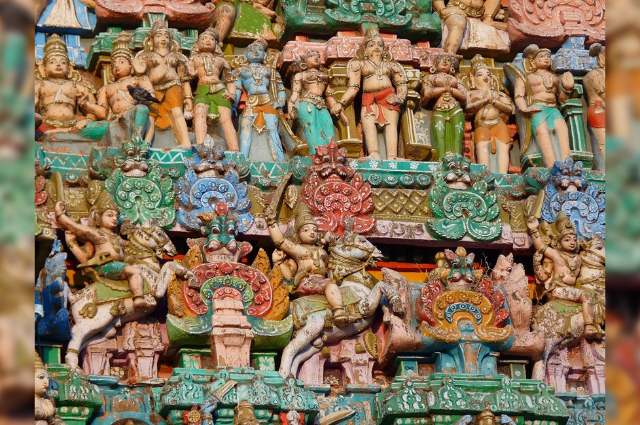
Image by LoggaWiggler from Pixabay
“A nation’s culture resides in the hearts and in the soul of its people.” These words beautifully capture what my culture means to me. For me, culture is not merely a collection of customs and traditions inherited from previous generations; it is my identity, my guiding light, and the foundation upon which my values, beliefs, and aspirations are built. Being born and brought up in India has been one of the greatest blessings of my life. Every aspect of my upbringing has been deeply rooted in the rich heritage of this extraordinary land, making me immensely proud of who I am.
India is often described as a land of diversity, where countless languages, traditions, festivals, cuisines, and art forms coexist in remarkable harmony. Yet beneath this diversity lies a common thread—a timeless culture that teaches respect, compassion, tolerance, and the pursuit of knowledge. Growing up in such an environment has instilled in me a profound admiration for Indian culture. The values I learned as a child continue to shape my decisions and define my character even today.
One of the strongest pillars of my cultural identity is my unwavering faith in Hinduism and its timeless wisdom. To me, Hinduism is far more than a religion; it is a way of life. It teaches acceptance rather than intolerance, self-realisation rather than materialism, and duty over desire. The ancient scriptures, including the Vedas, Upanishads, Bhagavad Gita, Ramayana, and Mahabharata, are not merely religious texts—they are timeless guides that offer practical lessons for leading a meaningful life.
The stories from Hindu mythology have fascinated me since childhood. As a young child, I eagerly listened to tales of Lord Rama’s righteousness, Lord Krishna’s wisdom, Goddess Durga’s courage, Lord Shiva’s simplicity, and Lord Ganesha’s intelligence. These stories were never just bedtime tales; they became lessons in integrity, perseverance, compassion, and humility. Even today, whenever life presents challenges, I find inspiration in these legendary characters whose virtues continue to guide millions across generations.
I deeply admire the philosophy of “Vasudhaiva Kutumbakam”—the world is one family. This ancient Indian belief reflects the inclusiveness and universal brotherhood that have always been at the heart of our civilisation. Similarly, the concepts of karma, dharma, and moksha encourage us to lead lives of responsibility, righteousness, and self-awareness. These principles remain remarkably relevant in today’s fast-paced and competitive world.
Indian festivals hold a very special place in my heart because they are celebrations not only of faith but also of togetherness. Every festival carries a unique story, spiritual significance, and emotional warmth. Diwali fills homes with the light of hope and positivity. Holi paints life with vibrant colours and joyful laughter. Navratri celebrates the divine feminine power through devotion and dance. Raksha Bandhan strengthens the bond between siblings, while Janmashtami reminds us of Lord Krishna’s playful wisdom and eternal teachings.
What I love most about Indian festivals is the way they bring families together. Preparations begin days in advance; homes are cleaned and decorated, delicious food is prepared, prayers are offered, and relatives gather to celebrate with love and laughter. In today’s busy world, these festivals serve as precious reminders that relationships are life’s greatest treasures. They reinforce our sense of belonging and preserve traditions that have been lovingly passed down through generations.
Food is another beautiful expression of Indian culture that I cherish deeply. India’s culinary diversity is as fascinating as its geography. Every region has its own distinctive flavours, spices, cooking techniques, and traditional recipes. From the comforting aroma of freshly prepared dal and rice to the richness of festive sweets like laddoos, jalebis, gulab jamuns, and kheer, every dish tells a story of history, community, and celebration.
Indian cuisine is not simply about satisfying hunger; it reflects hospitality, generosity, and affection. We believe that serving food is an act of love and that every guest should be treated as “Atithi Devo Bhava”—the guest is equivalent to God. Family meals, festive feasts, and community kitchens beautifully demonstrate how food becomes a medium for strengthening human bonds.
Another aspect of Indian culture that fills me with admiration is its rich tradition of dance and music. Classical dance forms such as Bharatanatyam, Kathak, Odissi, Kuchipudi, Manipuri, Kathakali, Mohiniyattam, and Sattriya are not merely performances; they are visual expressions of devotion, storytelling, and artistic excellence. Every graceful movement, facial expression, and rhythmic step carries centuries of cultural heritage.
Alongside classical forms, India’s vibrant folk dances reflect the spirit of its diverse regions. Whether it is Garba during Navratri, energetic Bhangra from Punjab, Ghoomar from Rajasthan, Lavani from Maharashtra, or Bihu from Assam, every dance celebrates community life, harvest, festivals, and shared happiness. Watching or participating in these performances always fills me with immense pride in my country’s artistic richness.
Among all forms of Indian attire, the saree holds a particularly special place in my heart. To me, the saree is much more than a garment; it is a symbol of elegance, grace, dignity, and timeless femininity. Its beauty lies in its simplicity and versatility. Every state in India has its own distinctive style of weaving and draping—from Banarasi and Kanjeevaram to Bandhani, Chanderi, Paithani, Patola, Sambalpuri, and many more. Each saree reflects the craftsmanship, history, and traditions of its region.
Whenever I see a woman gracefully draped in a saree, I see generations of culture woven into every thread. Whether worn during weddings, festivals, family celebrations, or formal occasions, the saree represents confidence, sophistication, and cultural pride. Despite changing fashion trends, the saree has remained timeless, proving that true elegance never goes out of style. It continues to inspire designers across the world while preserving its uniquely Indian identity.
Indian culture has also taught me the importance of respecting elders, valuing education, caring for family, and living with humility. Simple practices such as seeking blessings from elders, touching their feet as a mark of respect, lighting a lamp before beginning important work, practising gratitude, and offering prayers remind me that spirituality can be woven into everyday life. These customs nurture discipline, gratitude, and emotional strength.
At the same time, I appreciate that Indian culture has always embraced learning and innovation. Ancient India made remarkable contributions to mathematics, astronomy, medicine, philosophy, architecture, yoga, and literature. This rich intellectual heritage inspires me to pursue knowledge while remaining firmly connected to my roots. I believe that preserving our traditions does not mean resisting progress; rather, it means carrying our values forward as we embrace the future.
In an increasingly globalised world, cultures often influence one another, and change is inevitable. While I enjoy learning about different cultures and appreciate their uniqueness, my own Indian identity remains the foundation of who I am. My culture reminds me that true progress is meaningful only when accompanied by compassion, integrity, and respect for humanity. It gives me confidence to face modern challenges without losing sight of my values.
To me, being Indian is not limited to nationality—it is a lifelong privilege and responsibility. It means carrying forward a civilisation that has flourished for thousands of years while continuing to evolve with dignity and wisdom. Every prayer I offer, every festival I celebrate, every traditional meal I enjoy, every mythological story I remember, and every saree that symbolises timeless elegance deepens my connection with this magnificent heritage.
My culture has shaped my personality, enriched my thinking, and given purpose to my life. It has taught me to remain grounded while dreaming big, to honour the past while embracing the future, and to respect every individual regardless of differences. I feel immense gratitude for being born and brought up in India—a land where spirituality meets science, tradition meets innovation, and diversity blossoms into unity.
As I continue my life’s journey, I carry my culture with pride in my heart. It is my greatest inheritance, my strongest identity, and my everlasting source of inspiration. No matter where life takes me, I will always cherish the values, traditions, faith, festivals, food, dances, and timeless beauty of India. They are not merely parts of my culture—they are a part of me.
India is not simply the country where I was born.
It is the rhythm of my heartbeat.
It is the language of my soul.
It is my greatest pride.
And my culture is the most precious inheritance I will ever possess.
Long Live India’s Unity in Diversity