
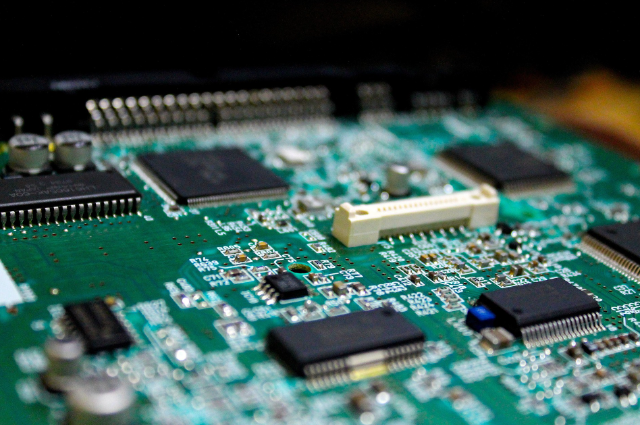
In the upcoming years, don't be shocked if the prices of affordable phones start increasing and crossing your budget. And it's not just phones. Laptops, gaming consoles, cars, smart TVs and many other electronic devices could also become more expensive. But why? What does AI have to do with the price of the phone in your hand? Let's uncover the mystery. One of the most trending and buzzing terms we've been hearing almost every single day is: AI. Yes, you read that right. AI, data centres. The rapid growth of AI is creating an enormous demand for something most of us don't think about much: Memory. And that growing demand is beginning to affect the memory used in everyday devices, including smartphones. You may have already heard dramatic terms like “RAMpocalypse” or “RAMmageddon.” These terms are being used to describe the growing pressure on memory supply and the rise in memory prices. But how can something happening inside massive AI data centres eventually make your phone more expensive? Let's break it down.
Whenever we buy a phone, we usually look at the RAM, storage, camera, battery and processor. But when it comes to this situation, two specifications are particularly important: RAM and storage. RAM is powered by a technology called DRAM — Dynamic Random-Access Memory. Think of DRAM as your desk. When you're working, you keep the things you need right in front of you. Similarly, your phone temporarily keeps the apps and data it is currently using in RAM, so the processor can access them quickly. More RAM generally means more working space for multitasking. But RAM is temporary. When you switch off your phone, the information stored there disappears. So: DRAM = your desk — fast, temporary working space. Now let's talk about storage. Your phone's internal storage uses NAND flash memory. Think of NAND as your cupboard. Your cupboard stores the things you want to keep for later. In the same way, NAND storage keeps your photos, videos, apps, documents and other files even when your phone is switched off.
So when you see:
8 GB RAM + 256 GB storage: these aren't two versions of the same thing.
8 GB RAM = your desk.
256 GB storage = your cupboard.
Your desk determines how much you can work with at once, while your cupboard determines how much you can store. Simple enough, right?
But here's where things get interesting.
AI systems need an enormous amount of computing power. And powerful AI processors need extremely fast memory to keep feeding them data. This is where HBM — High Bandwidth Memory comes in. Think of an AI processor as an extremely fast worker. If the worker is extremely fast but the data reaches them slowly, the worker has to wait.
HBM helps solve that problem by allowing huge amounts of data to move between memory and the processor very quickly. As AI models become larger and more powerful, data centres need more and more of this high-performance memory. And that is creating a new kind of competition.
Why Is AI Competing With Your Smartphone? Here's the chain reaction:
More AI → more data centres → more AI processors → more HBM demand → manufacturers shift capacity toward AI memory → tighter supply of consumer memory.
Memory manufacturers don't have unlimited production capacity. Companies such as SK hynix, Samsung and Micron produce different kinds of memory for different markets. But HBM is extremely valuable because of the huge demand coming from AI infrastructure. So manufacturers have a strong financial reason to dedicate more of their capacity to these high-value products. They aren't simply stopping smartphone memory production. Instead, the balance starts shifting.
And when less capacity is available for conventional memory, smartphone manufacturers can face tighter supply and higher component costs. So, in very simple terms: More demand + limited production = tighter supply + higher prices. And when the memory inside your phone becomes more expensive, eventually that cost can reach you.
You might be thinking: “If there's a shortage, why don't Samsung, SK hynix and Micron just make more?” Well, semiconductor manufacturing isn't something you can expand overnight. HBM itself is complicated to manufacture because it involves stacking multiple layers of memory together with extremely precise technology. Then there is advanced packaging. The memory has to be packaged very closely with powerful AI processors so that enormous amounts of data can move quickly between them. And building new semiconductor manufacturing capacity takes years. A new factory requires huge investments, specialised equipment and highly controlled environments. So manufacturers basically have two choices: Wait years for new capacity to become available… Or redirect some existing capacity toward the products that are currently in the highest demand. And because AI memory is so valuable, manufacturers have a strong reason to prioritise it. But there's a catch. Every bit of capacity redirected toward AI memory can mean less capacity available for conventional memory used in smartphones, PCs and other electronics. And that's why this problem can't simply be solved by saying: “Make more chips.” The industry needs more factories, more equipment, more advanced packaging capacity — and most importantly, time.
How Can This Affect Your Phone? The chain is actually quite simple:
Tighter memory supply → higher memory prices → higher manufacturing costs → difficult choices for phone manufacturers → possible impact on consumers. So what can smartphone companies do? They have a few options.
- Increase the Price - The most obvious one. If components become more expensive, manufacturers can pass some of that additional cost to consumers.
- Give You Less for the Same Price - Instead of increasing the price, manufacturers could reduce the RAM or storage configuration. So you may not necessarily pay more. But you could get less for the same money.
- Absorb the Cost - Companies can also choose to absorb some of the additional cost themselves. But that means accepting lower profit margins. The actual strategy will depend on the company, its pricing power and the market it is targeting.
Here's something interesting. A memory price increase doesn't affect every phone equally. Imagine a ₹10,000 smartphone and a ₹1,00,000 smartphone. If rising memory costs add ₹2,000 to manufacturing costs, that's a 20% increase for the ₹10,000 phone. For the ₹1,00,000 phone, it's only 2%. That's the percentage trap. For budget phones, even a relatively small increase in component costs can make a huge difference.
And customers buying affordable phones are usually much more price-sensitive. If a ₹10,000 phone suddenly becomes ₹12,000, many buyers may simply postpone the purchase or choose another phone. Premium phones have more room to absorb some of the additional cost. So when memory prices rise, budget smartphones can feel the pressure first and hardest.
This memory pressure doesn't stop with phones. Laptops and PCs use both RAM and storage, so higher DRAM and NAND prices can affect them too. Gaming consoles depend on high-speed memory and storage. Cars are becoming increasingly dependent on electronics, from digital dashboards and infotainment systems to driver-assistance features. And then there are smart TVs, security cameras, streaming devices and smart home appliances. All of them depend on memory and storage in some form. So this isn't simply a “phone problem.” It's part of a much bigger shift happening across the technology industry.
And now comes the difficult question: When will the memory shortage end? There isn't a simple answer. Some estimates point toward improvement around 2027 or 2028, while others suggest the pressure could continue even longer. The reason is pretty straightforward. AI demand is growing now. But building new semiconductor capacity takes years. So the industry is caught between two enormous forces: An AI boom that keeps demanding more memory… and a manufacturing industry that needs years to build enough capacity. Until supply catches up with demand, memory costs could continue putting pressure on electronics prices.
You don't need to panic-buy a phone just because you're hearing about a memory shortage. If your current phone is working perfectly, there's no reason to rush into an upgrade. But when you eventually buy your next device, don't look only at the price tag. Look at what you're actually getting for that price. Check the RAM. Check the storage. Check the processor. And remember, virtual RAM isn't the same as physical RAM. It uses part of your storage to simulate additional working memory, but it cannot completely replace actual DRAM. The important thing is to understand what you're paying for. Because in the coming years, the numbers written next to RAM and storage may become even more important when deciding whether a phone is actually worth its price. The AI boom isn't only changing how we use technology. It's changing what gets manufactured, who gets priority, and potentially how much we pay for the devices we use every day. So the next time you see a phone advertised with 8 GB or 12 GB of RAM, remember: That tiny number represents a much bigger story. Behind it are semiconductor factories, AI data centres, powerful processors, and billions of dollars competing for the same manufacturing capacity. And somehow, that competition inside an AI data centre could eventually show up on the price tag of the phone in your hand.
References :
- https://www.idc.com
- https://www.reuters.com
- https://www.reddit.com
- https://finance.yahoo.com
- https://en.wikipedia.org