
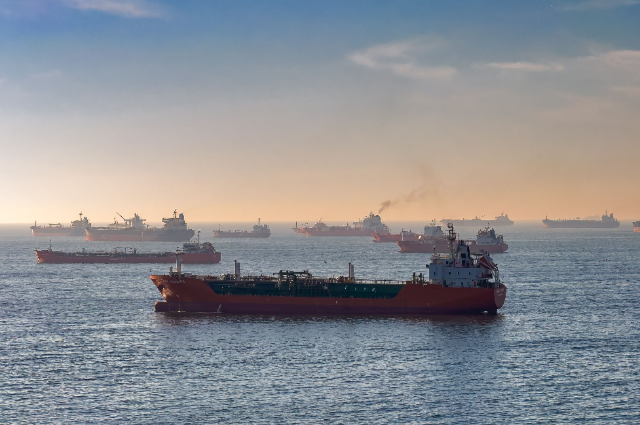
There is a stretch of water only 21 miles wide at its narrowest point — wedged between Iran and Oman — that quietly governs the fate of global economies. The Strait of Hormuz carries roughly 20 per cent of the world's oil and about one-third of the world's liquefied natural gas every single day. When that corridor closes, it is not just energy markets that flinch. Inflation spikes. Supply chains fracture. Ordinary people paying at the pump feel the tremor. And in the spring of 2026, that corridor became the centre of a geopolitical standoff unlike anything the world has seen in a generation.
Since early 2026, the United States and Israel have been in active military conflict with Iran — a war that most Western headlines initially underplayed, but that has since forced itself onto the front page of nearly every global publication. President Donald Trump, now in the most turbulent stretch of his second term, has been navigating simultaneous crises across foreign policy, the domestic economy, and a fracturing political coalition — all while attempting to broker a deal with a nation his own administration has repeatedly threatened to decimate. The story of how we got here, what is being negotiated, and what it means for the world is worth understanding in full.
The War Nobody Wanted to Call a War
The conflict escalated in stages. In late March 2026, Trump gave Iran a 48-hour ultimatum to reopen the Strait of Hormuz, which Iran had effectively shut down to international shipping — a move that sent global oil prices surging and triggered immediate supply-chain anxiety across Asia, Europe, and North America. When Tehran rejected the ultimatum, Trump threatened to destroy Iran's power plants, bridges, and energy infrastructure, telling reporters at the White House there was a good chance of a deal but warning that U.S. forces could decimate Iran in one night if no agreement was reached. By April 1, U.S. and Israeli strikes were underway inside Iran, with smoke rising over Tehran.
The economic consequences were immediate and felt personally by millions. U.S. inflation — already elevated by Trump's sweeping tariff policy — spiked further as energy prices climbed. Brent crude oil, which had been trading in the mid-$70s per barrel entering 2026, pushed toward $110 as tankers rerouted or anchored indefinitely. Reuters reported that dozens of countries scrambled to find alternative energy routes, while OPEC+ held emergency meetings to increase production quotas by 206,000 barrels per day in an attempt to stabilise markets. None of it fully worked. The disruption was too concentrated, the bottleneck too tight.
"Largely Negotiated" — A Phrase Doing a Lot of Heavy Lifting
On May 23, 2026, Trump posted on Truth Social that a deal had been largely negotiated, describing a two-phase framework: first, a reopening of the Strait of Hormuz; second, a broader reckoning with Iran's nuclear program. The announcement sent markets briefly higher and generated cautious optimism among U.S. allies. But within hours, the Iranian side issued a pointed rebuttal. Iran's Fars News Agency called Trump's characterisation of the deal incomplete and inconsistent with reality. Iran's chief negotiator, Mohammad Bagher Ghalibaf, struck a defiant tone, stating publicly that Iran will not back down from the rights of the nation and country. A senior Iranian source confirmed to Reuters that Tehran had not agreed to surrender its stockpile of highly enriched uranium — and that the nuclear question was not even on the table in the preliminary agreement.
According to reporting from Axios, the framework being discussed involves a 60-day ceasefire extension during which the Strait of Hormuz would reopen with no tolls, Iran would clear the mines it deployed in the waterway to allow ships to pass freely, and the U.S. would lift its blockade on Iranian ports while unfreezing some Iranian assets held in foreign banks. After those 60 days, negotiations on Iran's nuclear program would begin in earnest. It is, at its core, a pause — not a peace. And whether that pause becomes something durable is far from certain.
What makes this moment especially complex is the internal disagreement about what the deal even says. Iran's foreign ministry stated that any mechanism concerning the Strait of Hormuz is a matter for Iran, Oman, and the bordering states — and that the United States has nothing to do with it. Meanwhile, Trump publicly posted that he would not rush into a deal, keeping both allies and adversaries guessing about the final shape of any agreement. U.S. Secretary of State Marco Rubio offered cautious optimism while speaking to reporters in New Delhi, calling the overall direction positive — without committing to specifics.
Israel's Warning: You Just Handed Iran a New Weapon
Among the most striking responses to Trump's announcement came not from Democrats or foreign adversaries, but from Israel — America's closest partner in the conflict. A senior Israeli official, speaking anonymously to reporters, said the emerging agreement was bad for a specific and strategic reason: it signals to Iran that control over the Strait of Hormuz is, effectively, a weapon no less powerful than a nuclear bomb. Democratic Congressman Jake Auchincloss of Massachusetts put it plainly: Iran now recognises that its control over the strait is even more strategically vital than the development of a nuclear weapon — a view that strikingly aligned with Israeli security concerns.
This is the uncomfortable strategic paradox at the heart of the current negotiations. By going to war partly to neutralise Iran's nuclear threat, the United States and Israel may have inadvertently demonstrated — and thereby solidified — Iran's leverage over global energy infrastructure. The Strait of Hormuz is not a nuclear warhead. It cannot be dismantled through sanctions or destroyed in a single strike. It is geography. And geography, as history has repeatedly shown, is one of the most durable forms of power in existence.
Senator Ted Cruz of Texas echoed similar concerns from the American right, posting on X that Trump should hold firm to his red lines and warning that any deal allowing Iran to develop nuclear weapons while maintaining control over the Strait would be a disastrous mistake. The bipartisan unease surrounding the emerging framework speaks to just how difficult this negotiation actually is — not just diplomatically, but structurally. The two most important issues (the waterway and the nuclear program) are being deliberately sequenced, which means one can be resolved without the other ever being addressed.
The Domestic Storm Running Parallel
It would be a mistake to analyse the Iran situation in isolation, because Trump is simultaneously managing a domestic economic and political crisis that is directly shaping his incentives at the negotiating table. His signature One Big Beautiful Bill passed the House but has been widely criticised — including by his former ally Elon Musk, who called it a disgusting abomination after departing the administration. Musk, whose public rupture with Trump has become one of the defining political stories of 2026, also warned that Trump's sweeping tariff policy — described by economists as the largest tax increase as a share of GDP since 1993 — could trigger a recession by year's end.
The numbers tell a complicated story. While the bill's proponents argue it fuels long-term growth, independent analyses suggest that only the wealthiest 5 per cent of Americans are seeing meaningful financial relief under the combined effect of tariffs and the new legislation — while average households are paying more, not less. With a 60 per cent disapproval rating and midterms approaching, Trump's political calculus around Iran is inseparable from his domestic position. A successful deal — one he can frame as a historic win — could reshape his political standing significantly. Which may explain why he keeps publicly insisting he will not be rushed, even as the framework is reportedly close to finalised.
What This Means Beyond the Headlines
For anyone paying attention to how power actually works in the 21st century, this moment offers something important to sit with. The Strait of Hormuz is not a metaphor — it is a physical chokepoint through which the lifeblood of the modern industrial economy flows. Its disruption in 2026 did what decades of diplomatic pressure, economic sanctions, and military threats failed to do: it forced the world's most powerful military to negotiate seriously with a nation it had been bombing.
This is a lesson in infrastructural power — the kind that rarely makes the first paragraph of a geopolitics textbook but shapes outcomes more decisively than almost any other variable. China understood this lesson early, investing heavily in the Belt and Road Initiative to build alternative trade corridors across Central Asia, reducing dependence on maritime chokepoints. The European Union has spent years trying to diversify its energy supply away from single points of dependence. And yet, in 2026, a 21-mile-wide passage still held the world hostage.
Trump's diplomatic challenge now is to extract from Iran a durable commitment on its nuclear program — the issue that has animated U.S. policy in the region for two decades — while managing a ceasefire framework that both sides are describing differently to their own publics. That gap between the two narratives is not just rhetorical noise. It is the actual negotiating gap that could cause the deal to collapse. Whether the 60-day window produces a genuine framework or simply delays the next escalation will define one of the most consequential foreign policy chapters of this decade.
The Deal That Isn't Signed Yet
History tends to remember moments like this in binary terms — the deal that worked, or the one that didn't. But the reality, as it is unfolding right now, is far more textured. Iran has signaled willingness to step back from the brink. Trump has signaled willingness to negotiate. The world is watching a 60-day framework take shape that could reopen one of the most critical trade corridors on Earth — or collapse under the weight of unresolved nuclear demands, domestic politics, and two governments describing the same agreement in fundamentally different terms.
What is certain is this: the Strait of Hormuz will remain a pressure point in global geopolitics long after whatever deal is eventually signed. The geography hasn't changed. The dependence hasn't changed. And the lesson — that controlling physical infrastructure is one of the deepest forms of leverage a nation can hold — will not be forgotten by anyone who was paying attention in the spring of 2026.
References
- CNBC — Trump says deal with Iran is 'largely negotiated,' will be announced soon (May 23, 2026)
- NPR — Trump: Deal with Iran is 'largely negotiated' (May 23, 2026)
- CNN — Trump says agreement with Iran has 'been largely negotiated' (May 23, 2026)
- Axios — Exclusive: What's inside the Iran deal Trump is close to signing (May 24, 2026)
- News on Air — Trump gives 48-hour ultimatum to Iran to open Strait of Hormuz (April 5, 2026)
- News on Air — Trump warns Iran of action if Strait not reopened by deadline (April 6, 2026)
- Fox News — Trump touts 'significant' Iran gift linked to Strait of Hormuz (March 24, 2026)
- Rep. Auchincloss — Iran's control of the Strait is 'more strategically vital' than nuclear weapons (April 5, 2026)
- Reuters via AOL — World anxious to open Hormuz Strait while Trump and Iran trade threats (April 2, 2026)