
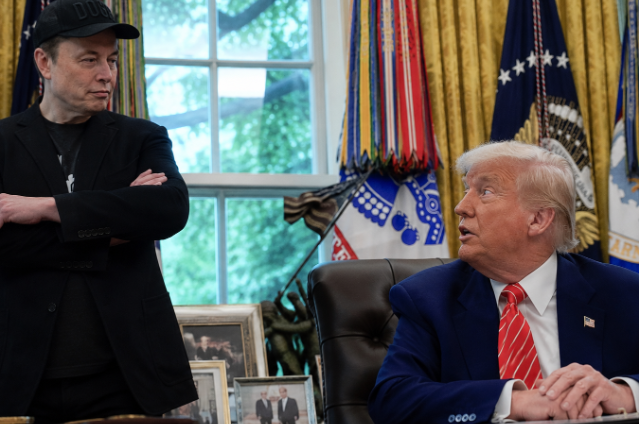
In politics, few friendships are as loudly celebrated or as spectacularly destroyed as the one between Donald Trump and Elon Musk. What once looked like the defining power alliance of a generation has unravelled in real time, triggered not by betrayal or scandal but by a 1,038-page piece of legislation. Trump’s “One Big Beautiful Bill” didn’t just divide Congress. It blew up the most-watched bromance in American political history and, in doing so, exposed the deepest contradictions inside the MAGA movement itself.
To understand the fallout, you have to understand what brought these two men together in the first place. Musk didn’t just endorse Trump; he invested in him. He poured an estimated $300 million into GOP races during the 2024 election cycle. He took a senior role in the new administration as head of the Department of Government Efficiency, playfully acronymed DOGE. The partnership felt historic: the world’s richest man and America’s most polarising president, united by a shared vision of a leaner, faster, disruption-first government. Trump gave Musk a golden key to the Oval Office. Musk gave Trump a tech-world credibility that no Republican had managed before. For a while, it worked.
Then came the bill.
After Musk left the White House, the rupture between him and Trump spilt into the open when Musk called Trump’s signature domestic policy bill a “disgusting abomination”.The numbers Musk pointed to were hard to argue with. The Congressional Budget Office estimated the Senate version of the bill would increase federal budget deficits by $3.3 trillion between 2025 and 2034. When future interest costs are factored in, that figure climbs to $4.1 trillion. If the temporary tax cuts embedded in the bill are eventually made permanent, which is politically likely, the total cost could reach $5 trillion. For someone who had spent months in Washington wielding a chainsaw at government budgets, this wasn’t just disappointing. It was a betrayal of everything DOGE stood for.
Trump’s counter-argument was that the bill would benefit everyday Americans. On average, taxpayers are projected to save about $2,900 per household in 2026,
according to the Tax Policy Centre, but the relief is deeply unequal. About $6 of every $10 in tax breaks flows to the top 20% of households, those earning $217,000 or more. Meanwhile, households in the bottom income bracket earning up to $34,600 a year will save an average of just $150, or 0.8% of their income, while those in the top quintile save an average of $12,540, or 2.5% of theirs. In other words, the bill cuts taxes for everyone, just not equally. And when you factor in Trump’s sweeping tariff regime running alongside it, the largest tax increase as a share of GDP since 1993, many middle and lower-income Americans are arguably paying more overall, not less.
Trump’s explanation for Musk’s fury was characteristically blunt: Musk was angry because the bill stripped out electric vehicle tax credits that had been quietly boosting Tesla’s bottom line. It was a sharp accusation, essentially calling Musk’s outrage a cover for corporate self-interest. Musk fired back hard, accusing Trump of being “in the Epstein files” and threatening to primary every Republican who voted for the bill. “Every member of Congress who campaigned on reducing government spending and then immediately voted for the biggest debt increase in history should hang their head in shame,” Musk wrote on X. Tesla’s stock fell nearly 6% during the peak of the feud. Musk even floated launching an entirely new political party, a remarkable threat from a man who had just months earlier been credited with helping deliver Trump’s election victory.
The Senate passed the bill 51–50 after a marathon overnight session, and Congress cleared it by Trump’s self-imposed July 4 deadline. But the political cost was significant. Trump threatened to use DOGE to scrutinise Musk’s government subsidies and contracts, striking a reversal from the man who had handed Musk the keys to federal efficiency. The White House press secretary called the feud “an unfortunate episode,” but the damage to both men’s images was real. Musk, for all his bravado, eventually backed down. Trump got his bill signed into law. Neither came out looking entirely clean.
The Trump–Musk split is more than celebrity drama. It reveals a real fault line at the heart of the MAGA coalition between the fiscal hawks who wanted government genuinely reduced, and the political machine that needed a legislative win badly enough to pass a bill that adds trillions to the debt. Critics have called the One Big Beautiful Bill the largest transfer of wealth from the poor to the rich in a single law in U.S. history, stripping food assistance from millions, leaving an estimated 10 million more people without health coverage, while simultaneously cutting taxes for the wealthiest Americans by over $50,000 per year per household in the top 1%.
In the end, the bill passed. The bromance didn’t survive it. And somewhere between the Truth Social posts and the X polls and the Tesla stock dips, a simple truth became impossible to ignore: when ideology meets self-interest, even the most powerful alliances crack. The “One Big Beautiful Bill” may have been Trump’s greatest legislative victory, but it cost him something no legislation can buy back.
References
- Tax Foundation taxfoundation.org
- Tax Foundation (House version) taxfoundation.org
- Tax Policy Centre cbsnews.com
- Yale Budget Lab budgetlab.yale.edu
- Bipartisan Policy Centre bipartisanpolicy.org
- Centre for American Progress americanprogress.org
- NBC News nbcnews.com
- The Hill thehill.com
- Axios axios.com
- Snopes snopes.com
- Wikipedia (Trump–Musk feud timeline) en.wikipedia.org