
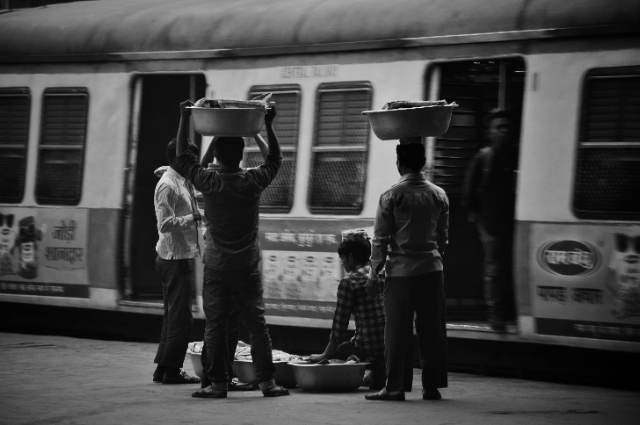
Mumbai’s suburban rail network carries over 70 lakh commuters every single day, weaving through the city like a second circulatory system. On the night of June 23, 2026, that lifeline became the scene of a tragedy that started with something almost absurdly small — a request to shut a train door — and ended with a 22-year-old man dead.
Mayank Lohar was a resident of Virar who worked as a salesman at a private company in Andheri. Like thousands of others that evening, he was simply trying to get home after a long day. He boarded the first-class coach of the Churchgate– Nallasopara Fast Local, Train No. 90663, which pulled out of Churchgate at 10:05 PM. Mumbai was deep in monsoon rain that night, the kind that blows sideways into open train doors and soaks everyone standing near them. Somewhere between Andheri and Borivali, Lohar turned to a fellow passenger and asked him to close the coach door.
It’s the sort of exchange that happens a hundred times a night on Mumbai locals, usually settled with a shrug or a grumble. This time it didn’t stay small. Words were exchanged, tempers flared, and the disagreement escalated with startling speed. The other passenger pulled out a knife and stabbed Lohar in the abdomen, right there in the moving compartment, with other commuters around them.
As the train rolled into Borivali, the attacker didn’t linger. He leapt off onto Platform No. 6 before the train had even come to a complete stop, disappearing into the platform crowd within seconds. Personnel from the Railway Protection Force and the Government Railway Police, alerted almost immediately, rushed to the spot and got Lohar into the station’s emergency room. But the wound was too severe. He was shifted to Shatabdi Hospital in Kandivali, where he later died.
In the chaos that followed, a video from inside the coach began circulating widely. It showed the attacker still standing near the scene moments after the stabbing, weapon in hand, while nearby passengers visibly recoiled and put distance between themselves and him. The clip spread fast, and with it, a wave of anger and unease among daily commuters who suddenly saw their own routine evening ride in a very different light.
What could have easily turned into another case that drags on for months, with a suspect vanishing into the city’s vastness, instead moved with unusual speed. Borivali GRP got to work quickly, pulling CCTV footage from the station and
the train, and cross-checking it against passenger statements. That effort paid off. The accused was identified as Roshan Suvarna, 30, and traced to the Panvel area of Navi Mumbai. He was arrested within 24 hours of the attack, a rare quick resolution in a case that began with the accused literally jumping off a moving train to escape.
Western Railway, for its part, said it was extending full cooperation to investigators and remained committed to passenger safety, pointing to the swift emergency response on the night of the incident as evidence of that commitment. But for regular commuters, the reassurance only goes so far. This is not the first time in 2026 that an ordinary disagreement on a Mumbai local has spiralled into a stabbing. Back in February, a 32-year-old college lecturer from Vile Parle was stabbed while trying to get off a train. That case, too, ended in an arrest — the accused, Omkar Shinde, was picked up by police soon after — but the fact that it happened at all, twice within the same year, on the same stretch of suburban rail, is hard to shrug off as coincidence.
There’s something particularly unsettling about the ordinariness of both triggers. A door needing to be shut against the rain. A passenger trying to get off at his stop. These aren’t confrontations born of long-standing feuds or premeditated grudges — they’re the kind of split-second friction that plays out in Mumbai’s local trains every single day, usually resolved with nothing more than an irritated word or two. That two of these frictions turned lethal within the space of a few months says less about the individuals involved and more about the pressure cooker environment of the city’s rail commute itself: packed compartments, long hours, short tempers, and, increasingly, people carrying knives on their evening ride home.
For Lohar’s family in Virar, none of this context will bring back a 22-year-old who left for work one morning and never made it home. For Mumbai’s commuters, the? adds to a quiet but growing anxiety about a system they have no real alternative to — the locals remain the fastest, cheapest, and often only way to get across a city this size, rain or no rain, argument or no argument. The swift arrest in this case may offer some measure of closure, but it does little to answer the harder question hanging over the city’s rail network this monsoon: what does it take for an ordinary evening commute to turn deadly, and how many more warnings will it take before something changes?
Sources:
ANI (X/Twitter) — official statement on the incident and GRP investigation Newsgram — “Mumbai Local Train Murder: Mayank Lohar Stabbed to Death, Accused Arrested” (June 25, 2026)