
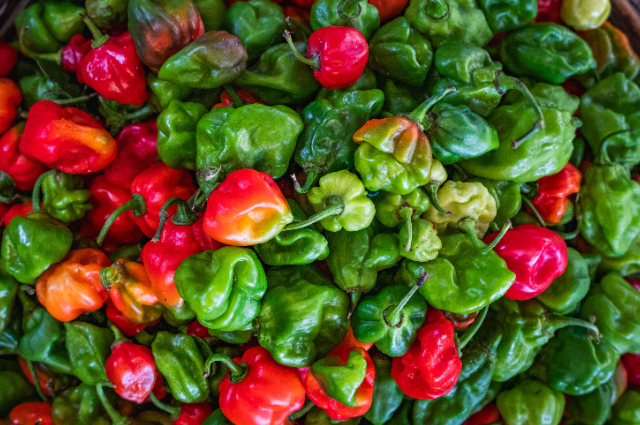
Every time you bite into something spicy, your mouth isn’t tasting heat — it’s reporting an emergency. Capsaicin, the compound responsible for the burn in chillies, doesn’t interact with your taste buds the way salt or sugar does. It doesn’t belong to flavour at all, technically. Instead, it binds to TRPV1 receptors — the sensors your nervous system uses to detect dangerously high temperatures. Boiling water. Open flames. The kind of heat that causes real, lasting tissue damage. Your body, when it encounters capsaicin, cannot tell the difference between a green chilli and a lit match held to your tongue. The signal it receives is identical. Something is burning. Something is wrong. And it responds accordingly.
The pain signal goes up, your brain receives it, and does exactly what it’s designed to do when the body is under threat — it releases endorphins. The same neurochemicals that flood your system after a serious injury or an intense workout. They blunt the pain, stabilise the system, and keep you functioning while whatever crisis is happening gets sorted out. Except there is no crisis. There’s just a bowl of curry. But your brain doesn’t know that. All it has is the signal — heat, threat, pain — and it responds with everything it’s got. The endorphins arrive, the intensity softens, and something unexpected happens in the middle of all that chemical chaos: it feels good. Not good the way eating something delicious feels good. Good the way relief feels good. Your nervous system, in trying to rescue you from a fire that doesn’t exist, has accidentally handed you a reward. And your brain, being the pattern-recognition machine it is, files that away immediately.
This is where it stops being a food story. Because now there’s a loop — you ate something your body classified as dangerous, your body released chemicals to counteract the danger, and those chemicals produced a sensation you’d describe, if pushed, as a kind of rush. People who eat spicy food regularly will recognise this: the way a really hot meal leaves you feeling weirdly alert and calm at the same time. That’s not the chilli. That’s your endorphins. And the next time you sit down to eat, some part of your brain remembers.
Here’s where it gets structurally uncomfortable: this is tolerance. Not metaphorical tolerance — actual, physiological, receptor-level tolerance. When capsaicin hits your TRPV1 receptors repeatedly, those receptors adapt. They downregulate. They require more stimulation to fire at the same intensity. The chilli that felt like a crisis last year barely registers now. So you reach for something hotter, not because your taste has changed, but because your nervous system has recalibrated around the input you keep giving it. The craving stays consistent; the threshold keeps moving. If you described this pattern in any other context — a substance that causes pain, triggers endorphins, produces pleasure, and eventually requires increasing doses for the same effect — it would read like a pharmacology textbook. But because it’s food, because it’s cultural, it sits in a different category in our heads. It’s just spice. Except what some people like, neurologically speaking, is a pain-induced high they’ve built a tolerance to.
None of this is an argument against eating spicy food. The body’s capacity to adapt is impressive, and the endorphin release that comes with spice has real, documented effects on mood. There are worse habits to have. But it’s worth sitting with the honesty of what’s actually happening when you reach for the hot sauce. Your body called a medical emergency. You felt the chemicals kick in, decided that counted as enjoyment, and quietly built your lunch habits around it. The alarm is still going off. You’ve just learned to find it comfortable.
Sources:
- ScienceDirect
- PMC (PubMed Central)
- Oxford Academic
- Varsity
- Biology Insights