
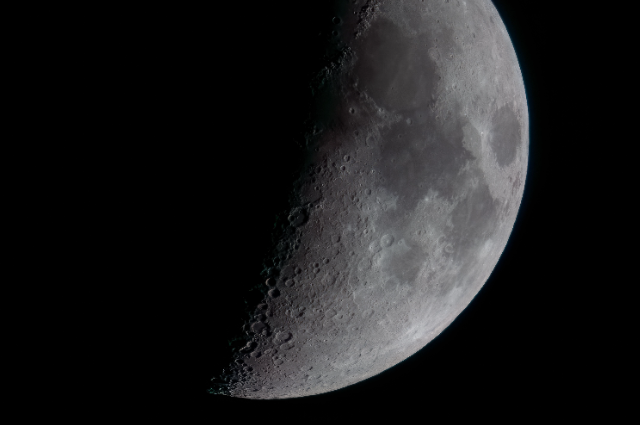
People remember grand achievements but forget the humble beginnings that made them possible. Today, India is recognized as one of the leading nations in space exploration. Its spacecraft have reached the Moon and Mars, its satellites support millions of people every day, and its scientists continue to push the boundaries of innovation. The story of India's rise in space exploration began with a vision, a handful of determined scientists, and a belief that even a developing nation could reach for the stars.
The story of the Indian Space Research Organisation (ISRO) is one of the most remarkable success stories of modern India—a journey marked by perseverance, ingenuity, setbacks, and triumphs, demonstrating how determination and purpose can overcome even the greatest limitations.
In the years after independence, India faced numerous challenges. Poverty, illiteracy, and limited infrastructure demanded urgent attention. Many people questioned whether a space program was a practical priority under such circumstances. Many believed that space exploration was a luxury reserved for wealthy nations. However, one visionary scientist believed otherwise.
Dr. Vikram Sarabhai, often regarded as the father of the Indian space program, saw great potential in space technology. Unlike many countries that viewed space exploration primarily as a symbol of power, Sarabhai believed it could directly improve people's lives. He envisioned satellites helping farmers monitor crops, improve agricultural planning, and make informed decisions; assisting meteorologists in predicting weather patterns and storms; supporting communication networks; and expanding access to modern education across the country.
His vision became the foundation of India's great space ambitions.
During the 1960s, India's space research activities were centered in Thumba, a small village near Thiruvananthapuram in Kerala. The location was chosen because of its proximity to the Earth's magnetic equator, making it ideal for atmospheric studies. Scientists worked in converted buildings, and equipment was transported using bicycles and bullock carts. Historical photographs from that period show us the iconic symbols of ISRO's humble beginnings.
While these images are admired today, they also reveal the magnitude of the challenges faced by the pioneers of India's space program. They lacked the infrastructure available to established space powers. Yet they possessed something equally valuable: an unwavering commitment to their vision. Every experiment, every launch, every innovative idea, every setback, and every lesson learned contributed to the recognition and growth of India's scientific capabilities.
A major milestone arrived in 1975 with the launch of Aryabhata, India's first satellite. Named after the ancient Indian mathematician and astronomer, the satellite represented India's official entry into the space age. Although it was launched with international assistance, Aryabhata demonstrated India's growing ability to design and build advanced space technology. The mission inspired confidence and encouraged further investment in the field of space and scientific research.
Over the following decades, ISRO focused on developing technologies that could benefit society. Communication satellites improved connectivity across the nation. Remote-sensing satellites provided valuable information
about agriculture, forests, resources, and urban development. Weather satellites strengthened forecasting systems and helped authorities prepare for natural disasters.
The impact of these achievements extended far beyond scientific circles. Farmers gained access to better information. Communities became more connected. Disaster management agencies improved their response capabilities. Through these efforts, ISRO fulfilled Sarabhai's vision of using space technology to solve real-world challenges.
However, true independence in space required the ability to launch satellites without relying on other nations. To achieve this goal, ISRO invested heavily in the development of indigenous launch vehicles. Years of research and testing eventually produced the Polar Satellite Launch Vehicle (PSLV), a rocket that would become one of the most reliable launch systems in the world.
The PSLV transformed India's position in the global space community. It successfully launched numerous satellites for both India and other countries, earning a reputation for reliability and cost-effectiveness. International confidence in ISRO grew steadily, and India emerged as an important participant in the global space industry.
ISRO's reputation for efficiency became one of its defining characteristics. While many space agencies operated with enormous budgets, ISRO consistently demonstrated that innovation, careful planning, and disciplined engineering could achieve extraordinary results at a fraction of the cost. This ability to accomplish ambitious missions with limited
Resources earned the organisation international respect and became a model studied by scientists and policymakers around the world.
In 2017, ISRO achieved another remarkable milestone when a single PSLV mission successfully launched 104 satellites into orbit, setting a world record at the time and demonstrating the reliability of India's launch technology.
The twenty-first century marked a new chapter in ISRO's journey. Having established itself as a capable space agency, ISRO began pursuing more ambitious goals. Among these was the Mars Orbiter Mission, popularly known as Mangalyaan.
Launched in 2013, the mission sought to place a spacecraft into orbit around Mars. The challenge was immense. Historically, many Mars missions had failed due to the complexity of interplanetary travel. Nevertheless, ISRO approached the mission with confidence and meticulous planning.
In September 2014, Mangalyaan successfully entered the orbit of planet Mars. The achievement made India the first Asian nation to reach Mars and the first nation in the world to do so on its maiden attempt. This remarkable achievement attracted global attention and demonstrated that innovative thinking and efficient engineering could overcome financial limitations. Mangalyaan became a symbol of national pride and inspired a new generation of students to pursue careers in science and technology.
ISRO's achievements did not end there. ISRO's lunar exploration program also produced significant milestones. Chandrayaan-1, launched in 2008,
Conducted extensive studies of the Moon and contributed to the discovery of evidence for water molecules on the lunar surface. This finding was considered one of the mission's most momentous scientific contributions and enhanced India's reputation within the global scientific community.
The journey, however, was not always smooth. Chandrayaan-2, launched in 2019, aimed to achieve a soft landing on the Moon. While the orbiter successfully entered lunar orbit and continued to provide valuable data, communication with the lander was lost during the final moments of descent. This setback was disappointing for millions of Indians who had followed the mission with great anticipation.
Yet ISRO's response to the challenge revealed one of its greatest strengths. Instead of allowing disappointment and failure to define the mission, scientists carefully analyzed what had happened and used the lessons learned to improve future designs and missions. Their relentless determination eventually led to the launch of Chandrayaan-
In 2023, the relentless efforts of Indian scientists culminated in a historic success: the Chandrayaan-3 mission. The spacecraft successfully performed a soft landing near the Moon's south polar region, making India the first nation to successfully land near the Moon's south polar region and only the fourth country to achieve a successful soft landing on the Moon. The accomplishment was celebrated across India and around the world.
The significance of this achievement extended far beyond national pride. Scientists believe that the Moon's south polar region contains water ice trapped within permanently shadowed craters. These resources could prove crucial for future lunar exploration, scientific research, and even long-term human presence on the Moon.
long-term human presence on the Moon. By successfully landing in this challenging region, India contributed valuable knowledge to the global scientific community while demonstrating its capability to conduct highly sophisticated space missions.
More importantly, Chandrayaan-3 demonstrated that progress is often built upon perseverance and that every great leap forward is fueled by the refusal to give up. The mission transformed a previous setback into a story of resilience, redemption, and determination.
While the Moon and Mars captured global attention, ISRO's ambitions continued to expand. In September 2023, the organisation launched Aditya-L1, India's first dedicated solar observatory mission. Named after "Aditya," a Sanskrit word for the Sun, the spacecraft was designed to study the Sun's outer atmosphere, known as the corona, as well as solar winds and space weather.
Unlike missions that orbit planets or land on celestial bodies, Aditya-L1 was positioned near the Sun-Earth Lagrange Point 1 (L1), a unique location in space that allows continuous observation of the Sun without interruptions caused by eclipses. The mission marked another significant milestone in India's scientific journey, enabling researchers to better understand solar activity and its effects on Earth.
Aditya-L1 demonstrated that ISRO was no longer focused solely on reaching destinations in space; it was increasingly contributing to humanity's understanding of the universe itself. The mission further strengthened India's position as a serious participant in advanced scientific research and space exploration.
Today, ISRO stands on the verge of another exciting chapter in its remarkable journey. The Gaganyaan program aims to send Indian astronauts into space aboard an indigenous spacecraft. Future missions will continue exploring the Moon, the Sun, and other celestial bodies. Meanwhile, India's rapidly growing private space sector opens new doors leading to fresh prospects and opportunities for innovation, exploration, and collaboration.
Beyond its technological achievements, ISRO's story offers an important lesson for developing nations across the world. Its success demonstrates that scientific advancement is not determined solely by economic wealth or vast resources. Strategic planning, investment in education, long-term vision, and efficient use of available resources can enable nations to compete at the highest levels of innovation. In many ways, ISRO has become a global case study in how determination and ingenuity can overcome limitations and transform ambitious dreams into reality.
The remarkable journey of ISRO is far more than a succession of rockets, probes, and satellites. It is the story of determined dreamers who achieved greatness despite scarce resources. It is the story of innovative scientists who turned challenges into breakthroughs and failures into lessons. Above all, it is the epic story of a nation that dared to dream beyond its boundaries.
From transporting rocket parts on bicycles down village lanes to launching orbiters toward the Moon, Mars, and the vast depths of space, ISRO's legendary journey stands as a testament to human ambition, resilience, and determination. It reminds us that true greatness lies not in our starting point, but in the fearless pursuit of bold dreams and the relentless drive to conquer them.
Today, ISRO has not only expanded India's presence in space but has also inspired millions to believe that even the most distant dreams are within reach through determination, innovation, and perseverance.