
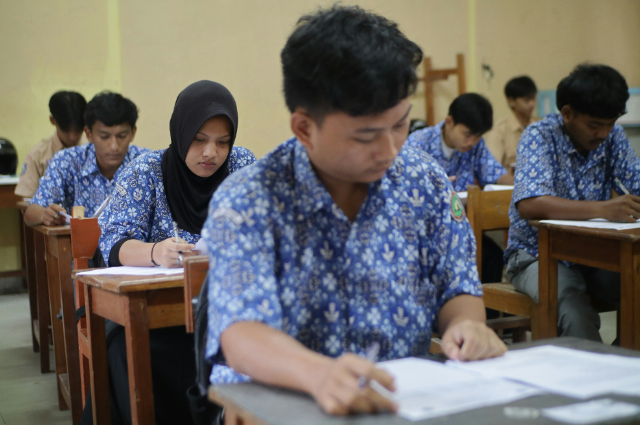
The NEET-UG 2026 paper leak controversy became one of India's biggest education scandals after allegations that exam questions were leaked before the test. The incident led to the cancellation of the original exam, a CBI investigation, arrests of suspects, and the announcement of a re-examination. The controversy triggered widespread anger among students, parents, and educators, many of whom argued that years of preparation had been undermined by failures in exam security. Many students committed suicide after hearing this news because they felt that their years of preparation had failed.
During this time, the Cockroach Janta Party (CJP) began as an online movement led by Abhijeet Dipke. The name originated from the controversial remarks made by Surya Kant, who was serving as the CJI of India, comparing unemployed youth to "cockroaches." Abhijeet Dipke, who was in the USA studying at Boston University, used this remark and made a party called the Cockroach Janta party. There has been evidence that the person has been a part of the Aam Aadmi Party in past. This party has gained the support of the youth because they feel disrespected and wanted to show what they could do.
The timeline starts when the Cockroach Janta Party organised a protest on 6 June 2026 as its first major street demonstration at Jantar Mantar in New Delhi. The protest was led by Abhijeet Dipke, who travelled from Boston to participate personally in the protest. Protesters included students, NEET aspirants, parents, job seekers and supporters who wanted to reform the education system. Participants carried placards, flowers, and copies of the Constitution, emphasising a peaceful and democratic approach. Police were positioned for significant security around the protest area and other sensitive locations in Delhi.
The protest demanded that firstly, the resignation of Dharmendra Pradhan, who is the education minister currently, secondly that the education system should be reformed, where students demanded stronger security, fair evaluation, better accountability and greater transparency and thirdly that the government should be accountable for students' sufferings. People used different types of slogans in the protest that were "Dharmendra Pradhan Istifa Do" (Dharmendra Pradhan, resign), "We asked for Make in India, you gave us Leak in India." These slogans reflected the frustration of people with recurring examination controversies, because of which this became national news as well as an emotional protest.
The government responded to the protest by allowing the protests to happen and by increasing the security as well as by implementing measures like authorities launched investigations, and the government announced a re-examination with significantly stronger security measures, including stricter monitoring of question-paper preparation and distribution to restore trust in the examination process, but the government did not act on the demand for Dharmendra Pradhan's resignation.
But I believe that whatever happened during this time period, we all ignored the most important thing, which is the mental health of students or NEET aspirants, and all the things should be kept aside, and instead of protests, disappointment and resentment, we all
should try to stand up together, help each other, especially the students who are devasted due to all these events happening and try to improve the mental health of students and instead of focusing on a political agenda that would only result in re-examination, instead we should try to help the students who are suffering right now and seek mental health workshops, spread awareness about suicides so that we as individuals can help in decrease the percentage of suicide happening due to NEET-UG leak.
References:
- Times of India
- The Indian Express
- Medical Dialogues
- Thanks and regards