
History of Recycling
India's recycling revolution did not begin with environmental campaigns, government policies, or sustainability targets. It began in ordinary homes, narrow lanes, and small neighbourhoods where people learned to reuse, repair, and resell plastic a long time ago, before the world started talking about a "circular economy” that is the cycle of production, consumption and recycling of plastic.
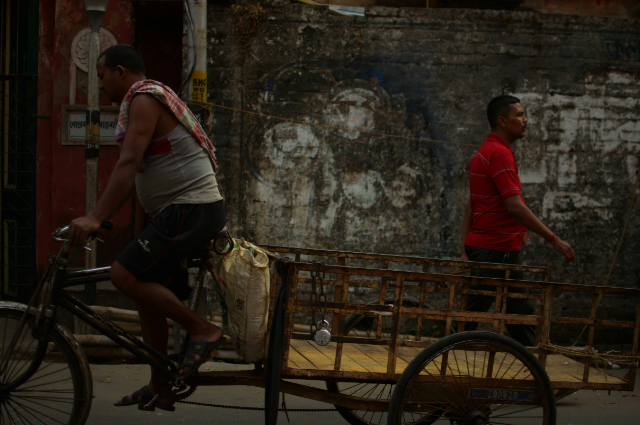
For generations, Indian households followed a simple routine. Old newspapers were stacked in a corner, glass bottles were carefully stored, worn-out utensils were exchanged, and scrap metal was never treated as useless waste. Eventually, the familiar call of the kabadiwala, the waste collector, would walk in the streets and lanes saying kabadi de do - give the discarded items that would re-enter the economy instead of ending up in landfills and creating large pits of plastics. Today, there is a market of 4 million people in India informal recycling system.
Story of Recycling
What appeared to be a neighbourhood service was actually the foundation of one of the world's most effective recycling systems. Today, millions of informal workers or unskilled workers, including waste pickers, scrap collectors, sorters, and recyclers, form the backbone of India's material recovery network. Despite operating without formal job titles, corporate offices, or widespread recognition, they recover and process vast amounts of recyclable material every day. It can be said that they do it for money, but in reality, even if it's for money, it helps improve society, the environment and sustainability, which we call today. Their contribution is particularly significant in plastic waste management because while many countries struggle to recycle even a small portion of their plastic waste, India's informal recycling sector recovers a remarkably large share, keeping valuable materials in circulation and reducing pressure on landfills and the environment.
This success was not created through advanced technology, but it is built on practicality, local knowledge, and an understanding that almost everything has value. A broken appliance can be repaired. A glass bottle can be reused. Metal can be melted down and repurposed. What others might call waste often becomes raw material for someone else's livelihood because everything we throw away can be utilised to make something valuable. Let's say we throw a plastic can after drinking soda, but we pay triple the amount in workshops of rhinestones to decorate that same can of plastic just because it is marketed in that way, where it can be used as decor.
The same philosophy of efficiency can be seen in another unique Indian institution, the Mumbai dabbawala network. Using bicycles, local trains, handwritten codes, and decades of experience, dabbawalas deliver thousands of lunchboxes across one of the world's busiest cities with extraordinary accuracy. Their system has been studied internationally as an example of operational excellence, proving that innovation does not always require advanced technology; it just needs proper efforts and a little bit of brain.
Together, kabadiwalas, waste pickers, recyclers, and dabbawalas represent a larger truth about India. Long before sustainability became a global movement, millions of Indians were already practising it in their daily lives. They created a functioning circular economy through habits of reuse, repair, and
resourcefulness. Yet these workers often remain invisible. Many lack formal recognition, social security, healthcare benefits, or stable working conditions despite providing an essential environmental service. Their work reduces waste, conserves resources, and supports industries that depend on recycled materials but still these people are humiliated and said that they are lower class or they smell like garbage; in reality, we cannot function without them.
As the world searches for sustainable solutions to growing environmental challenges, India offers an important lesson that some of the most effective systems are not always designed in boardrooms or laboratories. Sometimes they emerge from communities, traditions, and everyday practices that are refined over generations. India did not wait for the sustainability movement to begin recycling. It had
already built one, powered by millions of workers whose contribution to the economy and the environment remains invaluable, even if most of them have never had an official job title but I think we genuinely respect these people, glorify their work and effort as well teach our friends, family and even childern to learn to respect something we call a garbage because that can be utilised for something much valuable and even marketed at a triple price and also that we should respect garbage or plastic pickers and we all should support and help these people and appreciate them.
References:
- International Alliance for Wastepickers
- Science Direct
- Harvard Business School (study)
- Research Gate