
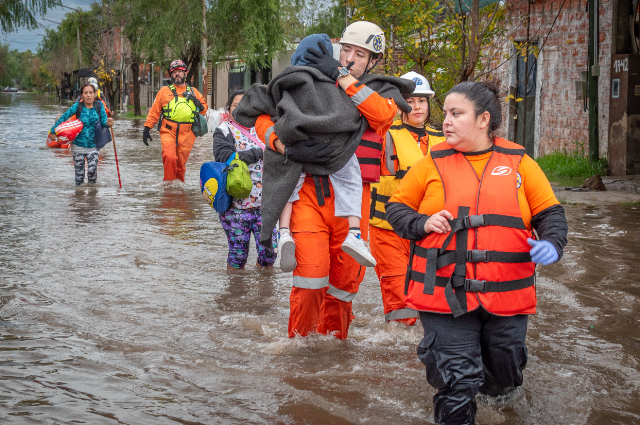
The individuals who put their lives on the line to rescue victims in such cases often prove to be the saviors that separate death from life for those affected by the disasters. The case of volunteers in Kerala, which has faced floods and landslides before, shows how locals have been instrumental in dealing with emergencies in the region through their intimate knowledge of rivers and villages as well as treacherous terrain.
The unfortunate demise of 36-year-old volunteer rescuer Rajesh in Kannur, Kerala, highlights the dangers associated with being an active participant in emergency rescue efforts, as well as the bravery shown by common people. As per the details shared in the report, Rajesh met his untimely death during flood rescue efforts when he was trying to save a farmer stuck in the floodwaters.
Rescue Operation in the Floodwaters
As per the reports published in The Indian Express, India Today, and Onmanorama in August 2026, Rajesh was a professional swimmer and rappelling trainer from Kalliyoor in Thiruvananthapuram. He was employed at Meenthully Waterfalls in Kannur when, due to continuous rain, the water level of the river increased. As a result of the flood, 61-year-old farmer Benny was trapped near his farm.
Upon learning about the plight of the farmer, Rajesh, along with two other volunteers, Shibin and Jithin, tried to rescue him. They crossed the flooded river using ropes to reach him. While returning, the situation for them started turning worse. Rajesh gave his own life jacket to Benny, who was struggling in the floodwaters. In the process of reaching the shore, Rajesh lost hold of the rope and was taken away by the floodwaters.
A History of Service
Apart from this particular mission, Rajesh was known for his participation in rescue operations in various natural disasters such as the floods of 2018 in Kerala and landslides in 2024 in Wayanad. The fact that he worked as a swimmer and rappelling instructor made him well-versed in the skills that would prove very useful when faced with difficult rescue missions in areas where the presence of rivers and uneven topography is combined with rapidly changing water levels.
In this regard, Rajesh's participation in multiple disasters demonstrates that disaster management largely relies on teamwork between official bodies and local communities. While volunteers are likely to have important information about the landscape and population under threat, their engagement in such work comes at high risk.
Recognition and Responsibility
The death of Rajesh saw politicians and the public pay tribute to him. The Government of Kerala indicated that he will receive state recognition and his unfinished home will be completed. Such measures were seen as the government acknowledging the role he played by him in the rescue mission.
Nevertheless, recognition after such an unfortunate event cannot adequately compensate for the dangers the volunteers face during the emergency. There are several issues that arise concerning preparation for disasters, rescue efforts and equipment for such a situation. Volunteers are helpful, but their willingness to help ought to be supplemented by the emergency system itself.
Meaning of Sacrifice in a Broader Perspective
Rajesh's story not only relates to the one rescue mission, but it also tells us about the importance of solidarity among members of a community at times of disaster. In natural catastrophes, where members of a family are left isolated from each other due to blocked roads and an unfavourable environment for emergency workers, regular citizens often tend to be the first responders to such incidents. This shows the significance of collective responsibility as part of disaster management.
However, one must bear in mind that courage cannot be judged by readiness to ignore one's own safety. Water in floods is often highly unpredictable, and sometimes even experienced swimmers may encounter some unexpected dangers. Disaster management presupposes coordination, proper equipment and professional assistance, which is required both for the sake of rescuers and victims.
Remembering Rajesh
The final rescue mission of Rajesh turned out to be tragic, yet the farmer he wanted to save remained alive. The loss of Rajesh made people realise the dangers that volunteers face when helping communities during natural disasters. While the recognition and completion of the house that the government plans to give in his memory are formal ways of expressing gratitude towards this man, his unfortunate death calls for better protection of volunteers.
In general, Rajesh's story makes one think about the value of human life and preparedness within the community. It is possible not only to commemorate the actions of Rajesh but also to improve the process of rescuing people. In the state where floods and landslides are frequent, it is important to remember that it is necessary to be ready to provide help and, at the same time, be protected while doing so.
References:
- The Indian Express: https://indianexpress.com
- India Today: https://www.indiatoday.in
- Onmanorama: https://www.onmanorama.com