
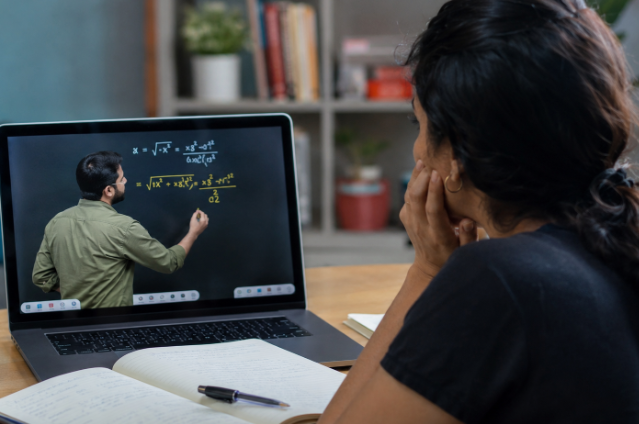
“One book, one pen, one child, and one teacher can change the world.” — Malala Yousafzai.
This quote makes us realise the importance of teachers in our lives, especially those who dare to teach despite a lack of credibility, importance, or attention. But when an influential personality, a journalist belonging to the fourth pillar of our democracy, disrespects these teachers on national television, where does the impact last?
On May 29-30, Anjana Om Kashyap, a profound journalist popular because of her TV debates, spoke on live television in front of a large audience.
“YouTube wale star teachers, jinko kuch janna na kaudi, kabhi blackboard lekar kuch explainer banate hai, khali views batorte hai, utpatang graphs likhte hai aur uske baad se apne aap ko itna mahanati samajhte hai ki kuch log unko follow karne lagte hai.”
This statement not only disrespects the teachers who teach on online platforms like YouTube but also those students and aspirants who follow these educators to prepare for their examinations.
This live debate started floating on the internet by May 31, triggering many.
The Trigger Point
On the live TV debate, journalist Anjana Om Kashyap made controversial remarks about online educators and "star" YouTubers as teachers during a broadcast on the Hindi news channel Aaj Tak.
During the broadcast, Kashyap alleged that some were more focused on views, publicity, and monetisation than genuine teaching. Her statement, "do kaudi ke" or worthless for teachers who chase views and clickbait rather than offering genuine educational value, triggered the public.
She further claimed that these teachers were commercialising education and commenting on complex systemic matters far beyond their actual understanding. This was found offensive by many students and educators on EdTech platforms.
What went wrong?
In the wake of massive unrest, public outcry, and allegations surrounding the National competitive examination, specifically the NEET-UG and CUET exam systems, Kashyap hosted a prime-time debate focusing on the systemic flaws and the role of coaching institutes.
Not realising that the teachers Kashyap was talking about are the same teachers who
teach students preparing for these national competitive exams for free on online platforms like YouTube. This was found to contradict the TV debate’s agenda.
With students surviving a broken system of education, paying daily prices for annual paper leaks, CBSE’s digital marking system, and issues like examination mismanagement, only these YouTube teachers step down to break the process, standing with students and amplifying their concerns.
This comment sparked a firestorm among students whose only hope is these teachers who help them throughout the process, from preparing for the examination to discussing its leaks and standing against unreasonably expensive revaluation systems.
The primary misstep in this situation was a profound failure of tone, empathy, and contextual awareness. The debate took place at a highly sensitive time when Millions of students were experiencing immense stress, anxiety, and anger. cancelled exams and paper leaks. For these students, online educators are not merely content creators; they are accessible mentors who fill the gaps left by expensive offline coaching and a flawed institutional system.
Who is against?
The unified front of students, teachers, and parents viewed the broadcast just as an attack on specific internet personalities, but as a direct insult to a community that has democratized education for the masses.
Pioneer educators such as Abhinay Sharma, a famous maths teacher in a widely viewed the response video, he challenged the elitism inherent in the broadcast, stating, "Mainstream media sits in air-conditioned studios and calls us 'frauds' and 'minions,' completely blind to the fact that we have built an ecosystem where a child in a remote village can dream of passing the SSC or Banking exams for free or for just a few hundred rupees. Our credibility comes from the success of our students, not from a television ratings system." Sharma was among the most vocal.
Suman ma’am from Ocean Gurukul, known for her easy-to-learn English, brought a crucial perspective on the ground reality of online teaching, and she fiercely defended the community's integrity. She pointed out that she regularly runs exhausting, hours-long free marathon classes on YouTube specifically for students who absolutely cannot afford paid coaching. Suman ma’am directly challenged the anchor's moral authority, asking why a journalist sitting in an
The air-conditioned studio was calling grassroots teachers like her a "fraud" instead of stepping out to cover the real, devastating issues plaguing the student community.
Other teachers like Arvind Bhadauriya and Babita Tyagi pointed out the hypocrisy of mainstream networks. Tyagi publicly stated that labelling an entire community of hardworking teachers as "view-chasers" was a desperate attempt by traditional media to undermine influencers who hold genuine public trust and social capital.
Khan Sir’s defamation controversy
Faisal Khan, universally known as Khan Sir, emerged as the most formidable and aggressive face of this opposition. As one of India’s most-followed online educators, his response carried immense weight. Leveraging his massive digital footprint, Khan Sir released a series of highly charged videos and posts that directly targeted Kashyap and her network.
The counter-response from educators quickly crossed the line from professional.
disagreement into highly toxic, retaliatory territory. Khan Sir did not hold back, turning the narrative of "view-chasing" back onto mainstream media. He argued that traditional television channels routinely prioritise sensationalism over constructive journalism, yet dare to accuse ground-level educators of commercialising education. Delivering arguably the most cutting, unreserved response to the entire controversy, Khan Sir bluntly dismissed the critique by stating, "Tu apna gyaan apne paas rakh" (Keep your knowledge to yourself). He forcefully argued that online teachers are the ones actually building the nation by making education affordable to the poorest segments of society. However, his rhetoric quickly crossed professional boundaries, as he led a campaign labelling the network with derogatory terms like "bikau patrakar" (sold-out journalist) and “chatukar” and accusing the channel of running a "fake news ki dukaan," statements that later formed the core of the legal battle.
The conflict escalated severely when the digital campaign crossed personal boundaries. Khan Sir allegedly disclosed personal, private details on public platforms regarding the school attended by Kashyap’s child, exposing her family to severe privacy violations, targeted trolling, and safety risks.
In response, Anjana Om Kashyap and TV Today Network filed a ₹2 crore civil defamation lawsuit in the Delhi High Court against Khan Sir, Abhinay Sharma, Babita Tyagi and others. The suit alleges a coordinated, abusive campaign that incited public hostility and violated family privacy. While the Delhi High Court issued notices to the defendants, it initially declined to pass an immediate interim injunction, listing the matter for further hearing on June 17.
Beyond the Ego clash
At its core, there lies a bitter feud between Anjana Om Kashyap and India’s prominent online educators, exposing a deeply fractured ecosystem between their personal egos.
But for millions of competitive exam aspirants, particularly those from rural, Lower-income families who cannot afford the exorbitant fees of offline coaching hubs in cities like Kota or Delhi, see online teachers as lifelines. Following the broadcast, students flooded platforms like X, YouTube comments, and Reddit to express their anger.
For the education and media landscapes to heal, the focus must urgently shift away from fragile egos and back toward the stakeholders who matter most: the students who are sacrificed in between.
Mainstream media must learn to respect the immense democratisation of learning brought about by online platforms, while digital educators must recognise that massive public trust demands a higher standard of internet ethics and professional restraint. Moving forward, the true measure of success for both sides will not be won through courtroom battles or social media metrics, but through a shared commitment to constructive discourse, mutual respect, and the safeguarding of India's educational future.
References:
- Newslaundry-https://www.newslaundry.com
- Newslaundry- https://www.newslaundry.com
- Law Beat- https://lawbeat.in
- Scroll. in - https://scroll.in
- The Economic Times- https://share.google
- LiveLaw.in- https://share.google