
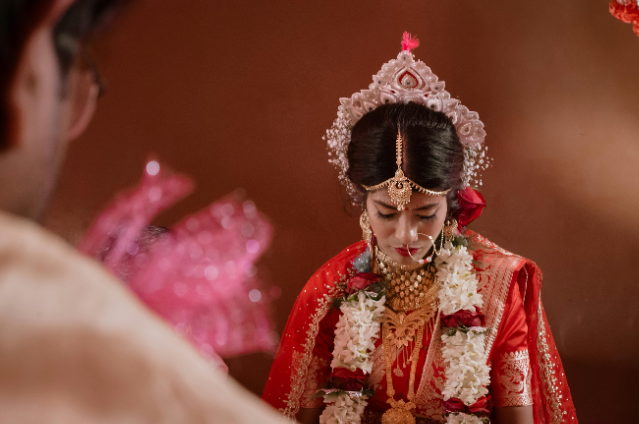
Being the most populous country in the world, India holds the dreams of many. Consisting of one of the most traditional and cultural societies in the world, it holds aspirations for many families. One such aspiration is marriage.
Many young men and women dream of getting married and leading a joyous life. In India, marriage is not just a dream but a responsibility parents wish to fulfil, spending lakhs on a wedding for their children in order to lead a settled life.
But, what if these dreams, expectations for which one saves their lifetime, sells assets, and takes a financial burden, all get destroyed because of blindly trusting someone?
On May 24, 2026, in Dewas, Madhya Pradesh, something similar happened. When 42 families showed up with their sons to a mass wedding, dressed up for one of the most important days of their lives, they were left devastated.
How did it all start?
For the past few months, Narsingh Das Bairagi, the father-in-law of the accused, had been travelling to various districts of Madhya Pradesh, such as Vidisha, Shajapur, Bhopal, and Dewas, to find desperate families to get their sons married. Especially targeting those whose marriage had been coming to a halt due to economic weakness.
Bairagi contacted these families through WhatsApp consistently, luring them into a mass wedding being organised on May 24, with registration and the whole wedding ceremony taking place only between ₹12,000 and ₹25,000 for each groom. Some were even told to receive a dowry.
When the families asked to see the prospective brides, the con artists circulated downloaded photographs of young women and models from social media platforms to make the fake matches appear genuine. It was allegedly promised that the brides belonged to an orphanage, “Matru Chhaya Ashram” in Indore, to avoid any questions. The scammers even had families submit documents online to give a sense of authenticity and official procedure.
Seeing this as an opportunity for them to finally start a new married life, the families blindly trusted the scammers in haste, paid the money without hesitation, and some even borrowed funds or spent their savings in anticipation of the wedding, not knowing they were about to deal with a big fraud.
The Long Wait in Dewas
At the club ground in the Radhaganj area of the Dewan city, the victims were instructed to arrive in plain clothes and not to apply traditional wedding markings like haldi or mehendi, as the organisers claimed they would provide all wedding apparel and arrange the rituals at the venue. The ceremony was meant to culminate with a visit to the hilltop Mata Chamunda Tekri Temple.
Guided by the two accused, Mukesh Bairagi & Sunita Bairagi, acting as the event organisers, the victim families were instructed to reach Dewas as soon as possible. Some families arrived as early as 8 AM. As more families with grooms dressed in sherwanis and marigold garlands, travelling long distances, relatives who had taken leave to attend the wedding, bands from different districts who believed they would experience one of the happiest days of their lives, were left perplexed when they saw no wedding decorations, no preparations, and most importantly, no brides.
Throughout the day, the organisers reportedly continued to offer excuses, claiming that the women were on their way from Indore. First waited till 5 pm, which stretched till 10 pm. As hours passed and night approached, it became evident that the entire event was a scam.
The Investigation
As families started questioning aggressively and phone calls went unanswered, complaints were filed at the Dewas police station. Police investigated that the middlemen promised marriages in exchange for fake photos and thousands of rupees, that estimated to be a total fraud of over 10 lakh rupees.
As the Bank Note Press Police in Dewas launched a manhunt and successfully arrested the primary suspects, the couple named Mukesh and his wife, Mukesh himself claimed to be a victim who was duped by his brother Dinesh Das Bairangi, who initiated the scam and took all the money. He is currently said to be on a run along with Narsingh Das Bairagi.
Police registered a case under relevant provisions of the Bharatiya Nyaya Sanhita related to cheating and fraud. Investigators also identified other alleged participants in the scheme, including family members who were suspected of helping connect victims to the fraudulent operation. Police teams were dispatched to different districts to gather evidence and locate additional suspects. Authorities stated that the investigation is ongoing and encouraged other potential victims to come forward.
The Emotional Cost of the Scam
Beyond financial losses, the scam had a profound emotional impact on the victims and their families. One of the victim’s sisters reported huge embarrassment caused back home due to returning with no bride and betrayal. For families in smaller towns and villages, where marriage holds immense social significance, the humiliation was especially painful. The incident demonstrated how fraud can cause not only economic damage but also deep psychological and social distress.
The highest emotional cost of this scam was the “bharosa” of the innocent families belonging to rural and semi-urban areas, which was played with.
For the 42 families, their lives have been shaken forever. The marriage market trap that once appeared inconceivable has become a reality. This incident not only shows the acts caused by social and economic weakness but also the lack of awareness and knowledge exploited by these scammers in desperate situations.
India’s digital literacy accounts for only 38% at the household level; this is just a figure, but innocent people, like the families in Dewan, who risk their income and lives unknowingly, expecting happiness at the end, only to lose everything.
References
- NDTV- https://www.ndtv.com
- Times of India- https://share.google
- The Standard (HK)- https://share.google
- The Indian Express- https://indianexpress.com
- Deccan Chronicle- https://share.google