
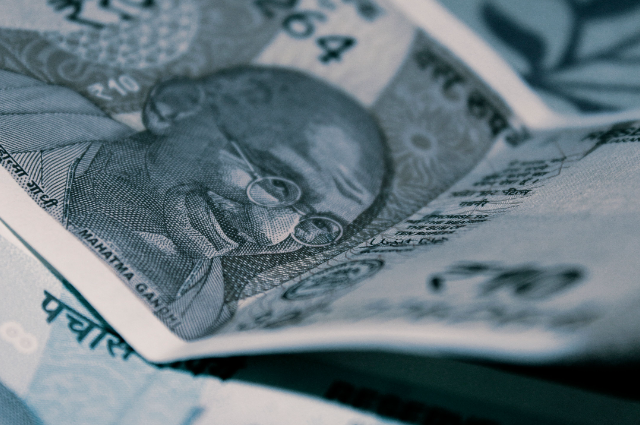
Out there, each morning begins with fingers brushing against paper money - folded, crumpled, passed along. That familiar face shows up on every piece, calm as ever, watching silently through transactions big and small. Not far from street vendors or inside towering banks, his image moves hand to hand without pause. Sometimes tucked between coins in an old satchel, sometimes exchanged at bustling markets under heavy sun. Always present, though never spoken of much. A quiet constant among shifting prices and changing routines.
That well-known picture on cash across South Asia? For years it shaped how people saw money. Some think an artist painted it just for the central bank. Others believe it was designed like a cartoon meant only for currency. But what lies behind it feels stranger than fiction. A quiet instant caught long ago gave rise to this widely seen face. Not drawn, not invented - just part of one old photo flipped and trimmed. Time nearly erased it. Now billions know its lines by heart.
A Chance Moment at the Viceroy’s House
Back in 1946, the story behind that globally recognised smile begins. A new chapter waited just around the corner for India. Instead of calm, people felt unrest heavy in the atmosphere. Behind closed doors, talks unfolded quietly. Meanwhile, freedom from British control loomed closer each day.
That winter, sunlight streamed across the marble steps as Gandhi climbed toward the old Viceroy’s residence, now known as Rashtrapati Bhavan, for talks that shaped nations. Midway through one session, while journalists crowded near the stone columns, an unnamed camera operator suddenly pressed his shutter.
A flash captured Gandhi next to a well-known British figure, Lord Frederick William Pethick-Lawrence, during the Cabinet Mission's visit to discuss handing over control. In the raw image, before any edits, his gaze doesn’t meet the lens; it drifts to the right, drawn to someone outside the frame, his face illuminated by a warm, genuine smile. That moment, frozen unexpectedly, would later appear countless times around the world, though the photographer could not have predicted its journey.
The Rupee’s First Forms: Kings and Stone Lions
Emerging from Britain’s shadow in 1947, India faced a quiet challenge: whose eyes should watch from its banknotes? Before that moment, King George VI had filled every space on rupee paper, his gaze fixed since long before independence. With the empire gone, his image needed to disappear as well. A fresh start called for new symbols, even if just a face.
Interestingly, Mahatma Gandhi did not immediately take on that role. Though early design drafts showed his face soon after freedom was won, people eventually agreed on imagery that reflected a wide array of cultures, focusing less on one famous individual.
In 1949, a new kind of money arrived, replacing the British king's face with the ancient lion sculpture from Sarnath. Instead of honouring notable figures, India decided to celebrate shared achievements on its currency. In the years that followed, each decade brought bold colours and strong images. Tigers stood proud alongside gentle deer. The grand temple at Konark rose in meticulous detail. Massive dams like Hirakud spanned rivers. Even the stars shone when the Aryabhatta satellite took its place among earthly scenes.
Human Faces Outsmart Forgery Attempts
That photo from 1946 sat forgotten until things started shifting in the late eighties, finally reaching print by ninety-six. Come the middle nineties, machines evolved fast - no slowing down. With sharp new copiers showing up, along with digital eyes that could capture every detail, faking documents turned into something governments had to worry about. Suddenly, what once took skill now only needed a device.
Something clicked at the Reserve Bank of India when old tricks started failing. Watermarks of stone monuments, like the Ashoka Pillar, no longer scared counterfeiters - they copied them too well. Then came an idea, not from bankers, but from how people see faces. A twist of thought turned art into armour.
Instantly, eyes catch tiny flaws - a brow out of place, a lip uneven. Around the globe, specialists rely on this quirk of perception. A shift in symmetry screams wrongness without explanation. Printed deep into paper, the portrait becomes a trap. Anyone trying to copy it stumbles at the curves, the shadows, the fine lines. Subtle depth fools machines less easily. The mind spots fakes before logic kicks in. That gap - between real and near-real - is where fraud collapses.
The Final Emblem of a Unified Country
After choosing a human face, figuring out which person came next. Not just any figure could stand for everyone. Across India, thousands of tongues are spoken, traditions followed, faces shaped by distinct histories. A hero from one state might mean little to someone far away. Choosing that one image meant walking through landmines of pride, memory, history - each choice risking anger where it hoped to unite.
Standing apart from others, Mahatma Gandhi rose beyond local limits. Every state claimed him just as much, since he became known widely as the Father of the Nation. The year 1996 brought something new - banknotes under a distinct theme honouring his name. Beginning with denominations of 10 and then 100 rupees, the Reserve Bank introduced these quietly but clearly.
From the 1946 archive, a photo at the Viceroy’s house was pulled - Lord Pethick-Lawrence carefully removed by designers. Facing inward on the note, Gandhi’s smile now appears, flipped from the original frame. Every line carved into the engraving shows exactness, built from that altered picture.
Out of the 2016 money remake came the "Mahatma Gandhi New Series." Though bold new tones like magenta, stone grey, and lavender took over, that 1946 photo stayed right in place - holding steady on bills as India’s economy shifted around it. Once just a quiet image among reporters, unnamed and overlooked, now it stands fixed - forever tied to how the country sees its money.
References
- Civilsdaily- https://www.civilsdaily.com
- The Better India- https://thebetterindia.com
- The Lallantop (YouTube)- https://www.youtube.com