
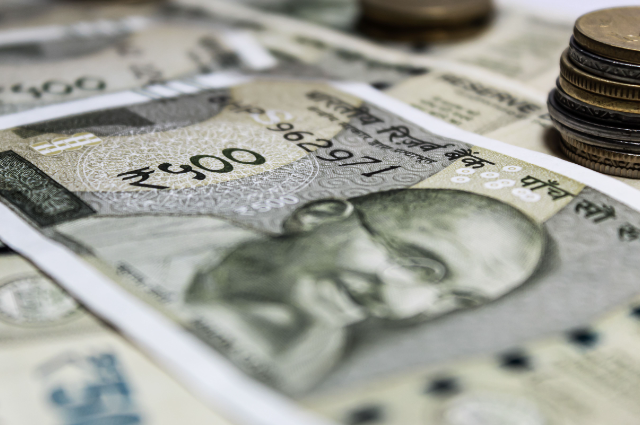
The depreciation of the Indian rupee vis-à-vis the American dollar has become a major factor in India's economic outlook for 2026. Having already reached the ₹96-per-dollar level in May and moved to ₹97 in October, the rupee has been under increasing threat owing to the high cost of energy imports, capital outflows and uncertainties in the international economy. While the Indian currency had recovered to ₹94.88 per dollar by 16 October with the help of policy measures, it nevertheless reflects structural weaknesses that go beyond the immediate market conditions.
Immediate Shock: Pressures from Abroad and Trade Uncertainties
There have been several factors that have caused the rupee to depreciate recently. In particular, higher crude oil prices have been detrimental since India imports a significant portion of its energy needs. Higher oil prices mean that there is a need for higher amounts of dollars to buy the same amount of energy, which causes increased demand for the foreign currency and thus depreciation of the rupee. Other costs that may be affected by this include costs related to transportation, manufacturing, and home expenses, which might create additional inflationary pressures.
Trade relations between the United States and India have added one more uncertainty to the situation. Tariffs on Indian goods imposed by the United States were 50 per cent during 2025-26 and posed a threat to the competitiveness of Indian products in the US. While both countries have agreed to try to reduce the level of tariffs, which will drop to 18 per cent under the new trade agreement, this issue still causes market uncertainties. A weaker rupee can partly offset higher foreign tariffs by making Indian goods cheaper in dollar terms, but this advantage is limited when exporters face substantial tariff barriers or rely on imported components.
Foreign Investments and the Strength of the Dollar
The movement of capital has added to this pressure. There have been significant withdrawals of capital by foreign portfolio investors from the Indian stock market in 2026, leading to the demand for dollars because of conversion and repatriation of investments. The rise in the yields of US Treasuries has further increased the attractiveness of the dollar, thus leading investors to reassess their investments in the emerging markets.
This is an example of the link between currency movements and investor sentiment. It is possible for the currency of an economy performing well to depreciate if investors see a lower return or greater uncertainty ahead. Thus, in the case of India, it is not enough to assess the economic fundamentals on the basis of GDP growth. Reuters in October reported foreign equity outflows, high energy costs, and high US yields as the main pressures on the rupee.
The Long-Term Pattern since 1991
Rupee depreciation had started even before the recent problem. The balance-of-payments crisis that took place in 1991 led to the economic reforms in India, where the country adopted a more market-based exchange-rate system. In other words, the liberalisation of trade and foreign investment altered the way the rupee was valued.
In the following years, the rupee depreciated against the dollar due to inflation differences, capital movements, and India's import demand. Nevertheless, such a long-term trend does not mean that the economy of India continuously declines. It is important to note that the nominal exchange rate is determined by several factors, and depreciation can happen along with increased productivity, growth of exports, and income growth.
More interestingly, it is important to ask if depreciation is related to a sustainable adjustment or persistent imbalances in the economy. If there is a steady demand for dollars to pay for imports, but there are insufficient export proceeds and steady capital inflows to cover the demand, the situation becomes unsustainable. Such a process is explained in the Reserve Bank of India’s historical review of exchange-rate reforms.
Rupee Against Pakistani Rupee: A Different Exchange Rate Pattern
Another way to evaluate the region’s economic evolution is to consider the rupee’s performance against the Pakistani rupee. The country suffered from a serious currency and balance-of-payments crisis in 2023, characterised by high inflation, low foreign-exchange reserves and substantial economic uncertainty. Its economic stabilisation has been driven by strict macroeconomic policies, external support and an IMF programme.
In the 2026 report of the International Monetary Fund, it is noted that Pakistan had foreign-exchange reserves amounting to about $16 billion by the end of December 2025. Also, the Pakistani rupee was relatively stable and traded at about 280 rupees to one US dollar. IMF, May 2026.
The reported claim that the Indian rupee has lost approximately 12–13% against the Pakistani rupee since May 2025 should therefore be verified against consistent historical exchange-rate observations before being treated as definitive. What can be established is that Pakistan’s currency stabilisation, alongside renewed pressure on India’s, demonstrates how different policy choices and external financing conditions can produce divergent exchange-rate outcomes.
RBI’s Intervention and Future Path
Reserve Bank of India has tried to counter excessive volatility through the provision of dollars and measures designed to counter speculative pressure and manage foreign-exchange demand. While such intervention will help to smooth sharp moves and stop market disruption, it cannot indefinitely offset the impact of costly imports or persistent capital outflows.
On one hand, the task of the government and central bank is to find the right balance between currency stabilisation and development, investment and inflation management. Sharp interest rate increases will help the rupee by making Indian assets more attractive; on the other hand, they will raise the cost of borrowing and reduce domestic demand. Some depreciation will help exports while raising the price of fuel, equipment and other imports.
For the future, improvements in export competitiveness, diversification of energy supply, stable foreign investment and industrial development can be a better way than constant interventions.
The evolution of India’s currency is influenced by shocks from the external world and the inherent structural pressures in the country. The recent weakness in its currency is due to several factors rather than one decision made by the Indian government or any international issue. Similarly, the rupee’s continued depreciation should not automatically imply weakness in its economy; its relevance stems from the relationship between energy import vulnerability, foreign investment, trade competitiveness, and monetary policy. However, Pakistan’s stable currency may offer a point of comparison to India without implying an economic turnaround in favour of Pakistan.
References:
- Reuters- https://www.reuters.com
- International Monetary Fund- https://www.elibrary.imf.org
- Economic Times- https://economictimes.indiatimes.com
- Reserve Bank of India- https://www.rbi.org.in/scripts/bs_viewcontent.aspx?Id=2253&