
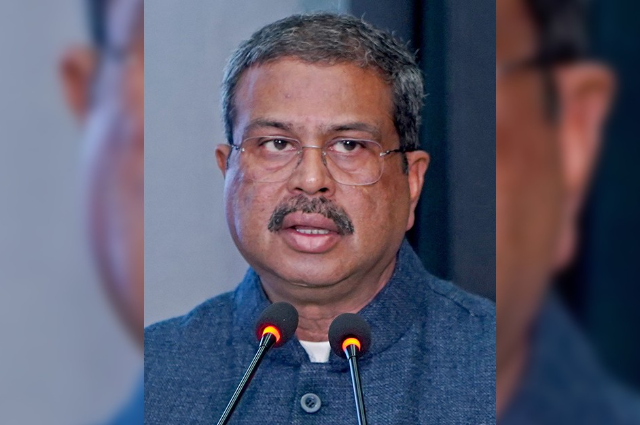
The political landscape surrounding India’s national examination framework experienced a seismic shift on July 25, 2026, when Union Education Minister Dharmendra Pradhan submitted his resignation to Prime Minister Narendra Modi. Pradhan’s exit followed weeks of relentless, youth-driven "Cockroach" demonstrations at Delhi’s Jantar Mantar and across the country. Sparked by widespread allegations of paper leaks in the 2026 NEET-UG medical entrance test and systemic marking irregularities within the Central Board of Secondary Education (CBSE), the protest movement evolved into a major political crisis. The resignation reflects a rare instance of the ruling administration yielding to sustained public street pressure. However, the narrative surrounding Pradhan's departure remains sharply contested, with the ruling establishment, the opposition, social activists, and student organisers offering vastly different interpretations of his exit.
Narrative of the Government: Moral Responsibility and Prevention of Exploitation
According to the narrative provided by the government, Dharmendra Pradhan left office voluntarily as a principled move to protect the integrity of the education system and to bring back stability in the country. In an interview given on the X social media platform, Pradhan explained that his departure was inspired by the need to assume moral responsibility to prevent anti-national elements from exploiting student unrest. Pradhan noted that he had been serving for over four decades in the field of public life and educational transformation; he thus clarified that the departure was not based on personal ego, but to ensure that youth were not trapped in a legal tangle and agitations.
To support its narrative, the administration brought forth several actions that have been taken by the ministry led by Pradhan. This has included passing on the case to the Central Bureau of Investigation (CBI), cancellation of the affected exam, arranging for a new test, and announcing plans to adopt Computer-Based Testing (CBT) systems to prevent future leaks. Apart from that, the government referred to some structural changes that have been made, such as the dismissal of scores of NTA officials and the passing of legislation in line with strict penalties for paper-leak cartels. By emphasising these regulatory steps alongside Pradhan’s voluntary exit, the government sought to project an image of responsive, protective governance focused on the long-term interests of students.
Voice of Opposition: The Triumph of Democratic Resistance
On the contrary, the voice of the political opposition led by the Indian National Congress party saw the resignation as a victory of students’ resistance to administrative incompetence. According to the opposition, the resignation of Pradhan was not a voluntary step of good faith but a coerced step following weeks of protest by the youth. Criticism followed the fact that the administration had, for several weeks, refused to show any signs of accountability, instead viewing the systemic failures of the testing agencies as simple technical errors.
According to the opposition, the resignation of Pradhan brought forth many weaknesses in the system of the centralised exam architecture of the country. The opposition said that the resignation was a move made by the administration due to the pressure of public outrage on its reputation. Though welcoming the resignation as proof that mass protest can bring accountability from the executive, the spokespersons of the opposition reiterated that a resignation does not solve all the problems of exam security.
Perspectives of Activists: Hunger Strikers and Defensive Appeals
In the weeks preceding the resignation of the minister, one of the prominent activists and educators, Sonam Wangchuk, conducted a 26-day hunger strike to support the protesters. The hunger strike conducted by Wangchuk was an expression of the movement, which gained international attention regarding their calls for institutional change and the resignation of the Education Minister. However, the decision by Wangchuk to break the fast a few days before the official resignation by Pradhan was not well received by some groups of protestors who believed that the hunger strike must be sustained until all their demands were fulfilled.
On the contrary, Wangchuk justified his actions by highlighting his intention to ensure that the young people would not face any repercussions or risks of criminal prosecutions due to the activities of the protest movement. Thus, the preservation of their safety and legal standing is more important than the fast. With the resignation of Pradhan, Wangchuk described the results of the protests as the "victory of democracy, straight from the streets."
The Student Movement: Meeting the Ongoing Demands
In the case of the Cockroach Janta Party (CJP) and its affiliated youth organisations, Pradhan’s stepping down was seen as a big win. Student leaders hailed this as evidence that young people acting together could change the political equation. Yet, organisational heads pointed out that the Minister’s resignation solved only one of their primary demands.
After the announcement, negotiations took place between the government and members of CJP. Some other issues were still pending on the table. The delegation from the students insisted that their movement would be considered over only after the government had assured them of complete withdrawal of FIRs filed against the protesters, compensation to the candidates whose examinations were compromised, and protection against any further paper leaks in the future.
References
- The Guardian: India’s Education Minister Resigns in Victory for Cockroach Youth Movement Protests
- Nepal News: Indian Education Minister Dharmendra Pradhan Resigns Amid Rising Student Protests
- Bangladesh Sangbad Sangstha (BSS): India's Education Minister Resigns After Countrywide Protests
- Nagaland Tribune: Dharmendra Pradhan Steps Down as Education Minister Amid NEET Paper Leak Controversy
- Open Magazine: Dharmendra Pradhan Resigns as Education Minister Over NEET-UG Row