
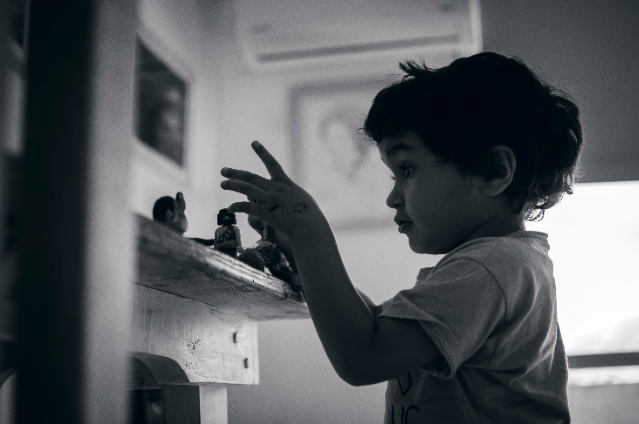
On the child's birthday, the frightened boy turned to his mother and told her what had been happening to him by his father, who supposedly was someone whom we seek security. The words of a five-year-old, scared and maybe frightened, perhaps barely understood even by himself, were enough to bring the horror into the light. He disclosed that his father had been repeatedly touching him inappropriately and sexually abusing him.
His mother, upon hearing her son's words, did not look away. She acted.
Following the mother's complaint, police in the Satara area of Chhatrapati Sambhajinagar registered a case against the father under the Protection of Children from Sexual Offences (POCSO) Act, India's key legislation designed specifically to safeguard children from sexual abuse and exploitation. During the investigation, it was revealed that the child was threatened to silence; he was warned that if he told his mother, he would be thrown off the roof.
The POCSO Act mandates stringent punishment for offences against children and requires that investigations be conducted in a child-sensitive manner. Cases under this act are treated with priority, and the accused can face severe penalties upon conviction.
The registration of this case marks a critical first step, but for the child and his mother, it marks the beginning of a long road to justice and healing.
Cases of child sexual abuse within families — known as intrafamilial abuse — are among the most underreported crimes in India and across the world. The reasons are many: shame, fear of breaking the family apart, disbelief, or simply not knowing that what is happening is wrong.
What makes this case particularly significant is the role the mother played. She listened. She believed her child. And she reported it.
Child protection experts consistently emphasise that one of the most critical factors in a child's recovery from abuse is having at least one adult who believes them and takes action. In this case, that adult was the mother, and her courage in coming forward may have saved her son from years of continued suffering.
Statistics paint a grim picture. According to data from the National Crime Records Bureau (NCRB), crimes against children in India — including those under POCSO — have been rising year on year. Yet experts believe the reported numbers represent only a fraction of actual incidents, as most cases go unreported due to social stigma, fear of retaliation, or lack of awareness.
When abuse occurs within the family, the barriers to disclosure are even higher. Children are taught to respect and trust parents. They often lack the vocabulary to describe what is happening to them. Many are threatened into silence. Others simply do not understand that they are being harmed.
This five-year-old boy had none of the adult frameworks to process what had been done to him. Yet on his birthday, perhaps in a moment of feeling loved and safe with his mother, he found the words.
This case is a reminder a painful, urgent one that child sexual abuse does not always happen in dark alleyways or at the hands of strangers. It happens in homes. In families. Behind closed doors. And far too often, it is carried out by those whom the child loves and trusts the most.
Every adult has a role to play:
- Teach children about body safety and the concept of consent in age-appropriate ways.
- Create an environment where a child feels safe to speak without fear of being disbelieved or punished.
- Listen without panic when a child discloses something troubling — your calm reaction encourages them to keep talking.
- Act immediately — report to the police or a child helpline. In India, the Childline helpline number is 1098, available 24/7.
- Do not confront the accused yourself — allow the legal system to handle it in a way that protects the child.
Justice Must Follow
The registration of a POCSO case is not the end of this story; it is the beginning. Investigations must be thorough. The child must be provided with trauma-informed counselling. The legal process must move with both speed and sensitivity.
The accused stands charged with one of the gravest violations a human being can commit — the abuse of a child who trusted him completely. The law must answer accordingly.
And as this case moves through the justice system, it should also move us — as a society — to break the silence around child sexual abuse, to build stronger safeguards, and to ensure that every child has an adult in their life who will listen, believe, and act.
If you or someone you know needs help, contact Childline India at 1098 (toll-free, 24/7). You can also report child abuse to your local police station or via the POCSO e-Box on the National Commission for Protection of Child Rights (NCPCR) website.
This article has been written to raise awareness about child safety and the importance of reporting abuse. The identity of the child has not been disclosed in accordance with legal protections under the POCSO Act.
Source-
- Navbharat India
- Indian Kanoon
- Girls not brides