
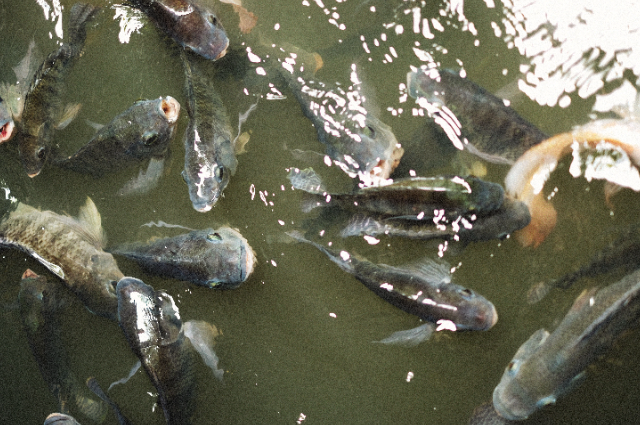
Hundreds of fish were found dead, floating belly-up, in Banganga Tank in Walkeshwar during Pitru Paksha, the fortnight when Hindus perform rituals for their ancestors. This year the period runs from September 26 to October 10. The Brihanmumbai Municipal Corporation (BMC) moved in to clear the water. For people living around the tank, the scene was painfully familiar.
What the BMC says went wrong.
Civic officials attribute the deaths to the offerings that devotees put into the tank during the rituals: flour dumplings, sweets, milk, oil and flowers. In the BMC's account, this material is organic waste. As it breaks down, it draws oxygen out of the water, and the fish suffocate. A BMC official told The Week that the slurry of flour and milk poured in during the fortnight affects the fish and has become an annual problem.
The explanation is consistent with how experts describe such events elsewhere in India, where low dissolved oxygen is a common cause of mass fish kills. Even so, it remains the civic body's own account. No laboratory report on the water or the fish has been made public, and this article could not find one.
Not new, and not small
Fish deaths at Banganga have been reported in 2021, 2023 and 2025, and press reports have long called them an annual tragedy. A resident quoted by the Free Press Journal said he has watched fish die after Pitru Paksha for more than four decades. The pattern goes back further still: a 2008 report in DNA described dead fish in the tank on the last day of Pitru Paksha, with officials blaming oxygen loss and pollution from offerings.
The scale of the clean-up shows how heavy the problem has become. In 2025, the BMC removed roughly 10,000 kg of dead fish and waste over three days. Last year the civic body also spent about Rs 1.2 crore on desilting the tank. Yet the deaths returned.
This year's response
The BMC has called a meeting with local priests and residents and has put more cleaning staff on the job. It has installed an aeration pump to raise oxygen levels, and an expert was called in to inspect the water and advise on measures to protect what is left of the aquatic life. The civic body also plans to pump out the tank and refill it with fresh water. One outlet additionally reported a plan to set up 10 artificial ponds, so that offerings are kept out of the tank itself.
Activists have been pushing for exactly that. They have suggested artificial ponds around the tank during Pitru Paksha, along the lines of those the BMC sets up for Ganeshotsav immersion, so that puja material is deposited there and only water is released to the tank. The BMC has already barred Ganpati idol immersion in Banganga before Ganesh Chaturthi this year, which shows the civic body can restrict what goes into the water when it chooses to.
The question that keeps coming back
Banganga is a protected heritage structure, a centuries-old spring-fed tank at the heart of a living religious site. The rituals are a matter of faith and deserve care in how they are handled. But the dates of Pitru Paksha are known months ahead. The pattern of deaths is known. The cause, according to the BMC itself, is known.
What is striking is the shape of the response: emergency cleaning after the fish are dead, instead of arrangements in place before the first offering is made. Aerators, alternative immersion points, volunteer guidance and clear rules for priests are all things that could be organised well in advance. Each year, the same crisis is treated as a surprise.
The BMC's plan for an engagement meeting with priests and residents is a sensible step, since any lasting fix will need the cooperation of the people who use the tank. Whether it leads to a standing plan for next year, rather than another round of removal and repair, is the test.
What we do not know
There is no published lab report, so the oxygen-depletion explanation rests on BMC statements. Reports also disagree on the number of dead fish: PTI and the Free Press Journal said hundreds, while The CSR Journal reported thousands. Details of the aeration pump, the refilling plan, and the proposed artificial ponds come from civic officials and press reports and may change.
References:
- PTI (via ThePrint). "Hundreds of dead fish spotted in Banganga Tank; BMC undertakes cleaning, protection measures." 5 October 2026. https://theprint.in
- The Week. "Mumbai's historic Banganga Tank sees fish deaths again: BMC plans meeting with priests, residents to protect the water body." 8 October 2026. https://www.theweek.in
- Free Press Journal. "Mumbai News: Activists Urge Artificial Ponds For Pinda Daan To Prevent Annual Fish Deaths At Banganga Tank." https://www.freepressjournal.in
- The CSR Journal. "Thousands of Fish Found Dead in Mumbai's Historic Banganga Tank." https://thecsrjournal.in
- SANDRP. "WFD 2025: Mass Fish Death in Lakes, Ponds in India." 23 November 2025. https://sandrp.in
- Daily News & Analysis (via India Environment Portal). "Homage frenzy chokes fishes." 30 September 2008. https://indiaenvironmentportal.org.in
- Mongabay-India. "[Explainer] What's causing mass fish death in India's ponds and lakes?" July 2022. https://india.mongabay.com
- Wikipedia. "Walkeshwar Temple" and "Walkeshwar" (background on the tank and its history). https://en.wikipedia.org/wiki/Walkeshwar_Temple