
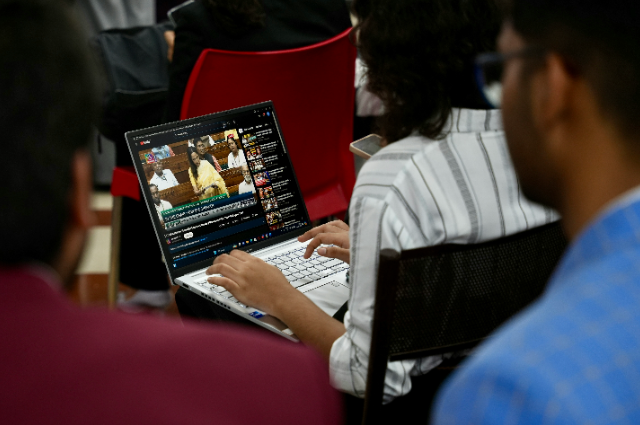
During a live primetime debate on May 29–30, 2026, Aaj Tak anchor and managing editor Anjana Om Kashyap went after YouTube educators with language that left very little room for interpretation. She called them "do kaudi ke", which is a Hindi phrase meaning "not worth two pennies", and alleged that they were drawing on blackboards not to teach students but to "grab views, do drama, and make money."The exact quotation, as we should not miss, goes "Inko kuch nahi aata. Do kaudi ke hain. Ye sirf blackboard pe likhte hain views ke liye, drama ke liye, paise kamane ke liye." She further said, pressing on the topic that these educators had started believing they are very important voices on every subject, despite having no real qualifications. She described them as “big frauds” and argued that due to them, there is a decline in the quality of education.
The clip was cut and circulated across X(formerly Twitter), Instagram, Facebook, and every social media platform within hours. The timing, as said, could not be worse for her.
The controversy broke out in the middle of the NEET UG-2026 paper leak scandal, one of the worst examination integrity crises in Indian history. YouTube educators had already been on the front lines, publicly calling out the government, the NTA, and the media for systemic failures that had robbed lakhs of students of a fair shot at their futures. Rather than addressing those criticisms or turning her journalistic lens toward the actual villains of that story, Anjana chose that moment to attack the teachers themselves. The optics were devastating. Here was a media anchor, insulated in an air-conditioned studio, accusing the one community that had actually shown up for students during COVID lockdowns, during exam panics, during financial crises of being frauds and attention-seekers.
Then came the reply of teachers who fought back, who saw the real mask of the media.
Abhinay sir (SSC/Railways), who said, "If YouTube teachers are worthless, who has been preparing millions of students for JEE, NEET, SSC, and UPSC all these years? For students in small towns, we are the only option."
Suman ma'am (Ocean Gurukul), who said, "I run free marathon classes for students who cannot afford a single rupee for coaching. You are calling me a fraud from your air-conditioned studio while the paper leak burns."
Khan sir said, "Shikshak ko keh rahi hai inko kuch nahi aata, to tum padhaao aake." (If teachers know nothing, come teach them yourself.)
And then there comes the final body, the people who are actually affected, the students who flooded social media with personal testimonies on how YouTube has carried the education through COVID lockdowns, poverty and exam prep when there was no other option.
Television news, a medium already under sustained fire for TRP-chasing, sensational headlines, and turning every debate into a theatrical shouting match, chose this moment to accuse YouTube educators of doing exactly that: chasing views, doing drama, and making money. The internet noticed. Abhinay Sir and other teachers openly called it "godi journalism" and TRP politics. They asked a pointed question: where was this same media when the NEET paper leak was happening? The answer, for many observers, was uncomfortable. YouTube teachers Khan Sir, marching with BPSC students in Patna, Suman Mam running free marathon sessions, Abhinay Sir making SSC preparation accessible to students who cannot get to Delhi, have been doing the actual work. The media that claimed to speak for students had largely been covering politics. There is a fair version of the criticism Anjana was trying to make. The online education space is not without problems. Some channels do overpromise. Some use emotional manipulation to sell expensive courses that underdeliver. A serious, evidence-based conversation about accountability in digital education is entirely legitimate and overdue. But that conversation requires specifics, evidence, and good faith. What aired on May 29–30 was a blanket dismissal of an entire community, hundreds of educators, and the millions of students who depend on them, using language that many found contemptuous. That is what drew the intensity of response. It was not a criticism. It was a sneer.
The silence from the studio has been interpreted in different ways. Some says its typical standard practice of television news channels to wait for the controversy to be out, ignoring it for a long time, and the news cycle moves on, whereas some say that this particular controversy, grounded in the live experiences of millions of students, is not the kind that quietly dissolves.
The hashtag kept trending. Educator rebuttal videos kept stacking up. Students from Bihar, UP, Rajasthan, and Jharkhand kept sharing personal stories. What began as one anchor's ill-timed remarks during a paper leak debate had become something much larger: a referendum on who actually serves Indian students, and who gets to decide.
Sources and references:
- The Jan Post
- bestmediainfo.com
- missionkiawaaz.com
- Hindustan Times
- The live nagour
- hauterfly.com
- thelogicalindia.com