
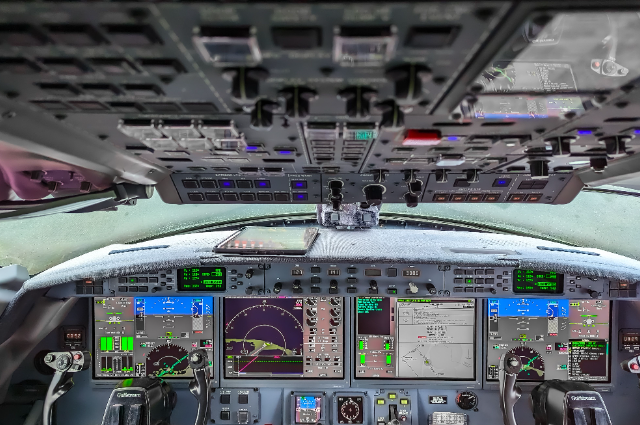
On the morning of 30 September, a routine Flydubai service from Dubai to Tel Aviv turned into one of the most frightening aviation security incidents the Gulf has seen in years. Within minutes, a cockpit struggle sent a Boeing 737 MAX 8 plunging thousands of feet with 174 people on board. It ended with a safe landing in Tabuk, Saudi Arabia. Eleven days on, much has been established, but the most important questions — why it happened and whether anyone else was involved — remain open.
What happened in the air
Flight FZ1073 left Dubai shortly after 7 a.m. local time and climbed to around 34,000 feet. A little over two hours later, tracking data showed the aircraft suddenly dropping more than 17,000 feet in roughly two minutes before climbing and descending again. Inside the cockpit, the co-pilot had attacked the Indian captain, Smit Machchhar. The aircraft first transmitted the general emergency squawk (7700), then the code for unlawful interference (7500).
Gravely wounded and on the cockpit floor, Machchhar managed to reach the door and open it. Passengers and crew rushed in and overpowered the attacker. Two off-duty pilots travelling on the flight then took the controls and flew the jet to an emergency landing at Prince Sultan bin Abdulaziz International Airport in Tabuk. Israeli fighter jets had reportedly been scrambled as the situation unfolded.
Machchhar later described the moment to Prime Minister Narendra Modi from his hospital bed in Abu Dhabi, saying that as the plane fell, he knew opening the door was his last chance. Israeli Prime Minister Benjamin Netanyahu has publicly credited his courage with saving everyone on board.
What is confirmed
The flight and the diversion. FZ1073 was bound for Tel Aviv with 174 passengers (27 of them children) and landed safely in Tabuk after the cockpit fight.
The captain was seriously wounded. He received treatment in Tabuk and was then moved to Abu Dhabi for specialised care.
The UAE calls it terrorism. On 3 October, UAE Prosecutor General Hamad Saif Al Shamsi said investigators found the co-pilot attempted a terrorist attack, using the cockpit crash axe against the captain and trying to take control of the aircraft.
The UAE is leading the case. The co-pilot was arrested by Saudi authorities and handed to the UAE, which claims jurisdiction because the aircraft is UAE-registered. Israeli investigators are taking part in the probe.
Flydubai has suspended Israel flights and says it is not in a position to comment further while the investigation continues.
India has opened its own case. The National Investigation Agency has registered an FIR under the Anti-Hijacking Act and the UAPA, since the captain is an Indian national.
What is still unverified
The suspect’s identity. Reuters and AP, citing anonymous sources including diplomats, name the co-pilot as Hamam al-Hammami, an Omani national. Neither the UAE nor Oman has officially confirmed this. Oman has not commented.
His background. Reports citing the Wall Street Journal, CNN and others say Oman barred him from flying over concerns about extremist views, and that he spent time in Australia, where police are examining his links. These accounts rely on unnamed sources and have not been officially verified.
Motive. The UAE has not publicly stated one. Flydubai has declined to speculate. Israeli sources told CNN he probably acted alone, but a Gulf diplomat said investigators are still testing whether he had connections to extremist groups.
The weapon, as described. Early accounts and the Indian FIR speak of stabbing; the UAE prosecutor specifically cites the crash axe. The two are not necessarily in conflict, but the exact sequence has not been published.
Claims of a planned strike on Tel Aviv, a wider conspiracy, or a state sponsor. These circulate in partisan outlets and social media. No official body has substantiated them.
Reports of a death-penalty push. Some outlets, citing Israeli media, say the UAE will seek the harshest sentence. This is second-hand and unconfirmed by Emirati authorities.
The vetting question
The issue now shaping the debate is how the co-pilot ended up on this flight at all. Reports say he had been with Flydubai for under a year, and an Israeli official indicated it was his first trip to Israel. The same official pointed to an arrangement under which pilots from countries without diplomatic ties to Israel are not meant to fly the route. Oman and Israel do not have formal relations. Whether that rule existed in the form described, and how it was applied here, has not been explained by Flydubai or the UAE.
A second, broader question concerns information sharing. If Oman did restrict him over security concerns, it is unclear whether that was ever communicated to a future employer. Aviation regulators and airlines across the region will likely face pressure to tighten background checks and cross-border reporting of such flags.
What comes next
The UAE says it will publish findings once procedures are complete, including technical examinations and physical and digital evidence. Until then, readers should treat the official terrorism characterisation and the captain’s account as firm, and everything about identity, ideology and networks as provisional. The incident has already become a political talking point in Israel and a reputational test for Flydubai and the wider Gulf aviation sector.
References:
- Al Jazeera — “Flydubai co-pilot attacked captain with crash axe in ‘terrorist act’: UAE” (3 Oct 2026) — https://www.aljazeera.com
- Al Jazeera — “Who is the mystery co-pilot behind the Flydubai attack?” (3 Oct 2026) — https://www.aljazeera.com
- Euronews — “Israel says pilot tried to crash Tel Aviv-bound plane during cockpit fight before safe emergency landing” (30 Sep 2026) — https://www.euronews.com
- CBS News — “What we’re learning about the FlyDubai co-pilot who allegedly stabbed the captain and tried to crash the plane” — https://www.cbsnews.com
- Reuters (via Taiwan News) — UAE prosecutor general statement on flydubai FZ1073 (3 Oct 2026) — https://www.taiwannews.com.tw/en/news/6451709
- ITV News — “Co-pilot accused of attempted Flydubai hijacking probably acted alone, officials say” (5 Oct 2026) — https://www.itv.com
- Sky News (via Radio X) — “Flydubai co-pilot: Australian links probed after ‘axe attack’ on captain” — https://www.radiox.co.uk
- The420.in — “NIA Takes Over Probe into Attack on Flydubai Pilot Smit Machchhar, Registers Case Under Anti-Hijacking Law and UAPA” — https://the420.in
- Outlook India — “Who Is Hamam Al-Hammami? What We Know About Flydubai Co-Pilot Accused Of Attacking Captain Smit Machchhar” — https://www.outlookindia.com
- Daily Wire — “UAE To Seek Death Penalty For Flydubai Terrorist: REPORT” (secondary reporting; treat claims as unverified) — https://www.dailywire.com
- Odisha Bytes — “UAE Seeks Death Penalty For flydubai’s Omani Co-Pilot” (citing Ynet; unverified) — https://odishabytes.com
A note on sourcing: this article reflects reporting available as of 11 October 2026. Details may change as the investigation develops. All sources are listed under Sources & References at the end.
Accessed 11 October 2026. Sources are listed in the order they are most relied on; the last two are secondary and flagged as unverified.