
A note on timing: The mass crossing described below took place overnight into July 30, 2026, so this account looks back at an event now several weeks old rather than breaking news. Figures were revised upward significantly in the days that followed, and those later, more reliable numbers are used here.
On the night of July 29 into July 30, 2026, the Moroccan border town of Fnideq became the launch point for one of the largest single migration events Europe has ever recorded at its edges. Thousands of people, many of them young men and teenagers, some unaccompanied minors,s swam around the breakwater separating Fnideq from Ceuta, Spain's tiny North African enclave, while others crossed on foot through the Tarajal area after slipping past checkpoints on the Moroccan side.
Spain's initial estimate on the morning of July 30 put arrivals at around 50,000 people in a single push, sh a scale that dwarfed the previous benchmark crisis of May 2021, when roughly 8,000 people crossed in 48 hours. Over the following four days, Spanish authorities said an estimated 69,500 crossings and returns were tallied in total as people moved back and forth across the border, with most eventually returning to Morocco either voluntarily or under pressure from Spanish police and troops.
The human cost was severe from the first hours. Early reports on July 31 put the death toll at "at least 18," with victims drowning in the strait or crushed in a crush at the breakwater and border fence. By the weekend, Spanish officials raised the confirmed toll to at least 72 deaths on the Spanish side, while Moroccan authorities separately reported 11 deaths on their side of the border, bringing the combined toll well above initial estimates.
Rachid Sbihi, who leads a local association representing Civil Guard officers in Ceuta, described a city overwhelmed: people still arriving even as reinforcements worked to treat the injured, and thousands including unaccompanied children left to sleep in parks and on sidewalks with nowhere else to go. Ceuta's two migrant reception centres, one for adults and one for minors, reportedly collapsed under the strain.
Prime Minister Pedro Sánchez visited Ceuta on July 31 alongside Interior Minister Fernando Grande-Marlaska, pledging to "restore order" and calling the situation a serious crisis for Spain and for Europe as a whole. Spain deployed military personnel to reinforce the Civil Guard and National Police, and by the following weekend, Ceuta's president Juan Jesús Vivas said the vast majority of arrivals,s all but an estimated 3,000 to 5,000 people, le had already returned to Morocco, voluntarily or otherwise. Spain later reinforced the sea barrier at Tarajal beach with a 500-metre floating containment structure to make future crossings harder.
Ceuta authorities initially linked the surge to a Spanish Supreme Court ruling that restricted the immediate return of migrants arriving by sea without due process, a ruling that does not apply to those who cross by land over the fence. Some Moroccan activists were sceptical that this legal nuance was actually what drove the crowds; much of the online mobilisation appears to have spread through Facebook, Discord and Instagram among young Moroccans, some of whom had also taken part in the 2025 "Gen Z" protests in Morocco.
The crisis quickly became a European affair. Within days, 22 EU member states led by Italy and Denmark signed a joint letter accusing Spain of creating a "pull factor" through a mass regularisation programme launched in January 2026, which had drawn more than a million applications, mostly from migrants of Latin American and Moroccan origin. The letter called the episode a threat to the Schengen open-border area and demanded emergency talks.
Italy went further than words. On July 31, Rome announced it would temporarily suspend Schengen free-movement arrangements with Spain for the month of August, reimposing checks on air and sea travellers arriving from Spanish territory (a measure that does not affect EU citizens). Italian Deputy Prime Minister Antonio Tajani called it "a necessary choice to safeguard the security of our citizens," while Spain's Foreign Minister José Manuel Albares condemned the move and summoned Italy's ambassador. Analysts at the Centre for European Policy Studies later characterised Italy's move as largely symbolic, a demonstration that a member state could invoke Schengen's emergency provisions over a crisis unfolding elsewhere, rather than a practical response, since Italy and Spain do not even share a land border. By early August, Italy and Portugal had also deployed police officers to Ceuta's port to help Spanish police screen ferry passengers heading to the mainland.
European Commission President Ursula von der Leyen called the situation in Ceuta "unacceptable" and appointed two commissioners to oversee the EU response, while stressing that no one had crossed onto mainland EU territory.
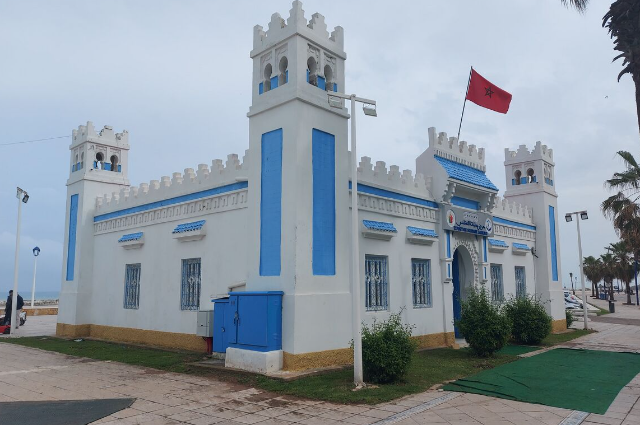
Fnideq itself, a Moroccan town of modest size sitting almost directly across the border fence from Ceuta, has long been a staging ground for crossing attempts, but never before at this scale. In the crisis's aftermath, Moroccan security forces closed access routes toward the town and dispersed crowds gathering there, a pattern repeated on August 15 when riot police again pushed back a smaller attempt to cross. Families of those who made it into Ceuta, and those sent back, gathered at Morocco's Bab Sebta crossing on the town's outskirts, waiting for word of relatives on either side of the fence.
More than seven weeks on, Spain and Morocco have tightened coordination on the border, but the episode has left a lasting mark: a sharply higher death toll than 2021, a fractured moment in EU border solidarity, and a Moroccan town that briefly became the centre of Europe's migration debate.
References:
- NPR / Michigan Public / CT Public — "At least 18 die after breach of border between Morocco and Spanish exclave of Ceuta", July 31, 2026
- Al Jazeera — "Spain installs floating barrier off Ceuta after deadly migrant crossings", August 1–2, 2026
- Al Jazeera — "Italy suspends free movement with Spain: Is Schengen in crisis after Ceuta?", August 4, 2026
- The Hill — "Italy closes air and sea borders, suspends Schengen with Spain over Ceuta migrant crisis", July 31, 2026
- Euronews — "Italy temporarily reintroduces border controls with Spain", July 31, 2026
- Coast FM — "Thousands of migrants remain in Ceuta after deadly mass rush from Morocco", August 3, 2026
- AFP via The Citizen — "At least 72 die in Spain's Ceuta migrant rush", August 2, 2026
- Wikipedia — "2026 Ceuta migrant crisis" (background and timeline, accessed September 2026)