
On the evening of Monday, September 21, a 17-year-old girl went to Kalkaji Mandir on her birthday. By nightfall, she had been allegedly gang-raped in Aastha Kunj Park, a short walk from the temple, by three men who, according to police, posed as policemen to threaten her and her friend. All three accused were arrested within 24 hours, and a POCSO court has sent them to judicial custody.
Within days, the crime had reshaped how a city, and a university, talked about who gets to be outside after dark.
A back gate, and a meeting at 9 pm
Lady Shri Ram College for Women sits close to the park. On Tuesday, a police encounter with one of the accused took place roughly 50 metres from the college's back gate. Classes were suspended from noon and moved online, and faculty were asked to teach the next day remotely. The administration advised students and staff not to gather near the back gate and asked mentors and counsellors to remain available.
That night at 9 pm, the LSR Students' Union convened an emergency online general body meeting. Its circulated statement said the events had left many students “shaken and unsafe,” and argued that safety around the campus was an immediate requirement, not a long-term aspiration. The worry was sharpest for students living in PGs and rented housing around the college and the park. Some reportedly considered going home for a while; others said they had stopped travelling alone and were commuting in groups. What students asked for was concrete: more police patrolling and surveillance around the back gate and the adjoining parks and lanes.
The state's answer: close the gates
The Delhi Development Authority's response arrived days later. DDA parks with multiple entry gates would move to controlled access after sunset, alongside additional CCTV cameras, better lighting, security personnel and night patrols, with a citywide audit of park safety ordered. Officials were told not to wait for the audit to finish before acting.
Cameras, lighting and patrols are not what students objected to; they had asked for much the same. The objection was to the first measure on the list. Restricting entry after dark removes people from public space rather than making that space safe, and the people it removes are, in practice, women. For many students, it read as the old reflex: when a woman is attacked, shrink her world.
“Hum Auratein Azaad Hain”
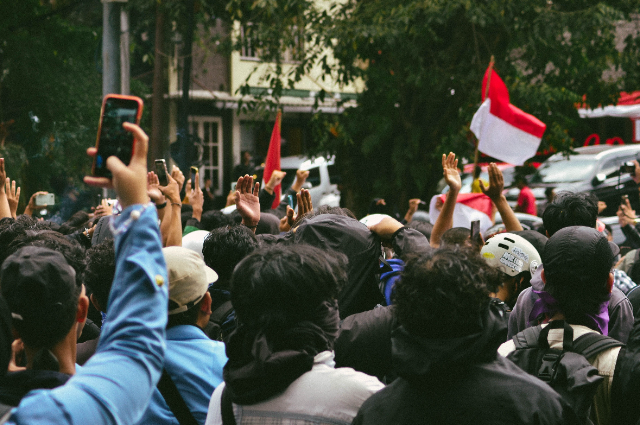
LSR students held a solidarity march after a day of online classes. Students from Gargi College and Kamala Nehru College followed, and on Friday, September 25, women marched from Kamala Nehru College. On Monday, September 28, a women-and-queer-only march moved through North Campus from near the Faculty of Arts, organised independently by students; one count put attendance at around 3,000. It was the third such student-led march in under a week.
The slogan that tied them together, “Hum Auratein Azaad Hain” (we, the women, are free), was also the argument. Marchers demanded better street lighting, reliable public transport, functional CCTV and real policing, and warned that surveillance alone is not safety. Restricting access to public places, they said, is itself a patriarchal answer to violence. The movement also threw up a chant, “Ek kachori, do samosa”, that went viral, and students floated drafting a Charter of Demands for lasting change.
Not every college is the same
The protests also exposed an uneven map within Delhi University. Miranda House, whose students organised one of the marches, has been described by a former hostel resident as having no curfew and an accommodating administration, and its hostel is promoted as the only one in the university without curfew timings. Many other DU hostels have long run on fixed closing times. The contrast raises a question the university has avoided for years: if one women's college can function without a curfew, what exactly are the others protecting?
A fight older than this month
None of this began on September 21. In 2015, women students and alumni formed Pinjra Tod (“Break the Cage”) to challenge discriminatory hostel rules and curfews across Delhi University. That October, the collective submitted a petition to the Delhi Commission for Women. In May 2016, the DCW issued notices to 23 universities on the basis of its complaint. In later years, Pinjra Tod members staged sit-ins and all-night protests demanding curfew-less hostels, the end of the “local guardian” requirement and functioning internal complaints committees.
This month's marches are the newest chapter of a struggle now more than a decade old, and they make the same point Pinjra Tod made in 2015: the cage is not a safety measure. Danger in Delhi comes from the men who commit violence and the systems that fail to prevent it. Dark lanes, unmonitored gates and thin patrols are failures of the city. Closing the park, or the hostel, after dusk asks women to absorb the cost of those failures.
The investigation and court proceedings against the three accused are ongoing, and the survivor's identity is, rightly, protected. What the students are asking for is something the city has the power to give: lit streets, working cameras and police who show up, so that nobody has to be home by sunset to be safe.
Sources and References
- Outlook India. “Restricted Entry In Delhi Parks After Sunset Post Astha Kunj Gang-Rape.” https://www.outlookindia.com
- Brut India. “17-Year-Old Allegedly Gang-Raped By Three Men Posing As Cops In Delhi Park Near Kalkaji Temple.” https://www.brut.media
- News Karnataka, 25 Sept 2026. “Delhi restricts park entry after sunset after teen gang rape.” https://newskarnataka.com
- The Tribune. “Lady Shri Ram College for Women suspends offline classes after post-rape encounter near back gate, panic grips students.” https://www.tribuneindia.com
- ANI, 23 Sept 2026. “Delhi: LSR shifts classes online after gangrape near campus, students raise safety concerns.” https://aninews.in
- Business Standard, 23 Sept 2026. “Astha Kunj gangrape: LSR suspends classes after encounter near campus.” https://www.business-standard.com
- NewsBytes. “After alleged Aastha Kunj Park rape, Kamala Nehru students march.” https://www.newsbytesapp.com
- Oneindia. “Abort Patriarchy: DU Women Students Turn North Campus Into a March for Freedom and Safety.” https://www.oneindia.com
- ThePrint. “DU's North Campus is full of poorly lit, unsafe stretches. Students demand sturdy solutions.” https://theprint.in
- The Statesman. “'Ek kachori do samosa', the DU protest slogan everyone knows....” https://www.thestatesman.com
- Substack (Kanishka Anish). ““Himpathy” Across Borders: The Cornell 7 and Kalkaji Rape Cases (source for the ~3,000 attendance estimate and POCSO custody detail). https://kanishkaanish.substack.com
- Collegedunia. “Miranda House, Delhi University Hostel (college-listing claim on curfew-free hostel).” https://s4.collegedunia.com
- Wikipedia. “Pinjra Tod.” https://en.wikipedia.org
- Deccan Herald / PTI. “DU students protest demanding curfew-less nights.” https://www.deccanherald.com
- Millennium Post, 27 Feb 2017. “Post-violence, stringent curfew timings making life difficult for hostellers (background on DU hostel curfews).” https://www.pressreader.com