
However, today it is considered a threat again and is under close observation by health and agriculture authorities in the Americas.
The New World Screwworm (Cochliomyia hominivorax) is not just an ordinary fly. Females lay eggs in the wounds of warm-blooded animals or their mucous membranes, and after hatching, larvae do not wait for the death of the host tissue; they simply dive into it, increasing the size of the wound, causing infections that may be lethal if not treated in time. That is indeed terrifying biology, but the key issue here is not that itself; it is a major animal health and food security threat that resonates globally. IAEA
There were no chemical pesticides or quarantine measures that helped the US get rid of screwworms. USDA developed a biological strategy, consisting of the release of millions of sterile male flies into infected territories. The principle lies in the biology of screwworm flies: females mate only once during their three-week life, and if a female mates with a sterile male, her eggs will not hatch. Just flood a territory with sterile males, and each subsequent generation will become smaller. And it did work: NWS was eradicated in the US, then in Mexico and then pushed further in Central America. CDC + 2
That is indeed one of the most celebrated cases of pest area-wide eradication in agricultural history; that is precisely why its reappearance causes such fears among officials.
The beginning of the unravelling was quiet. NWS outbreaks were found in Panama and Costa Rica territories, where the pest had been eradicated for years, in 2023. From there, the development of the situation was fast: CDC
All Central American countries and Mexico that had earlier been under the control of NWS have since detected the virus in their domestic livestock, domestic animals, wildlife, and humans. CDC
In February 2026, the Ministry of Health in Mexico reported 141 human cases from 8 states, while the highest number of cases was recorded in the state of Chiapas, together with over 600 animal cases. CIDRAP
As of January 20, 2026, the entire outbreak in Central America and Mexico had accounted for more than 1,190 cases and seven deaths; thus, the case fatality rate for the whole outbreak was estimated to be about 26%. CDCCDCCIDRAP
The outbreak continued moving in a northerly direction. Cases in animals were reported in the Mexican state of Tamaulipas that borders Texas. CDC
By early summer, the numbers had soared: Central American countries and Mexico recorded a total of over 185,000 animal cases and 2,263 human cases. CDC
One of the most alarming milestones in this particular outbreak occurred this year when the screwworm reappeared in the United States after almost 40 years in early June 2026. The first domestic animal case was recorded in the United States on June 3, 2026, and 16 domestic animal cases of NWS have been confirmed since then. FAOCDC
There is an important point worth remembering – these infestations are occurring in animals, not humans in the United States. There have been no reports of human infestation with NWS acquired in the United States. Only one confirmed case of human infestation with NWS occurred in the country, and this was in a US resident who recently returned from El Salvador. Therefore, at the moment, the risk of infestation of people in the US by NWS is extremely low, although it will increase for people who travel to regions where the disease is found. CDC + 2
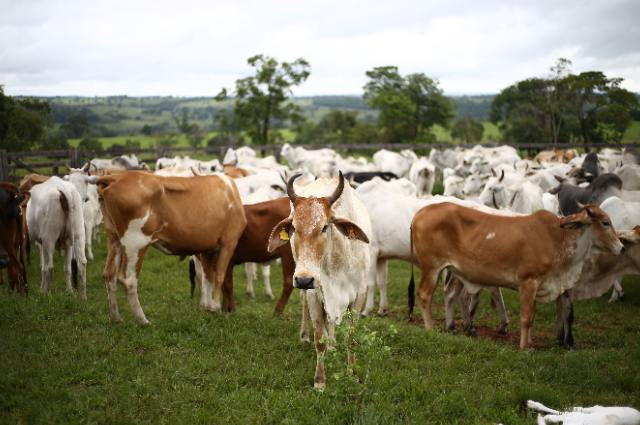
It would be easy to classify this news as "another one of those unsettling parasite stories". But there are more significant economic and agricultural consequences associated with the disease. NWS infests livestock, mainly cattle and horses, and historically, it was a major economic pest of livestock in the United States before the elimination of the species. An established population of NWS in US cattle herds will affect both the health of herds, the economy of ranchers, and the cost and availability of meat products downstream. KDHECDC
This is one of the reasons why the countermeasures have been so extensive and well funded. The USDA announced the NWS Grand Challenge, allocating up to $100 million to projects aimed at improving sterile-fly production and enhancing response and trade safeguarding strategies. In addition to that, the USDA increased surveillance and trapping systems along the US-Mexico border together with implementation of strict movement protocols coordinated with their Mexican colleagues. USDAUSDA
The method that proved effective the first time around now faces the problem of supply. The response to the outbreak can require up to 600 million sterile flies per week. Meanwhile, due to the emergency response efforts, there is a shortage of sterile flies at hand. At the moment, the COPEG facility in Panama producing the flies is the only fully operational plant producing about 100 million flies per week, which is far from sufficient. Construction of two new facilities in Metapa de Dominguez, Mexico, and Mission, Texas, which may produce up to 400 million flies per week, is underway. FAO + 2
In order to narrow this gap, various international science bodies have come into play. The IAEA, as well as the Food and Agriculture Organisation of the United Nations, have undertaken a five-year coordinated research effort aimed at the enhancement of sterile insect technique methods, involving scientists from over 20 countries affected by this problem. In addition, the USA has offered an additional $1.5 million to the IAEA for the development of new eradication techniques. IAEA + 2
Of course, it's not all about fate. Various reasons, including changes in weather patterns, globalisation, and illegal transportation of animals across borders, have been contributing to the spread of this pest, thus making the situation more complicated and demanding special measures. However, this particular set of circumstances, namely, a warmer climate, which allows this fly to live and breed in a wider geographic region, coupled with the increased mobility of both animals and people across borders, is a familiar picture in many cases of eradicated diseases.
Various health officials have stated several preventive measures to be taken by anyone visiting affected regions:
- Apply insect repellent and wear loose, long-sleeved clothes, socks and hats in affected regions. USDA
- Stay in places protected by screens, bed nets and tents while travelling through regions affected by this outbreak. USDA
- Do not linger in areas where you might encounter livestock or animals that could have screwworm flies. USDA
Notify relevant public health or agriculture personnel of any suspicious injuries or presence of maggots among humans or animals at once.
At present, US authorities state that the risk posed to the general public is considered to be low, but emphasize that the animal-health and agricultural risk should be the priority for the coming months, especially as the sterile flies' production is to make up for an outbreak that happened ahead of schedule.
Sources & References
- Centres for Disease Control and Prevention (CDC), New World Screwworm Outbreak – Situation Summary – https://www.cdc.gov
- CDC Health Alert Network, New World Screwworm: Outbreak Moves into Northern Mexico (January 20, 2026) – https://www.cdc.gov
- New World Screwworm – USDA, Animal & Plant Health Inspection Service – http://www.screwworm.gov
- UN Food and Agriculture Organisation (FAO), IAEA and FAO Start Initiative To Tackle Re-emerging New World Screwworm Outbreak – https://www.fao.org
- Department of Health and Environment, Kansas – Outbreak of New World Screwworm Enters Northern Mexico – https://www.kdhe.ks.gov
- International Atomic Energy Agency (IAEA), New Project Launched to Combat New World Screwworms Using Nuclear Technology — https://www.iaea.org
- New World Screwworm Outbreak in Mexico and Central America California Department of Public Health (CDPH) – http://www.cdph.ca.gov
- CIDRAP, CDC Issues Warning on Appearance of New World Screwworm Next Door in Mexico – https://www.cidrap.umn.edu
- CIDRAP, Mexico Reports Additional Cases of Human New World Screwworm – https://www.cidrap.umn
- Screwworm.gov – Unified Government Response to Protect the United States from Screwworms – https://www.aphis