
On the evening of June 18, 2026, a 13-year-old girl left her home in Sri Ganganagar, Rajasthan, to meet a friend. On her way back, she hired an e-rickshaw. It was an ordinary decision, the kind a child makes without a second thought. Police say the driver instead took her to Hotel Joy Inn and sold her to the property's operator. Over the next several days, she was allegedly moved between at least three hotels: Joy Inn, Hotel Sapphire and Hotel Khunga,r where, according to her statement to police, she was raped by more than 30 men brought in by hotel owners and managers, and given alcohol to cope with the pain.
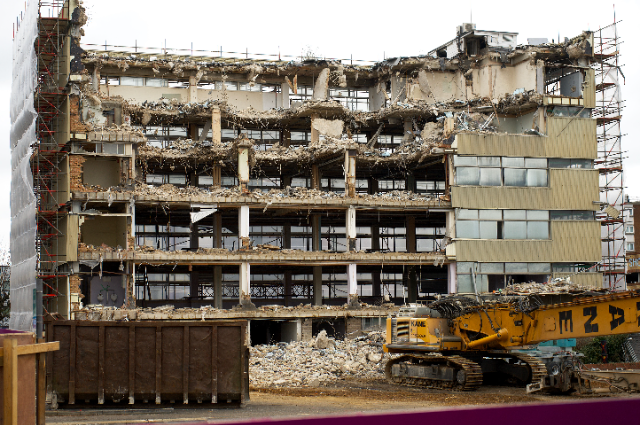
She was rescued after her family, unable to reach her, filed a missing-persons report. Police traced her to one of the hotels still in captivity. What followed was swift on two fronts: a criminal investigation that has so far led to more than a dozen arrests, and a demolition drive that flattened three to four hotels linked to the case within days, with bulldozers, over fifty police and administrative personnel, and a city administration eager to be seen doing something.
The scale of the allegations is what has made Sri Ganganagar impossible to look away from: a child, held for five days, allegedly assaulted by dozens of men across multiple commercial establishments whose owners and staff are accused of actively arranging the abuse rather than merely failing to notice it. The FIR reportedly names several hotel operators alongside the men accused of assault.
The case has triggered statewide protests demanding the death penalty for the accused and accountability for the local police and administration. Questions about how a trafficking-and-assault operation of this scale could run across multiple hotels in a mid-sized city for five days without detection have been central to the public anger. It has also renewed scrutiny of Sri Ganganagar's hospitality sector, where unlicensed and poorly regulated guest houses have long been flagged by local officials as vulnerable to exactly this kind of exploitation.
What distinguishes this case from the routine, grinding frequency of crimes against children in India is the response: demolition as spectacle. District authorities in Sri Ganganagar razed the hotels linked to the case within roughly ten days of the girl's rescue, officially citing building-code and construction violations rather than any court order tied to the crime itself. The optics were unmistakable: earthmovers, a heavy police presence, a visibly punished skyline standing in for a trial that hadn't yet begun. It is worth being honest about what that demolition does and doesn't accomplish. It destroys evidence-adjacent structures. It satisfies a public that wants to see force applied to something. It does not convict anyone, compensate the survivor, or fix the underlying regulatory failure that allowed unlicensed hotels to operate as unsupervised sites of exploitation in the first place. India's Supreme Court has separately ruled that demolitions used as instruments of punishment rather than through lawful, individualised due process amount to a "lawless" governance style, and has ordered nationwide guidelines requiring notice and hearing before any such action. Whether Sri Ganganagar's drive met that bar, or was simply expedited under public pressure with "building bylaw violations" as convenient cover, is a question local authorities have not directly answered.
That tension real accountability versus the theatre of accountability sits at the centre of the political response to this case. Demolishing a building is fast, visible, and popular. Prosecuting more than a dozen men, unwinding a trafficking network, and auditing a city's entire hospitality sector for similar risk is slow, unglamorous, and easy to defund once the cameras leave.
As the case went viral, so did a flood of fabricated content attached to it. Fact-checkers traced multiple viral videos and photographs falsely claimed to show the accused being publicly beaten or paraded footage that actually originated from unrelated incidents in Gujarat and a Muharram procession stunt in Uttar Pradesh. Other viral clips claiming to show the survivor herself were traced to an unrelated 2025 case in Uttarakhand and a separate abduction case in Hardoi, Uttar Pradesh. Rumours that the girl had died in hospital circulated widely enough that Rajasthan Police had to issue a public statement confirming she was alive and with her family.
Police in Sri Ganganagar have said the spread of this misinformation has complicated an already sensitive investigation, and have appealed to the public to stop sharing unverified content a now-familiar pattern in high-profile Indian crime cases, where outrage outruns verification within hours.
As of mid-July, the investigation continues. More arrests have followed the initial round, and police have said digital evidence,ce call records, and financial transactions between hotel operators are being used to identify additional suspects. The chargesheet has not yet been filed in full, and the trial has not begun. The hotels are gone; the men who ran them, and the systemic gaps that let this happen, are still working their way through a legal process that will take considerably longer than a bulldozer.
That gap between the speed of demolition and the slowness of justice is the real story of Sri Ganganagar. A city can tear down a building in an afternoon. Rebuilding a regulatory system that protects children, and delivering a verdict that survivors can actually rely on, takes much longer, and draws far less applause.
References:
- The Print (PTI wire) — "Three hotels in Sri Ganganagar face bulldozer action over gangrape of 13-year-old girl," July 1, 2026
- ETV Bharat — "Three Hotels Demolished In Sri Ganganagar For Aiding In Minor's Gang Rape"
- The Statesman — "Rajasthan: 13-year-old girl sexually exploited by over 30 men, hotels in Sri Ganganagar face bulldozer action"
- Pravda (via India Today) — "Indian Authorities Demolish Four Hotels After Shocking Gang Rape of 13-Year-Old Girl"
- RealShePower — "Five Days, Thirty Men, One Child: What Sri Ganganagar Says About Us"
- The Chenab Times — Fact Check: "Viral Videos of Public Hangings and Beatings Falsely Linked to Sri Ganganagar Rape Case"
- LatestLY — "Has the Sri Ganganagar Rape Victim Died? Rajasthan Police Clarify Viral Rumours"
- NewsMeter — Fact Check: "Sri Ganganagar rape case accused punished by cops in public? No, video is from Gujarat"
- The Quint (WebQoof) — "Videos From Hardoi Falsely Shared as Ones of Minor In Sri Ganganagar Gang Rape Case"
- Factly. in — Fact-checks on viral visuals falsely linked to the Sri Ganganagar case
- Supreme Court Observer — "Bulldozer demolitions remind of a 'lawless, ruthless state of affairs,' declares Supreme Court, as it issues pan-India guidelines," Nov. 13, 2024