
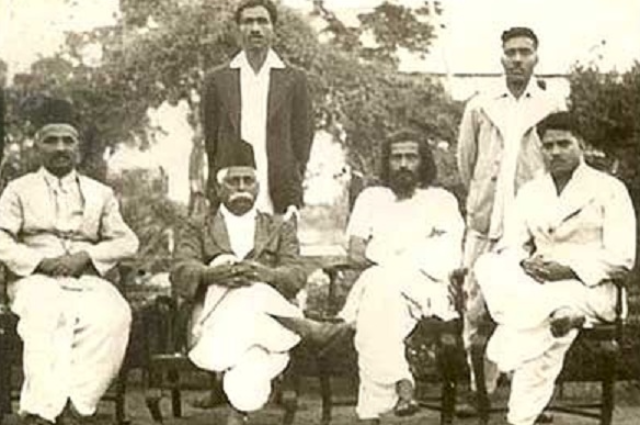
The Rashtriya Swayamsevak Sangh (RSS) was founded on 27 September 1925 in Nagpur by Dr Keshav Baliram Hedgewar and marked its 100th anniversary in 2025. It works through daily and weekly shakhas, is led by a Sarsanghchalak (currently Mohan Bhagwat), and sits at the centre of a family of affiliates that includes the BJP, the VHP and the ABVP. Yet the organisation, now marking its centenary, has been banned three times by the Indian state: in 1948, 1975 and 1992. Each ban had a different trigger, a different outcome and a different afterlife in political argument.
1948: after Gandhi’s assassination
Mahatma Gandhi was shot dead in Delhi by Nathuram Godse on 30 January 1948. On 4 February, the government declared the RSS an unlawful association, citing acts of violence by individual members and what it called a failure to adhere to the Sangh’s professed ideals.
Home Minister Sardar Patel’s own letters are central to the story. In July 1948 he wrote to Syama Prasad Mookerjee that the RSS and the Hindu Mahasabha, “particularly the former”, had helped create an atmosphere in which such a tragedy became possible. In September he wrote to M.S. Golwalkar in similarly severe terms. But the same sources note an important limit: the government did not find direct evidence linking RSS members to the assassination itself.
The ban was lifted on 11 July 1949, after Golwalkar made commitments, including submitting a written constitution. Jawaharlal Nehru reportedly also wanted the organisation to declare allegiance to the national flag. The RSS’s constitution describes the Sangh as devoted to social and cultural work rather than politics. Mainstream Weekly’s Praveen Davar argues the conditions were never truly honoured; the RSS and its supporters would reject that reading.
1975: the Emergency
When Indira Gandhi declared the Emergency on the night of 25 June 1975, the RSS was among the first organisations targeted. Sarsanghchalak Balasaheb Deoras was arrested in Nagpur on 30 June, and the RSS was banned on 4 July 1975. The ban ended with the Emergency, which was lifted in March 1977.
This is the most contested chapter of the three, because the question is not why the ban happened but how the RSS behaved under it. The RSS and its affiliated publication Organiser say swayamsevaks led the underground resistance, and claim that more than 100,000 of roughly 130,000 satyagrahis were from the Sangh. These figures come from an RSS-aligned source and should be attributed as such.
Other accounts are more mixed. Writing in ThePrint, an opinion piece describes senior RSS leaders as divided: some resisted staunchly, while others sought accommodation with the Gandhi government. Wikipedia notes there are accounts, disputed by RSS representatives, that Deoras wrote conciliatory letters from Yerwada jail. A DailyO article, drawing on the RSS’s own account, argues that Deoras’s letters show no clemency was sought. Writers should present these as competing readings rather than settled fact.
1992: after the Babri Masjid demolition
After the Babri Masjid in Ayodhya was demolished on 6 December 1992, the Narasimha Rao government banned the RSS under the Unlawful Activities (Prevention) Act, 1967. Under that law, a ban must be examined by a tribunal; here it was headed by Delhi High Court judge Justice P.K. Bahri.
The tribunal cancelled the notification in June 1993. According to the organiser’s summary, it found the government had not established its allegation that swayamsevaks took part in the demolition. Ritam Digital reports that the Supreme Court did not revive the ban, and a 1993 report in Hinduism Today says the court declined to stay the tribunal’s ruling. (Secondary sources give both 4 June and 18 June 1993 for the verdict; use “June 1993” unless you check the original order).
The tribunal’s finding did not end the argument. The Liberhan Commission, which reported in 2009, indicted RSS cadres for alleged involvement in the demolition. The RSS has long maintained that demolition was not on its agenda. In 2019, the Supreme Court, in its Ayodhya title verdict, called the demolition illegal while handing the site to a trust for a Ram temple.
The ban debate in 2025–26
The bans returned to the news in late 2025. Congress president Mallikarjun Kharge called for the RSS to be banned, while his son, Karnataka minister Priyank Kharge, sought restrictions on RSS activities in government institutions and public places and questioned the organisation’s registration and funding. Karnataka’s chief minister promised “necessary action” on the proposal.
Bhagwat responded at a Bengaluru event on 9 November 2025, saying the RSS is legally a “body of individuals” and that registration was never made compulsory after Independence; he asked whether anyone expected registration with the British government in 1925. In June 2026 at Thrissur, he went further, saying that calls for registration came from politics and that Hindu Dharma itself is not registered. Priyank Kharge’s side argues that no organisation, however influential, should be beyond scrutiny of its finances and legal status.
What the three bans do and do not show.
All three were lifted: after about 17 months in 1948–49, about 20 months during the Emergency, and about six months in 1992–93.
Supporters read this as proof the charges never held up, especially after the 1993 tribunal’s ruling.
Critics point to the content of the 1948 letters and the Liberhan findings, arguing that a lifted ban is not the same as vindication.
The three episodes are different in kind: one followed a political assassination, one was an act of an authoritarian emergency, and one went through a statutory tribunal.
Notes for writers
Treat each ban as a separate debate and name who is making each claim: the government of the day, the RSS or Organiser, or independent historians and commissions. Avoid merging “the RSS was banned” with “the RSS was found guilty”; the tribunal and the 1948 record support different conclusions. Founding details (1925, Hedgewar, Nagpur) and the list of affiliates come from the brief supplied for this piece and should be checked against an authoritative history before publication.
References:
- The Wire — “When Sardar Patel Took on the ‘Forces of Hate’ and Banned the RSS” (2018; republished 30 Jan 2023). https://m.thewire.in/article/history/sardar-patel-rss-ban-1948
- The Caravan — “How MS Golwalkar and Vallabhbhai Patel ensured the RSS’s survival after Gandhi’s assassination” (book extract). https://caravanmagazine.in
- The Tribune — “Open pledge: Changing dynamics after lifting of ban on govt officials joining the RSS”. https://tribuneindia.com
- Sabrang India — Government of India communiqué, “RSS is banned” (1948). https://sabrangindia.in/rss-banned/
- Mainstream Weekly — Praveen Davar, “Indira Gandhi’s early warning on RSS” (2025). https://mainstreamweekly.net/article16361.html
- ThePrint — “The story of how RSS leaders deserted Jayaprakash and the resistance during Indira’s Emergency”. https://theprint.in
- Wikipedia — Madhukar Dattatraya Deoras (used only for the contested-letters claim; verify against primary sources). https://en.wikipedia.org/wiki/Madhukar_Dattatraya_Deoras
- Organiser (RSS-affiliated weekly) — “From Emergency to resistance…” (25 June 2025). https://organiser.org
- Organiser (RSS-affiliated weekly) — “Courts on government servants’ participation in RSS” (22 July 2024). https://organiser.org
- Ritam Digital — “The Third Ban on RSS and the Tribunal’s Judgment”. https://ritamdigital.com
- Hinduism Today — News in Brief (August 1993). https://hinduismtoday.com
- Scroll. in — Justice Liberhan on Mohan Bhagwat at the Ayodhya ceremony (2020). https://amp.scroll.in/latest/969686/scroll_in
- Scroll. in — “‘Even Hindu Dharma is not registered’: Mohan Bhagwat on criticism about RSS’ legal status” (9 Nov 2025). https://scroll.in/latest/1088403/scroll_in
- The News Minute — “Mohan Bhagwat says RSS recognised as body of individuals, registration not mandatory” (Nov 2025). https://www.thenewsminute.com
- UNI — “Bhagwat rejects Kharge’s demand for RSS registration” (15 June 2026). https://www.uniindia.com
- Deccan Herald — “Karnataka mulls banning RSS activities in public places…” (Oct 2025). https://www.deccanherald.com
- DailyO — “Emergency, Indira Gandhi, RSS, Balasaheb Deoras” (presents the RSS-side reading of Deoras’s letters). https://dailyo.in