
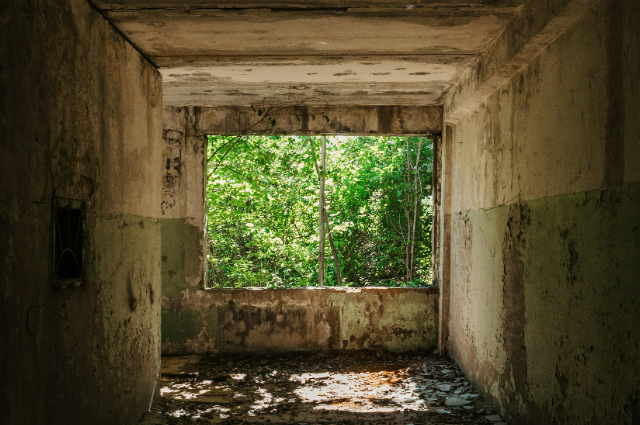
Gopal Sharma, a 15-year-old boy, an ordinary teenager on the afternoon of May 21st, went missing in Banwari Bans village, Jewar Area, Greater Noida, UP. He s/o of Ravi Bhushan (locally known as Bunty) and Saroj Sharma. When, on the evening of May 21st, he did not return, his family began to worry, leading his father to file a missing person report on May 22nd at Jewar Kotwali police station. The complaint was simple and heartbreaking: “My son left home between 3:30 and 4:00 pm and has not returned. Please search for him”. Two days later, Gopal Sharma’s body was found inside a room of an abandoned building house which is approximately 4km from his house.
The body had severe head injuries. There was a large amount of blood. The room was hot as a furnace had turned into a site of an unimaginable end for a child who had barely started living his life.
The details that came out from the family are difficult to read. The body was discovered by Gopal’s father. Bunty told news channels that the condition of the corpse was so horrific that he wished that if his son had been shot, he wouldn’t have felt as much pain as he did after hearing these things. His grandmother said something had been stuffed into Gopal’s mouth. His mother could not even bring herself to look upon her child. The family alleged extreme acts of torture-eyes being gouged, tongue cut, private parts mutilated, acid poured on his body, nails driven into his hands and whatnot. The Greater Noida police, led by DCP Praveen Ranjan Singh, moved to counter several viral claims circulating on social media. The DCP stated that Gopal's body had been post-mortem and video-graphed, and that the post-mortem report did not corroborate allegations of mutilation. He attributed the disturbing appearance of the body, including the visible eyes, to decomposition in extreme heat. The police maintained four investigative teams and assured the public of a swift resolution. The DCP posted on X (formerly Twitter), stating that allegations of cutting of private parts and an acid attack on the eyes were "completely false and misleading" based on the post-mortem report. He also ruled out a sexual assault angle. The cause of death, as confirmed by the post-mortem, was a head injury. The exact circumstances remained under investigation.
This public contradiction of the family's harrowing testimony versus the police's clinical denial became the heart of the controversy. It is a familiar pattern in cases involving child victims in India, where families allege institutional indifference and misinformation, and authorities struggle to manage both a criminal investigation and an outrage-fuelled information ecosystem.
The DCP announced on X (formerly Twitter) that the case had been “successfully solved” and the accused was taken into custody. Many newspapers and Hindi media have reported that the motive behind Gopal’s murder was shockingly very cliché. A dispute over hookah and substance use. Gopal had reportedly been killed following an altercation triggered when he or his family members objected to the accused's habits.
Brahmin organisations, including the Rashtriya Brahmin Ekta Manch and the Rashtriya Vipra Ekta Manch, descended on the area, meeting Gopal's family and issuing ultimatums to the police. The National President of the Rashtriya Vipra Ekta Manch, Mitresh Chaturvedi, gave police a two-day deadline to arrest the culprits, warning that failure to act would trigger mass protests. Greater Noida nonetheless became a pressure cooker before the arrest.
Gopal Sharma's case is not an isolated tragedy. India's National Crime Records Bureau (NCRB) data consistently reveals alarming rates of crime against children. In 2022 alone, over 1.5 lakh crimes against children were registered, and that number represents only what was reported. The dark figure of unreported cases is far higher.
Several patterns repeat, case after case:
Delayed FIR registration
Gopal went missing on May 21. His father's FIR was filed on May 22, a relatively quick response. But in many cases, police discourage families from filing FIRs, especially in rural areas, and urge them to "wait and see".
Contested narratives
Police and families routinely offer contradictory accounts of how a child died. The absence of a transparent, independent forensic review breeds distrust.
Misinformation and social media amplification
Images and claims spread virally before investigations conclude, whipping public sentiment into a frenzy that can distort justice rather than serve it. The accused may be convicted by mob pressure; the facts may be distorted.
Caste and communal mobilisation
When protests take on an identity dimension — as they did here with Brahmin organisations the risk is that the child's death becomes a political tool rather than a catalyst for structural reform.
Encounter jurisprudence
The fact that the accused were arrested "in an injured condition following a police encounter" raises its own questions. While public opinion often celebrates encounters, the Supreme Court of India has repeatedly held that extrajudicial killings violate Article 21 of the Constitution and that the state must conduct magisterial inquiries in all encounter deaths or injuries. Justice must be delivered through courts, not bullets.
At the end, Gopal Sharma was just 15 years old in class 9th, barely starting to know what life is or what the world is. He had planned his happy future, which could not be complete. The law governing bodies, whether internationally or domestically, urge to serve justice for him, and he will. His dignity would be protected. He who killed him will face a rigorous murder trial. His death won't be forgotten once the news is over or the protests are over. The question is whether the political will exists to do so, not just for children from communities powerful enough to mount a protest, but for every child.
Every Gopal Sharma. Every child.
References:
- OpIndia (May 2026)
- Zee News (May 2026)
- TV9 Hindi (May 2026)
- Dainik Bhaskar (May 2026)
- IANS (May 2026)
- UN Convention on the Rights of the Child
- NCRB Data Reports
- Bharatiya Nyaya Sanhita 2023
- POCSO Act 2012
- Juvenile Justice Act 2015
. . .