
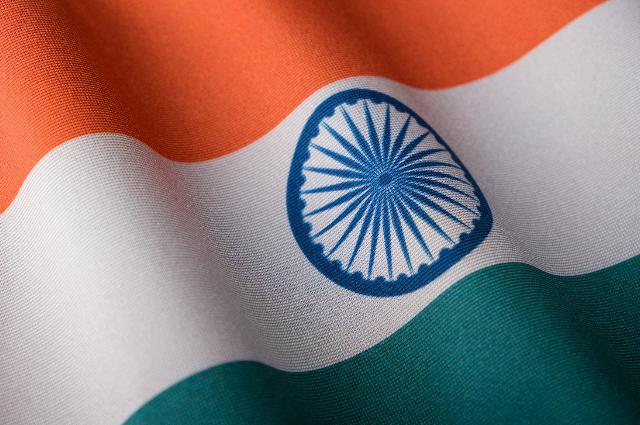
Every morning in schools across India, millions of children sing a song that names a handful of places. Punjab, Sindh, Gujarat, Maratha, Dravida, Utkala, Banga. Then come the mountains and rivers: the Vindhyas, the Himalayas, the Yamuna and the Ganga. It is a short list, and once you notice who is on it, you also notice who is not.
Who is missing, and why
Rajasthan is not in Jana Gana Mana. Neither is Kashmir, nor the Northeast, nor several other regions that are unquestionably Indian today. This is not an insult or an oversight. Rabindranath Tagore wrote the song in 1911, and it was first sung at the Calcutta session of the Indian National Congress that December. The provinces he named were the ones then under direct British rule.
Rajasthan, as a unified political entity, simply did not exist yet. The region was a cluster of princely states, along with the British-administered pocket of Ajmer-Merwara, known collectively as Rajputana. Only after independence were about nineteen of those states merged in stages, beginning in March 1948. The Union of Rajasthan was inaugurated in Jaipur by Sardar Vallabhbhai Patel in March 1949, and the state took its present shape with the States Reorganisation Act of 1956. By then the anthem had been settled for years. On 24 January 1950, the President of the Constituent Assembly declared Jana Gana Mana the national anthem, "subject to such alterations in the words as the Government may authorise as occasion arises." The government has never authorised any.
The word that Partition made awkward
Of all the names in the anthem, Sindh is the one that has drawn the most fire. After 1947, Sindh went entirely to Pakistan, and a line praising it in India’s anthem began to look, to some, like a relic. The objection has been raised repeatedly. In the mid-2000s, petitions in the Supreme Court asked for Sindh to be deleted and, in one case, for Kashmir to be added in its place. The Court declined to intervene. In 2011, a retired professor moved the Bombay High Court with a different argument: that the officially adopted word was never "Sindh", the province, but "Sindhu," the river, which still flows through India. The court noted that the Supreme Court’s own judgment quoted the anthem with "Sindh," and asked the Union government to clarify.
The challenges have not succeeded, and there are two sound reasons why. The first is consistency. If Sindh must go because it is no longer a state of India, then Utkal, Banga and Dravida must go too, since none of them is a current state name either. The anthem was never a map of today’s India. It is a poem that uses old names as shorthand for whole regions and peoples.
A homeland that only survives in a song
The second reason is human, and it is the stronger one. Punjabis and Bengalis lost land to Partition, but each kept a part of their homeland inside India, with a state, a language board and a capital. Sindhis kept nothing. Their entire homeland went to the other side of the border, and the community scattered across Gujarat, Maharashtra, Rajasthan, Delhi and beyond. For them, one word in the national anthem is among the last places in public life where their belonging is still named aloud.
The musician T. M. Krishna has taken this thought further. In his reading, "Sindh" stands for everyone who is not mentioned in the song, all the people whose identities are not tied to a province in their name. On this view, the word is not a leftover from 1911. It is a reminder, sung daily, that the nation includes people the list leaves out.
Why the text stays as it is
The government’s answer to every challenge, in Parliament, in the courts and in public debate, has come down to one position: leave Tagore’s original text alone. That position rests on more than caution. An anthem is not a legal schedule to be updated with each boundary change. It is a shared memory, and it carries the India of 1911 and the India of 1950 together. Partition took Sindh from the map. One word, left in place, gave a little of it back.
References:
- Supreme Court of India. Judgment in the public interest petition seeking deletion of the word "Sindh" from the National Anthem (quoting Constituent Assembly Debates, Vol. XII, 24 January 1950, and the text of the anthem). https://api.sci.gov.in
- Indian Kanoon. Text of the same Supreme Court order, including the petitioner’s earlier writ petition W.P.(C) No. 506/2004. https://future.indiankanoon.org
- PTI / Governance Now. "Petition challenges use of word ‘Sindh’ in national anthem," 9 August 2011. https://www.governancenow.com
- PTI / Governance Now. "Clarify on usage of Sindh in national anthem: HC to Centre," 7 September 2011. https://www.governancenow.com
- The Week. "National anthem is a protest song: T M Krishna," 17 January 2020. https://www.theweek.in
- The Wire. "T M Krishna: National anthem" (Kerala Literature Festival 2020 coverage). https://cms.thewire.in
- High Court of Rajasthan. "History of the Rajasthan High Court: A Bird’s Eye View" (integration of 19 princely states, 1948–1950). https://hcraj.nic.in
- High Court of Rajasthan. Annual Report 2020 (inauguration of the State of Rajasthan, 30 March 1949). https://hcraj.nic.in
- Wikipedia. "Rajputana" (citing Encyclopaedia Britannica). https://en.wikipedia.org
- Wikipedia. "Rajasthan Day" (stages of integration and the States Reorganisation Act, 1956). https://en.wikipedia.org