
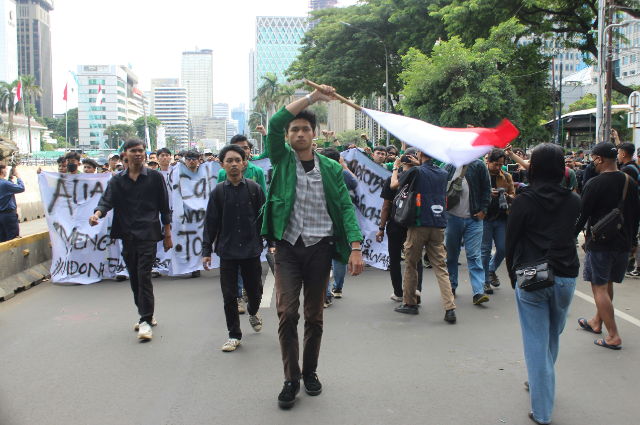
A country where a student's suicide on a leaked paper results and the student responsible for the leak remains in the chair untouched, unbothered and unbowed. And in response, a generation of young people decided they had had enough. They called themselves the Cockroach Janta Party. They came with books and flowers. And they were angry.
On May 3 2026, over 23 lakhs students sat for the NEET UG exam across India, the single gateway to medical education in the country. For most of them, it represented years of gruelling preparation, parental sacrifice, and deferred lives. For those who could afford it, lakhs of rupees were spent at coaching institutes in Kota, Hyderabad, and Delhi. Nine days later, the NTA cancelled the entire exam. Reports had emerged almost immediately after the test that "guess papers" had leaked questions and had been circulating on WhatsApp and Telegram for days before May 3. Investigators found almost 100 questions out of 140 in the paper and the guess paper. The Rajasthan Special Operations Group (SOG) launched probes, arrests followed across multiple states, and the CBI was handed the investigation. A multi-state racket allegedly sold the paper to candidates for 30-50 lakh a piece.
The re-examination is scheduled tentatively for 21 June. Students who prepared honestly, putting all their efforts, the announcement meant waiting more in an already brutal cycle of uncertainty.
Before the protest even began, CJP founder Abhijeet Dipke put a number on what the scandal had cost in human terms. "Education Minister must resign," he said, stepping off a flight from the United States. "Five students have committed suicide."
This is not a new headline in India. NEET's body count predates 2026 by years. Tamil Nadu's ruling DMK has repeatedly documented how 119 students enrolled in NEET coaching died by suicide over eight years, with 26 deaths in Tamil Nadu alone. The coaching hub of Kota, Rajasthan, a city that has built an industry around competitive exam preparation, recorded 17 student suicides in 2024 alone. The infrastructure of pressure, isolation, and failure has been known, documented, and largely ignored. What 2026 added to this grim record was a new dimension of injustice: students who studied honestly, who did not cheat, who could not afford 40 lakh to buy the paper, were now being punished twice. First, the system allowed the leak. Then by a cancelled exam that reset their timelines by months. The system had failed them. And the man nominally responsible for that system showed no sign of taking accountability.
Founded officially on May 16, 2026, the CJP positioned itself as a satirical political movement, carrying the slogan "Voice of the Lazy & Unemployed." Within weeks, it had evolved from digital meme to mass mobilisation. The NEET cancellation gave it an unmistakable sense of purpose.
On June 6, 2026, hundreds of young people descended on Jantar Mantar in New Delhi, had paper cockroach masks in hand, books and flowers clutched alongside protest signs. The central demand was unambiguous: the resignation of Union Education Minister Dharmendra Pradhan. The protest was led by Dipke, who had flown in specifically for the demonstration. He was joined by renowned scientist and activist Sonam Wangchuk, whose presence lent the gathering both credibility and visibility. The CJP had received official police permission to hold the demonstration from 10 AM to 5 PM, a detail that matters, given the state's long history of finding reasons to deny such permissions."Our primary objective is to reform the education system as a whole," Dipke said from the stage. "Exam irregularities and paper leaks are merely symptoms of a much deeper problem. The entire system requires comprehensive reforms to ensure transparency, accountability, and quality education for all."He also issued a direct ultimatum: if Dharmendra Pradhan did not resign by 5 PM, protests would be organised across India. A follow-up protest was announced for June 13, with another planned for Ramlila Maidan on June 23. The protesters were instructed to remain non-violent. Dipke urged participants to offer flowers to police personnel as a gesture of compassion. This was, he said, a peaceful constitutional campaign.
Sixteen-year-old medical aspirant Utkarsh Raj, speaking to AFP at the site, gave voice to what thousands felt: "We want accountability from the government. How is it that exam papers get leaked in this country? How is this right?"
Dharmendra Pradhan's response to the NEET 2026 scandal followed a script he had rehearsed before and told almost word-for-word. Back in June 2024, when the NEET UG 2024 paper leak scandal first erupted, he, with Bihar Police, reporting the paper was sold 24 hours in advance for a price around 30-32 lakh rupees, Pradhan told reporters: *"There is no corruption. There is no proof of a paper leak. An expert committee was formed."* The NTA, he insisted then, was "a very credible body."Two years later, with the NTA itself cancelling the exam and the CBI deployed to investigate a multi-state racket, the minister's position has grown increasingly untenable. Yet no resignation has come. This is the pattern that enrages students. Systems fail, evidence accumulates, lives are lost and ministers issue statements.
The protest at Jantar Mantar was, by most accounts, a beginning rather than a conclusion. Analysts who discussed the CJP movement noted that while the organisers had not yet finalised a structured roadmap for the next phase, the underlying grievance was not going away.
"It's already a pan-India movement," noted Tanvir Aeijaz of Ramjas College, speaking to The Federal. "The only thing is how they are going to organise their next move."Opposition parties have thrown their support behind the CJP's demands, though whether that support translates into parliamentary action on systemic exam reform remains to be seen. What is certain is that this generation, which is shaped by cancelled exams, coaching institute deaths, competitive exam scams going back to UPPSC in 2024, CUET irregularities, and NEET year after year, is not prepared to be patient indefinitely. They have been calling themselves cockroaches. They are not afraid of the dark. Tamil Nadu's DMK has long argued that NEET itself is structurally flawed and that it disadvantages students from state board backgrounds and rural areas, and has called for its abolition. While the constitutional question of state versus central jurisdiction in education remains contested, the student movement has brought new urgency to a debate that politicians have successfully buried for years.
The Chief Justice, who called them cockroaches, was not entirely wrong about one thing: Gen Z is chronically online, and its rage is often dispersed across a thousand comment sections. What June 6 showed is that it can also be channelled into streets, into demands, into a movement that carries books as its symbol and insists on accountability as its minimum condition.
India spends approximately 2.9% of its GDP on education. Its centralised entrance exams are meant to be meritocratic. In practice, those with money can buy the paper. Those without money buy years of their lives trying to beat a system that has already been gamed against them.
When the system protects ministers more than students, when five suicides are not enough to move anyone in power, when a million honest aspirants are collateral damage in a scam they never participated in rallies the cockroaches show up at Jantar Mantar with flowers and books.
The question is not whether the protest was justified.
The question is why it took this long.
Sources and references:
- thestatesman.com
- Business Today
- khaleejtimes.com
- thefederal.com
- Wikipedia
- testbooknews.com
- timesofcollege.com
- careers360